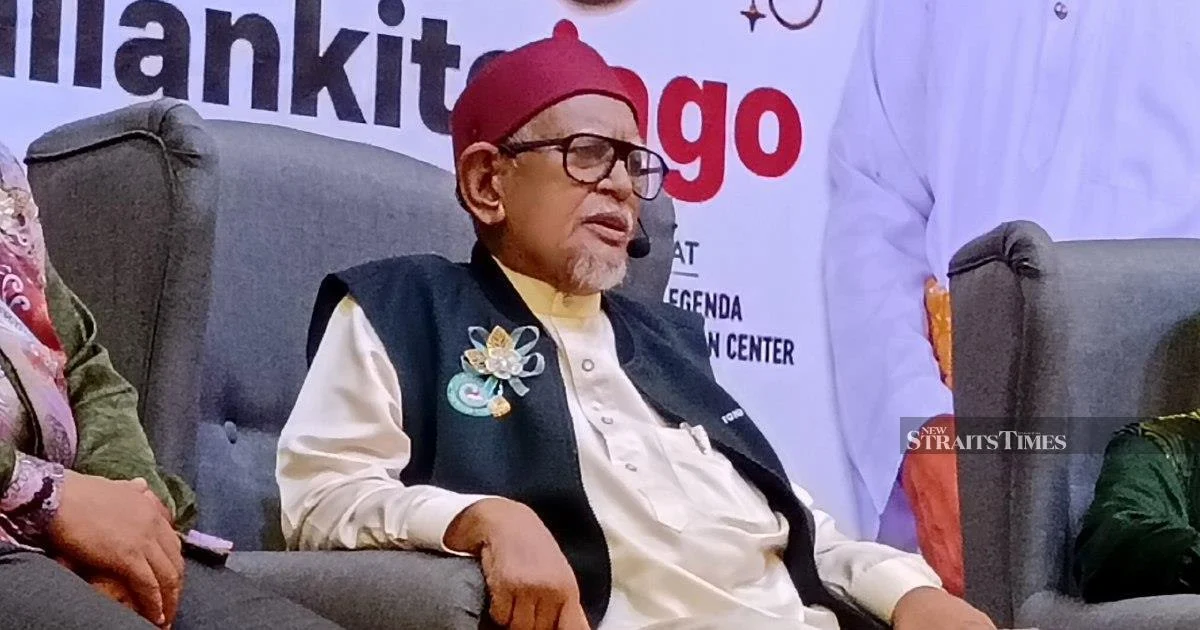
PAS has signalled openness to backing an Umno figure for the menteri besar post in Negri Sembilan should the two Malay-Muslim parties reach a definitive coalition agreement before the August 1 state election. The willingness to cede the chief minister role represents a significant negotiating position from PAS, which has been intensifying discussions with Umno over how parliamentary constituencies and state seats will be divided in the upcoming polls.
The announcement reflects the strategic calculus both parties face as they attempt to present a unified Malay-Muslim electoral front in Negri Sembilan. By publicly stating its flexibility on the top state position, PAS is signalling to Umno that it is a serious and pragmatic coalition partner willing to prioritise seat distribution and overall electoral performance rather than insisting on symbolic leadership positions. This approach differs markedly from PAS's stance in other states, where the party has been more assertive in demanding chief minister roles, and suggests the party views Negri Sembilan as a state where Umno may have greater electoral prospects or a stronger existing political foothold.
For Umno, such an arrangement would be advantageous on multiple fronts. The party has been working to rebuild its credibility and organisational capacity following the 2022 general election results that left it diminished. Securing the menteri besar position in a state election would provide tangible proof of recovery and serve as a platform for reasserting Umno's dominance within Malaysia's Malay-Muslim political sphere. Additionally, having a unified PAS-Umno ticket eliminates the risk of the two parties splitting votes or running candidates against each other, a scenario that has historically benefited opposition coalition partners.
The ongoing seat negotiations highlight the intricate choreography required when political parties attempt to forge lasting electoral partnerships. The discussions likely cover not only the assignment of individual state assembly seats but also considerations about the relative strength of candidates, the demographic composition of constituencies, and which party has incumbency advantages in particular areas. Negri Sembilan's 36 state assembly seats provide substantial room for negotiation, though both parties must also navigate the expectations of their grassroots supporters and existing political figures with established territorial claims.
The August 1 election date imposes a hard deadline on these negotiations, focusing minds considerably. Unlike discussions that can drift indefinitely, the proximity of the polling date means both PAS and Umno must reach binding agreements on candidate lists and campaign strategies in the coming weeks. This temporal pressure could either accelerate a deal or expose fundamental disagreements about seat allocation that prove impossible to resolve, potentially forcing the parties to contest the election on separate tickets despite their stated preference for cooperation.
PAS's public statements about its negotiating flexibility may also serve as pressure on Umno to move quickly toward finalisation of terms. By demonstrating reasonableness on the chief minister issue, PAS may be signalling that further concessions from Umno regarding seat distribution are now expected. The party's leadership appears confident enough in PAS's electoral prospects or appeal that it can afford to present itself as the more accommodating coalition partner, an image that strengthens its hand in subsequent negotiations.
From a broader Southeast Asian perspective, the PAS-Umno dynamic in Negri Sembilan reflects wider patterns in Malaysia's political system. Coalition politics in the country frequently require larger parties like Umno to share power with smaller but strategically important partners like PAS. The success or failure of such arrangements significantly influences voter confidence in the stability of Malaysia's political institutions and the predictability of electoral outcomes. A smoothly executed PAS-Umno alliance in Negri Sembilan could serve as a template for cooperation in other state elections and the next general election, while a breakdown would suggest continued fragmentation on the Malay-Muslim political front.
The stakes extend beyond Negri Sembilan itself. The state election occurs against a backdrop of broader coalition negotiations at the national level. The federal government comprises multiple political parties with sometimes divergent interests, and state-level electoral results provide important signals about which combinations of parties voters are most willing to support. A strong PAS-Umno showing in Negri Sembilan would validate this partnership at the state level and potentially strengthen both parties' positions in federal politics. Conversely, a disappointing result could fuel internal debates within both parties about the wisdom of continued cooperation.
For voters in Negri Sembilan, these negotiations carry practical implications regarding state governance. The composition of the coalition and the distribution of ministerial positions determine which politicians will oversee crucial state portfolios including education, agriculture, local government, and economic development. If negotiations result in a workable PAS-Umno arrangement with clear division of responsibilities, the state could benefit from stable governance. However, if either party feels aggrieved by the seat allocation or if the coalition is hastily assembled, governance could suffer from internal tensions and policy incoherence.
The flexibility PAS has displayed on the menteri besar position may also reflect lessons from previous elections. The party has competed successfully in Negri Sembilan in the past and may possess internal polling or demographic analysis suggesting that voter preferences in the state favour particular candidates or parties for the chief minister role. Rather than insisting on the position purely as a matter of principle, PAS leadership may be making a calculated decision that accepting an Umno menteri besar maximises the coalition's overall chances of winning the most seats and forming the state government.
As August approaches, the conclusion of these seat-sharing negotiations will be closely watched by political analysts, journalists, and observers across Malaysia. The agreement or disagreement reached will offer valuable insights into the strength of the PAS-Umno partnership, the relative negotiating power of each party, and the likelihood of this coalition persisting beyond the Negri Sembilan election into future electoral contests at state and federal levels.

