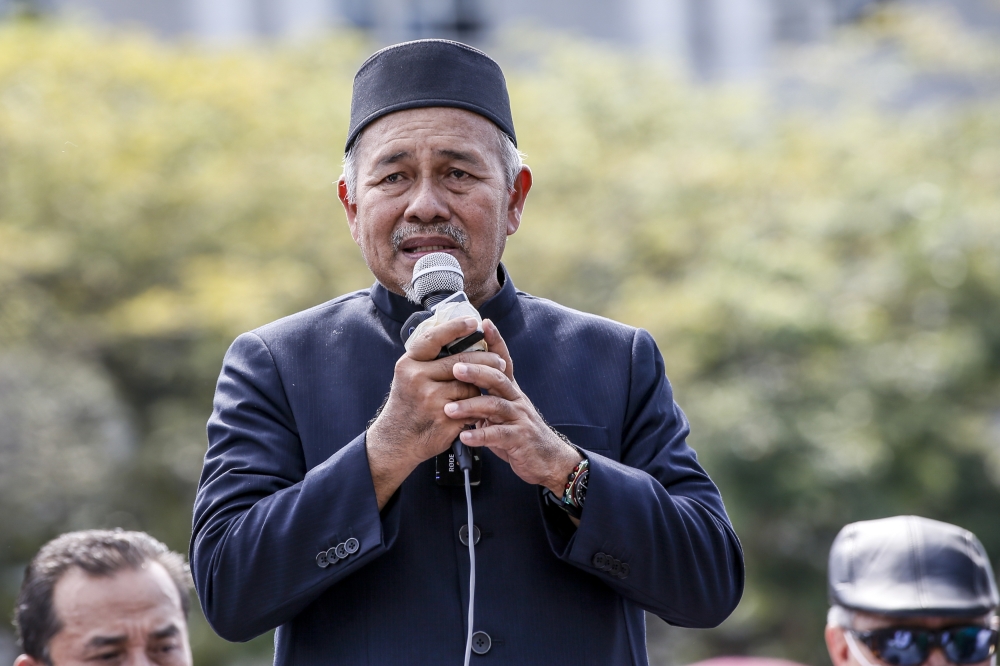
PAS president Tuan Ibrahim Tuan Man has indicated the party's willingness to engage in discussions about expanding the existing Barisan Nasional-Perikatan Nasional cooperation beyond its current scope, with ambitions to bring such collaboration to Melaka and potentially the national stage. The statement comes at a time when Malaysia's fractured political landscape continues to shift, with competing coalitions seeking to consolidate their positions and broaden their electoral appeal across the peninsula.
The tentative overture from the Islamist party reflects a strategic calculation about political leverage and coalition-building in the coming years. Malaysia has experienced considerable government instability since the 2018 elections, with various coalitions rising and falling as parties recalibrate their positions. The prospect of BN and PN working together at multiple levels would represent a significant realignment in national politics, merging two formerly opposing forces that have competed fiercely since PN's formation in 2017.
Understanding the context of these talks requires examining the current state of each coalition. Barisan Nasional, historically Malaysia's dominant political force, has been rebuilding after losing federal power in 2018 and then again after the Perikatan Nasional-led government fell in 2021. The coalition has since reclaimed the prime ministership and gradually reasserted control over several state governments. Perikatan Nasional, a relative newcomer to national prominence, gained strength through opposition to the then-ruling Pakatan Harapan government but has since struggled to maintain unity and electoral relevance.
PAS, which commands significant grassroots organisation particularly among rural and semi-urban Malay-Muslim voters, holds considerable sway within PN. The party has grown in electoral strength over recent election cycles and views itself as increasingly indispensable to any stable coalition seeking to command Dewan Rakyat seats and federal resources. By indicating openness to dialogue about closer BN-PN collaboration, PAS may be positioning itself as a kingmaker whose cooperation would be essential for either coalition to maintain or expand its grip on power.
The specific mention of Melaka carries particular significance. The state has been a political battleground in recent years, with control shifting between coalitions in quick succession. A unified BN-PN approach in Melaka would effectively eliminate opposition politics in the state for an extended period, allowing the combined coalition to govern without meaningful challenge. This level of political dominance in even a single state could provide valuable momentum and legitimacy for pursuing similar arrangements elsewhere.
Extending such cooperation to the federal level would represent an even more dramatic shift. It would essentially create a super-coalition controlling potentially two-thirds or more of parliamentary seats, fundamentally altering the balance of power and potentially constraining the role of opposition parties in legislative scrutiny and oversight. Such an arrangement could enable the ruling coalition to pass constitutional amendments and implement major policy shifts without meaningful resistance.
However, obstacles remain substantial. Both BN and PN contain parties with divergent interests and agendas that sometimes conflict with one another. Umno, BN's backbone, and PAS have history of mutual suspicion and competition for Malay-Muslim voter support. Merging these entities formally or semi-permanently could trigger internal dissent within both coalitions, with parties fearing the loss of distinct identities or electoral space. Negotiations on seat allocation, ministerial positions, and policy priorities would be extraordinarily complex.
For Malaysian politics broadly, such a development would reshape the democratic landscape considerably. Opposition parties would face severe challenges mounting competitive campaigns in either Melaka or federally if the two largest coalitions effectively merged. This could concentrate power in ways that critics argue would weaken democratic institutions and reduce accountability to voters. Conversely, proponents of such an arrangement might argue that it would provide the stability and clear governance majorities that Malaysia desperately needs to tackle economic challenges and social cohesion issues.
The timing of Tuan Ibrahim's comments also merits examination. Coming as Malaysia navigates multiple policy challenges including economic pressures, inflation concerns, and ongoing social divisions, the political elite may be calculating that strong, stable governance requires coalition broadening rather than continued fragmentation. Regional observers note that Southeast Asia increasingly requires governments capable of decisive action on economic and geopolitical fronts, and fractious parliaments can hinder such responses.
Regional economic considerations add another dimension to this political manoeuvring. Malaysia's standing as a key ASEAN economy and its role in regional supply chains mean that sustained political uncertainty hampers investment and competitiveness. A more unified political arrangement, even if democratically questionable, could potentially create the conditions for more consistent economic policymaking and investor confidence.
The broader implication for Malaysian voters is that political realignment appears to be an ongoing feature of the post-2018 landscape. Rather than establishing stable, clearly differentiated coalitions competing on policy platforms, Malaysian politics continues to resemble a complex game of coalition calculus where parties shift positions based on perceived advantage. Tuan Ibrahim's measured signals about negotiating expanded cooperation suggest this trend will likely persist, with voters potentially facing elections in which the fundamental coalition options remain fluid rather than clearly defined.
Internal discussions within PAS about whether to pursue such expansion will themselves be revealing. The party balances competing pressures from its grassroots membership, which values Islamic governance principles and distinct party identity, against pragmatic considerations about maximising influence at state and federal levels. How PAS navigates these pressures in upcoming weeks will provide important clues about the trajectory of Malaysian coalition politics.

