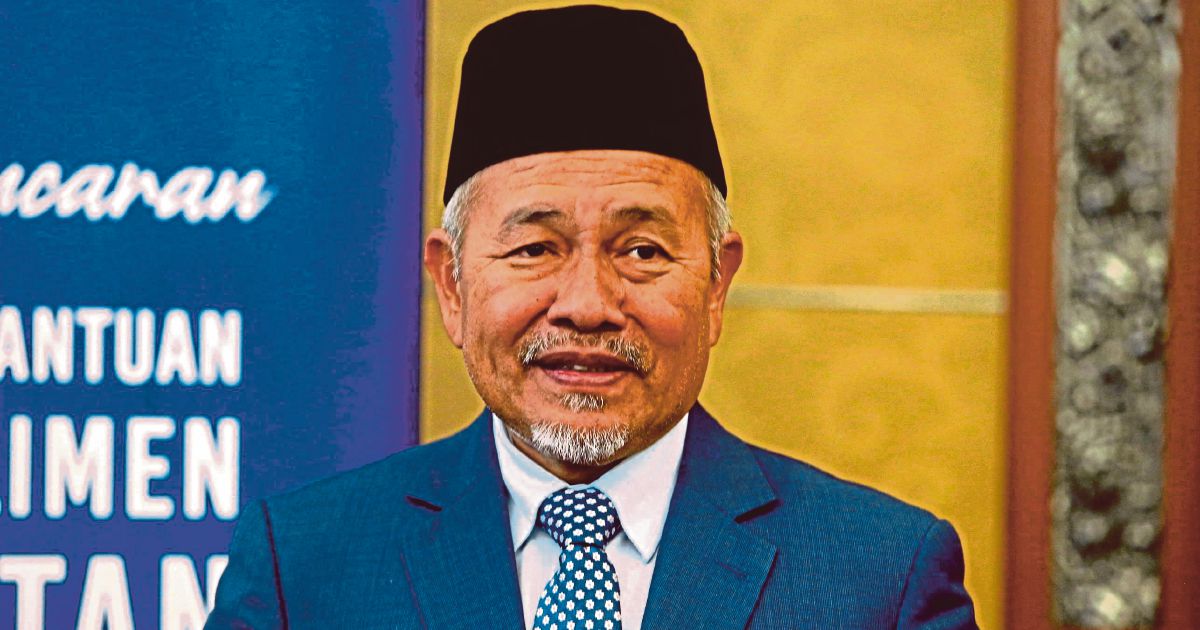
PAS deputy president Datuk Seri Tuan Ibrahim Tuan Man has commended Umno's decision to pull its backing from the Negri Sembilan state government, framing the withdrawal as a courageous political manoeuvre that could fundamentally alter the dynamics of the upcoming state election. Speaking in Seremban, Tuan Ibrahim suggested that Umno's departure from the ruling coalition represents more than a tactical repositioning—it signals a willingness to challenge the existing power structure and grant voters a genuine choice in determining the state's political direction.
The move marks a significant rupture within what had been a relatively stable governing arrangement in Negri Sembilan. For months, Umno's presence as part of the state coalition had provided numerical stability to the administration, but internal pressures and shifting national coalition politics appear to have prompted a recalculation. Tuan Ibrahim's characterisation of the withdrawal as "bold" reflects PAS's reading of the decision as politically risky for Umno, suggesting that the party has chosen principle or strategic advantage over the security of a sitting government.
This development carries particular weight for Malaysia's broader political landscape, where coalition politics have become increasingly fragile and unpredictable since the 2018 general election. Negri Sembilan, a state that has traditionally reflected national political currents, now finds itself in uncharted territory. The withdrawal creates uncertainty about governance, potential snap elections, and the realignment of state-level partnerships heading into what could be a competitive electoral period.
Tuan Ibrahim's public appreciation of Umno's decision should be read as more than courtesy. PAS, which has been strengthening its electoral presence in peninsular Malaysia, stands to benefit from a fractured opposition that lacks cohesive messaging. By praising Umno's withdrawal, PAS is positioning itself as the voice of decisive action and democratic renewal—themes that resonate with voters fatigued by entrenched political arrangements. The statement also reflects the ongoing competition between PAS and Umno for rural and conservative voter demographics, particularly in states like Negri Sembilan where both parties maintain significant support bases.
The timing of Umno's decision warrants scrutiny in the context of broader national political calculations. Both PAS and Umno face pressure to demonstrate political vitality and relevance following recent electoral performances at various levels. For Umno, withdrawing support—rather than clinging to office—presents an opportunity to reposition itself as a principled actor capable of making difficult choices. For PAS, the move creates space to either work with a weakened incumbent or prepare for fresh elections from a position of strength, depending on strategic calculations.
Negri Sembilan voters, meanwhile, face the prospect of returning to the polls sooner than anticipated. State elections typically occur every five years, but early dissolution triggered by coalition collapse can disrupt local political agendas and force rapid campaign cycles. The state, which encompasses constituencies ranging from the industrial Selangor border regions to agricultural and mining districts, has diverse economic interests that may be sidelined during an extended election campaign rather than policy-focused governance.
Umno's withdrawal also reflects the precarious nature of cross-party coalitions that lack deep ideological alignment or formal power-sharing agreements. In recent years, Malaysian state governments have increasingly become vulnerable to sudden shifts in partner allegiances, as happened in Perak and Johor previously. These instabilities create opportunities for ambitious parties to reset state politics, but they also introduce governance risks during transitional periods when caretaker administrations lack full executive authority.
The international dimension should not be overlooked. Malaysia's investors and regional partners monitor political stability closely, and volatility in state-level governments can influence broader perceptions of institutional reliability. Negri Sembilan's manufacturing and services sectors depend on confidence in predictable governance, making protracted political uncertainty a concern for economic stakeholders who prefer certainty over dramatic realignment.
Tuan Ibrahim's measured language about the withdrawal—emphasizing openness to voters rather than exploiting partisan advantage—suggests that PAS is conscious of appearing opportunistic. The party has invested considerable effort rebuilding credibility following controversy over Shariah law proposals and perceptions of institutional authoritarianism. By framing Umno's exit as democratically beneficial rather than a tactical victory, Tuan Ibrahim attempts to position PAS as statesman-like, committed to electoral principles above narrow party interest.
Moving forward, Negri Sembilan's political trajectory will depend on whether early elections materialise and, if so, which coalitions form to contest them. The state presents a microcosm of Malaysia's broader political fragmentation, where traditional blocs have fractured and parties must constantly negotiate alliances. Umno's withdrawal from the state government, rather than representing a singular event, may ultimately prove to be one episode in a longer period of political restructuring affecting multiple states simultaneously.
The coming weeks will reveal whether other state governments face similar pressures and whether this signals the beginning of a broader realignment in Malaysian coalition politics. For PAS, Tuan Ibrahim's warm reception of Umno's decision positions the party to capitalize on anticipated instability. For voters in Negri Sembilan, it means preparing for campaign season and evaluating which coalition can best serve the state's interests in what promises to be a competitive electoral contest.

