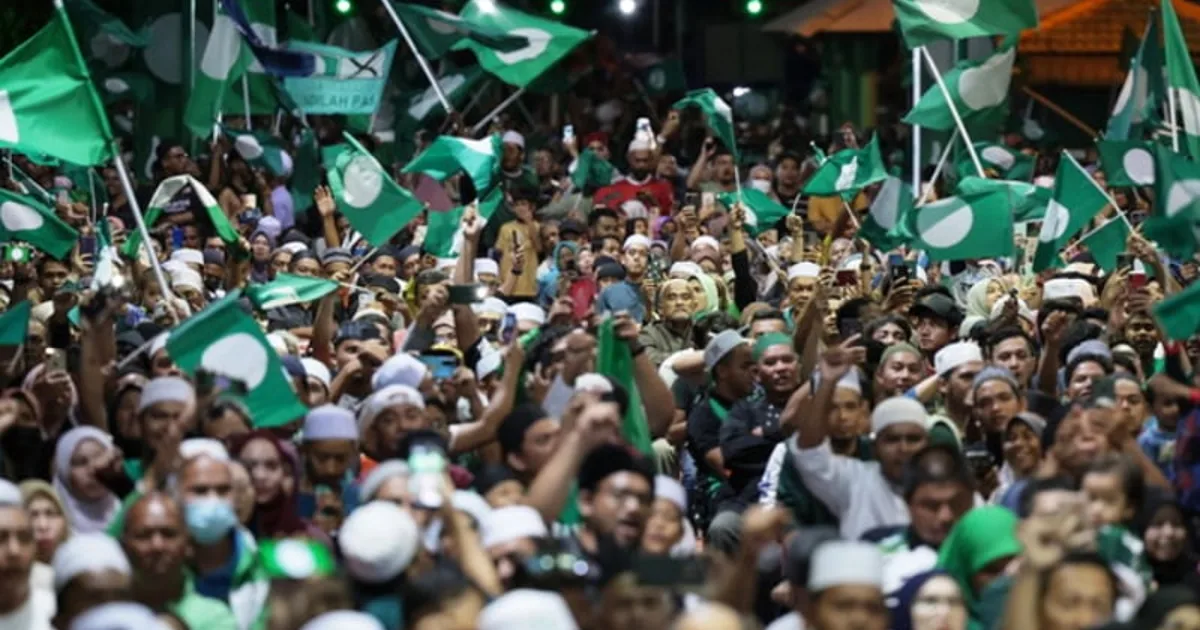
The Islamist party PAS has begun a strategic repositioning of its campaign apparatus, withdrawing organisational resources and election machinery from constituencies where the Malaysian United Indigenous Party (Bersatu) will be fielding candidates. This move signals a further consolidation within the Perikatan Nasional coalition as component parties attempt to maximise their collective electoral impact by avoiding internal competition in key battlegrounds.
Under the revised allocation, PAS is directing its full campaign infrastructure—including trained party volunteers, grassroots organisers, and promotional materials—toward constituencies where the party itself will contest, as well as seats designated for other Perikatan Nasional component parties. The reallocation reflects a pragmatic acknowledgment that splitting the opposition vote in any single constituency could weaken the coalition's chances against competing political forces at both federal and state levels.
Bersatu, the splinter party formed by former Prime Minister Muhyiddin Yassin, has long occupied an awkward position within Malaysia's political landscape. After initially leading the Perikatan Nasional coalition, the party found itself sidelined as PAS emerged as the stronger Islamic voice and kingmaker. This latest arrangement essentially formalises a pecking order within the coalition, with PAS asserting its primacy in determining which coalition partner receives full party backing in any given contest.
The implications for Malaysian politics are considerable. Coalition discipline of this kind has historically been difficult to maintain, particularly when smaller parties fear marginalisation by larger allies. That PAS and Bersatu have managed to reach such an understanding suggests either strong personal relationships between leadership figures or a mutual recognition that the alternative—uncoordinated competition—would prove catastrophic for both parties' electoral prospects. This stability may give the opposition coalition a structural advantage over the fractious government coalition.
For ordinary voters, the arrangement introduces complexity. Constituents in PAS-designated seats will encounter the party's full organisational apparatus, while those in Bersatu-contested constituencies may see comparatively muted PAS activity, even though PAS voters presumably reside in both types of constituencies. This could create anomalies where voter enthusiasm in Bersatu areas goes under-mobilised simply because another coalition partner controls the seat allocation.
The coalition's seat-sharing mechanism also highlights the continued relevance of ethnic and religious calculations in Malaysian politics. Perikatan Nasional has positioned itself as the champion of Malay-Muslim interests, and the allocation of constituencies often reflects this identity. Seats deemed winnable for the Islamic parties are concentrated in areas with high concentrations of Malay voters, while other component parties may receive rural constituencies or seats in ethnically mixed areas where they believe they can appeal beyond the Muslim base.
Regionally, this development carries significance for Southeast Asia. Malaysia's political coalitions have become increasingly fluid, and successful coordination mechanisms—like the one PAS and Bersatu are attempting—could serve as models or cautionary tales for other regional democracies managing multiple political parties and competing ethnic or religious interests. How the two parties execute this arrangement will be closely watched by political analysts across the region.
The withdrawal of PAS campaign machinery from Bersatu seats also raises questions about what happens in marginal constituencies where the competition is not between Perikatan Nasional and the government coalition, but between different opposition blocs. In such contests, PAS's restraint could theoretically benefit Bersatu candidates, but it could equally prove devastating if PAS supporters feel abandoned by their party's non-engagement in their area.
Historically, such strategic retreats have occasionally backfired in Malaysian politics. Parties that withdraw resources from constituencies sometimes find their grassroots presence atrophies faster than anticipated, making it difficult to re-establish organizational presence when circumstances change. If Bersatu performs poorly in its allocated seats, or if the coalition experiences fractures before the next election, PAS may find it harder to rapidly rebuild its ground game in the seats it has ceded.
The timing of this resource reallocation also matters. Whether this move precedes an imminent election call or simply represents ongoing coalition optimisation for whenever balloting occurs will influence how observers interpret the decision. A fully fledged election campaign could disrupt these careful arrangements, particularly if late defections or party realignments occur after the formal nomination period begins.
Looking ahead, the sustainability of this arrangement depends on maintaining unity within the Perikatan Nasional coalition on other fronts. Disagreements over religious policy, economic management, or federal-state governance could easily destabilise the seat-sharing consensus. For now, however, both parties have apparently concluded that electoral mathematics favour cooperation over competition, a lesson that resonates across Malaysia's perpetually shifting political terrain.

