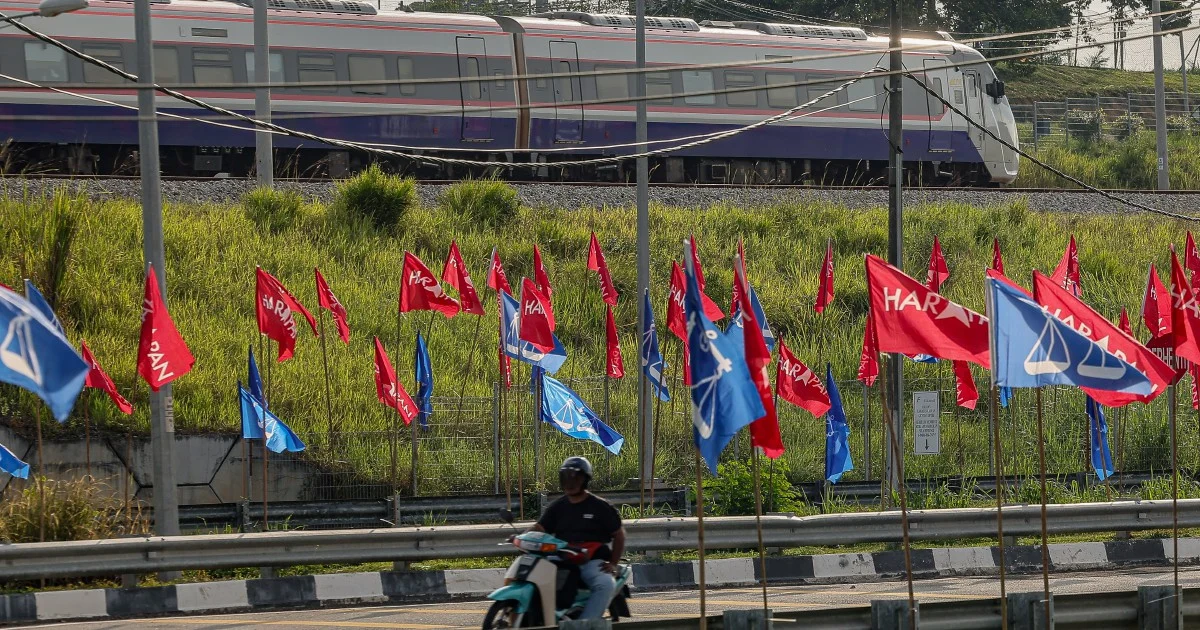
PAS Youth's announcement that the Islamic party will throw its weight behind Barisan Nasional candidates in certain seats where Perikatan Nasional is not fielding contenders marks a significant shift in coalition dynamics ahead of key electoral contests. The youth wing's clarification in Johor Baru underscores a deliberate tactical arrangement designed to fracture opposition unity and limit gains by the PKR-led Pakatan Harapan coalition, which has struggled with internal cohesion and flagging public support in several key states.
The strategy reflects deeper calculations within Malaysia's fragmented political landscape, where no single bloc commands overwhelming confidence from voters. PAS, which commands considerable grassroots machinery particularly in rural and semi-urban areas, has positioned itself as a kingmaker capable of swinging contests in marginal seats. By selectively backing BN candidates rather than fielding its own contenders, PAS Youth effectively multiplies its influence without diluting the anti-PH vote through triangular contests. This approach acknowledges electoral mathematics where splitting the opposition vote could inadvertently benefit PH in tight races.
Barisan Nasional, despite its historical dominance, has faced erosion of support especially among younger urban voters and in certain demographic strongholds. The coordination with PAS provides an infusion of ground organization and voter mobilization capacity, particularly valuable in constituencies where BN structures have weakened. Meanwhile, PAS retains flexibility by avoiding direct responsibility for BN governance while maintaining leverage to negotiate ministerial positions and policy influence in any post-election settlement. This calculated ambiguity allows PAS to campaign as an Islamic alternative while pragmatically sharing power.
Pakatan Harapan faces an uphill battle consolidating voter support across its coalition of PKR, DAP, and Amanah, each with distinct voter bases and ideological priorities. The arrangement between PAS and BN essentially creates a two-front challenge, forcing PH to defend ground simultaneously against both the traditional establishment coalition and an ostensibly populist Islamic alternative. In states like Johor, Pahang, and parts of Peninsular Malaysia, this dynamic particularly disadvantages PH which struggles with rural penetration and cannot match PAS's organizational capabilities in Islamic constituencies.
The tactical move also signals broader realignment patterns in Malaysian politics since the 2022 general election. The collapse of Perikatan Nasional's initial momentum and PAS's subsequent repositioning reflects how volatile Malaysia's electoral environment has become. Voters increasingly split their ballots between federal and state contests, and between different political formations, demanding sophisticated ground strategies rather than top-down directives. PAS Youth's stance indicates the party understands these realities and is optimizing its competitive position accordingly.
Geographically, the implications vary significantly across regions. In Johor, where PAS maintains influence particularly in the southern belt and among Malay-Muslim voters, the decision to back BN selectively strengthens the establishment coalition's machinery. In Terengganu and Kelantan, where PAS historically governed, such arrangements prove less relevant. However, in Selangor, Negeri Sembilan, and suburban areas of the Klang Valley, PAS support for BN could alter competitive equations in previously secure opposition strongholds. This geographic precision in the strategy demonstrates sophisticated political calculation rather than blanket endorsements.
The announcement also carries implications for Malaysia's broader democratic health and coalition formation processes. When major parties prioritize blocking opponents over advancing distinct policy visions, voters face fewer meaningful choices and more cynical political calculations. PAS Youth's framing emphasizes containing PH, not championing particular governance platforms or policy agendas. This negative framing, while electorally pragmatic, contributes to public cynicism about partisan competition focused primarily on power distribution rather than national direction.
Ministerial arithmetic becomes crucial under such arrangements. PAS expects concrete returns for its cooperation—likely cabinet positions, control of particular ministries, and influence over Islamic affairs policy. BN leaders must balance PAS's demands against their own members' expectations for posts and resources. These negotiations, typically conducted behind closed doors, ultimately shape governance priorities and resource allocation that affect ordinary Malaysians. PAS's youth wing signalling willingness to support BN indicates confidence in securing favorable terms.
For PKR and Pakatan Harapan broadly, the development underscores vulnerabilities in their coalition. Despite genuine policy achievements during their 2018-2020 period in government, PH struggles to mobilize sustained voter enthusiasm. The decision by significant segments of the Malay-Muslim electorate to support either PAS or BN rather than PH reflects concerns about PKR's leadership, DAP's perception among conservative voters, and broader questions about PH's capacity to govern effectively. Unless PH substantially refreshes its appeal or demonstrates clarity about its governance vision, similar tactical arrangements between competitors may increasingly marginalize the opposition.
The long-term trajectory of this strategic arrangement remains uncertain. Electoral competition could force realignment if voter preferences shift dramatically. Economic pressures, governance scandals, or internal ruptures could destabilize current partnerships. However, in the immediate electoral period, PAS Youth's calculated endorsement of BN candidates in strategic locations represents a deliberate effort to concentrate anti-PH votes and squeeze the opposition's electoral prospects across multiple constituencies and states.

