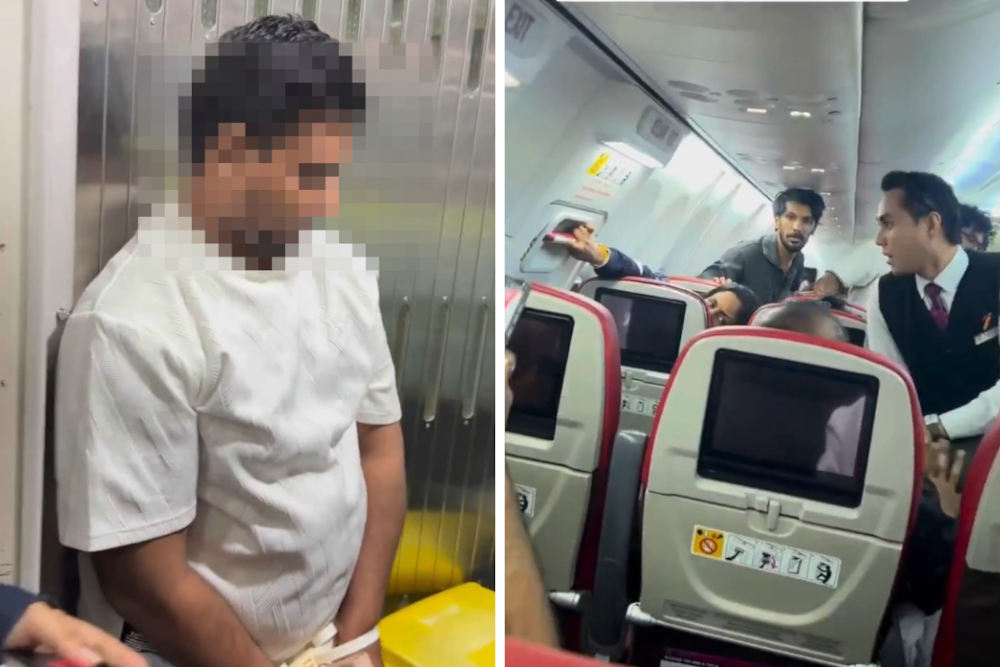
A man has been taken into custody following an alarming incident aboard a Batik Air flight travelling from Malaysia to India, after he allegedly attempted to open an emergency exit door whilst the aircraft was at cruising altitude of 9,144 metres. The incident raised immediate safety concerns and prompted a swift response from flight crew and authorities upon landing.
The passenger's actions during what should have been a routine flight have triggered an investigation into his motivations and mental state at the time of the occurrence. Batik Air, the low-cost carrier subsidiary of Malaysia Airlines, cooperated fully with authorities and ensured the safety of all passengers and crew members aboard the flight. Such incidents, whilst rare, underscore the seriousness with which aviation authorities treat any breach of in-flight security protocols.
Emergency exit doors on commercial aircraft are equipped with multiple safety mechanisms specifically designed to prevent accidental or deliberate opening during flight. These systems make it virtually impossible to open such doors without considerable force and knowledge, particularly at altitude where external air pressure creates an additional barrier. The fact that the passenger reached for the door represents a significant deviation from normal passenger behaviour and warrants thorough examination by both aviation and law enforcement authorities.
Aircraft operating at cruising altitude face extreme environmental conditions that would render opening a door catastrophic. At 9,144 metres, the external air pressure is approximately one-quarter that at ground level, and temperatures plummet to minus 50 degrees Celsius. Any successful breach would result in explosive decompression, posing an existential threat to everyone aboard. The aviation industry takes such incidents with the utmost gravity, as they challenge the fundamental safety systems that protect passengers and crew.
The incident illuminates an ongoing challenge facing airlines across Southeast Asia and globally: managing passenger behaviour and identifying individuals who may pose risks during flight. Airlines have implemented comprehensive training programmes for cabin crew to recognise warning signs and respond appropriately to disruptive passengers. Flight attendants receive specific protocols for de-escalation techniques and restraint procedures when necessary. The swift containment of this situation suggests that crew members aboard the Batik Air flight were well-trained and responded appropriately to the threat.
For Malaysia's aviation sector, which prides itself on safety standards and operates in a competitive regional market, such incidents carry broader implications. The country's airlines, including Batik Air, operate hundreds of flights daily across the region, carrying thousands of passengers. Maintaining public confidence in aviation safety is crucial for the industry's reputation and commercial viability. Authorities' prompt investigation and the airline's cooperation help demonstrate the robustness of Malaysia's aviation safety framework.
The investigation will likely examine whether the passenger experienced a medical emergency, mental health crisis, or acted with deliberate intent. Aviation authorities will coordinate with police to determine the circumstances leading to the attempt. Such cases often reveal complex personal factors rather than ideological motivations, though investigators must explore all possibilities. The outcome of this investigation will inform whether additional security measures or policy changes are warranted across Malaysia's airline industry.
International aviation regulations, established by the International Civil Aviation Organization and implemented by national authorities including Malaysia's Department of Civil Aviation, provide the legal framework governing passenger conduct and airline responses. Airlines are required to maintain detailed incident records and report serious safety occurrences. This specific case will be documented and analysed within the context of aviation safety data, potentially contributing to enhanced procedures if patterns emerge across the industry.
The incident also highlights the vulnerability of aircraft cabins and the trust passengers place in security systems and crew expertise. Unlike ground-based settings, an aircraft cabin represents a confined environment where safety depends on multiple layers of protection. Passengers at altitude depend entirely on the aircraft's integrity and crew competence. Incidents that challenge these systems, however rare, inevitably draw scrutiny and can temporarily affect passenger confidence in particular routes or carriers.
For travellers between Malaysia and India, this incident may raise questions about security procedures and passenger vetting processes. Both nations maintain commercial aviation links crucial to their economic relationship, with tens of thousands of passengers travelling between them annually. Assurances about the robustness of safety systems and security protocols become particularly important following such incidents, requiring both airlines and authorities to communicate clearly about preventive measures and response capabilities.
The broader implications for Southeast Asian aviation include potential discussions about enhanced mental health screening or additional security measures at airports. However, authorities must balance security with operational efficiency and passenger convenience. The aviation industry in the region faces the challenge of strengthening safety protocols without creating burdensome procedures that might deter legitimate travel. This particular incident, though serious, appears to have been contained effectively by existing safety systems and crew procedures.

