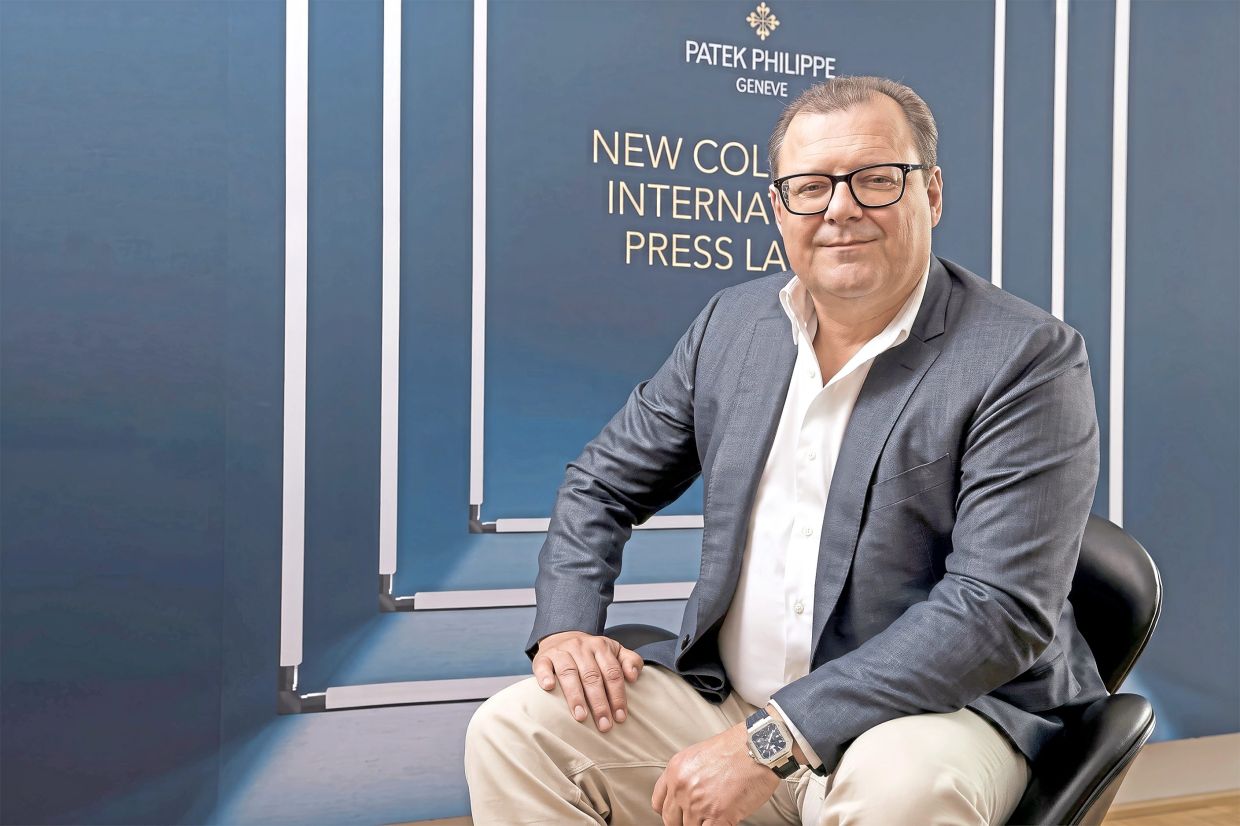
Leadership of Patek Philippe demands an uncommon quality that transcends boardroom credentials and business acumen: an authentic, almost obsessive devotion to horology itself. Thierry Stern, now in his mid-fifties and representing the fourth generation of family stewardship at the Geneva-based manufacture, embodies this philosophy so thoroughly that listeners encounter not a corporate executive but rather a watch connoisseur who happens to occupy the presidency. During conversations at the 2026 Watches and Wonders exhibition in Geneva, Stern articulated a conviction that separates his management philosophy from conventional luxury goods leadership: competence alone, regardless of intellectual prowess or business sophistication, cannot substitute for genuine enthusiasm about watches.
Stern's assertion that clients can immediately discern whether leadership cares about their passion reflects a deeper understanding of the luxury watch market's evolution. The contemporary buyer of high-end timepieces represents a knowledgeable constituency that has invested years understanding movements, case materials, dial finishing, and historical provenance. These purchasers—many of whom spend years on waiting lists or attend auctions seeking particular references—possess expertise that demands equivalent knowledge and sincerity from those stewarding the brands they pursue. Attempting to manage such a business through generic luxury industry principles would inevitably expose the absence of genuine engagement, creating a chasm between brand and customer that no marketing strategy could bridge.
The 50th anniversary of the Nautilus provides context for understanding Stern's approach to balancing heritage preservation with strategic evolution. When Gerald Genta's revolutionary design first debuted in 1976, the watchmaking establishment recoiled from what many perceived as an affront to classical traditions. The porthole-inspired case and integrated bracelet appeared industrial, almost architectural—a departure so radical that established collectors and competitors questioned whether Patek Philippe had abandoned its foundational principles. Stern, then merely six years old, would later observe with characteristic humility that those vocal detractors have largely vanished from the conversation, while the Nautilus has ascended to become one of modern horology's most coveted creations, commanding multi-year waiting lists and auction prices that consistently surpass conventional valuation logic.
Rather than leveraging this milestone for engineering excess, Stern charted an unexpectedly restrained course. The commemorative collection features three limited-edition Nautilus models in white gold and platinum, complemented by a playful desk clock interpretation. This restraint contradicts industry expectations, as previous significant anniversaries typically prompted Patek Philippe to unveil complicated movements—tourbillons, chronographs, or other technical flourishes designed to generate headlines and demonstrate manufacturing prowess. Stern's decision reflects conviction that the Nautilus itself requires no embellishment, that its essential identity as a refined hour-and-minute watch remains its greatest strength. This philosophy carries implications beyond mere product strategy; it suggests a manufacturer confident enough to resist the perpetual escalation of complications that increasingly dominates luxury watch marketing.
The technical specifications of these anniversary pieces reveal meticulous engineering applied to the principle of restraint. Measuring merely 6.9 millimetres in thickness, the cases house the historic Calibre 240 with its distinctive micro-rotor—a technical execution that prioritises elegance and wearing comfort over demonstrative complexity. Stern divulged that achieving the optimal ergonomic relationship between case and integrated bracelet required several years of refinement, underscoring how Patek Philippe's commitment to incremental perfection often remains invisible to external observers. This methodical approach to continuous improvement characterises the manufacture's broader strategy, distinguishing it from competitors who prioritise rapid innovation cycles and marketing-driven product releases.
Stern's own formation as a leader emerged directly from his father Philippe Stern's mentorship during a period of constant international travel. The elder Stern imparted a fundamental principle: understanding client requirements demands direct engagement with retailers, collectors, and end-users across different markets and cultures. This emphasis on listening rather than directing shaped Thierry's conviction that insularity threatens any luxury brand, regardless of historical prestige. The hierarchical structure that characterises many heritage manufacturers—where leadership determines direction without extensive external input—contradicts the model Stern advocates, suggesting that even houses with centuries of tradition require ongoing calibration to market realities.
Within the competitive landscape of Swiss luxury watches, Patek Philippe operates alongside Rolex, Cartier, Audemars Piguet, and Omega—an exclusive category of manufacturers that have transcended typical luxury brand status to achieve cultural significance. Each commands distinctive positioning, from Rolex's tool-watch heritage to Audemars Piguet's avant-garde complications. Patek Philippe's identity rests upon preservation of classical design principles combined with technical innovation pursued in service of refinement rather than specification accumulation. This positioning requires consistent reinforcement through product decisions, retail strategies, and brand communication that all emphasise timelessness over novelty.
Stern's articulation that stagnation equates to regression contests the romantic notion that heritage businesses can succeed through conservation alone. His conviction that meaningful risk-taking remains essential to institutional longevity acknowledges that client expectations and market conditions evolve continuously. Yet Patek Philippe's approach to risk differs fundamentally from the experimental ventures characteristic of younger luxury brands or technology-driven manufacturers. The late-1990s introduction of the Aquanaut exemplifies this calibrated risk-taking—a sporty, younger alternative to the established Nautilus that expanded the brand's appeal without compromising core identity or fabricating unnecessary technical complications.
For Malaysian and Southeast Asian readers, Patek Philippe's strategic philosophy offers instructive parallels to regional businesses navigating globalisation and market evolution. The emphasis on passionate engagement with one's domain, continuous improvement through listening rather than assumptions, and measured risk-taking in service of established values suggests an alternative model to either rigid conservatism or unmoored innovation. As many Asian manufacturers and service providers develop international aspirations, Stern's insistence that authenticity and genuine expertise cannot be manufactured or outsourced resonates as particularly relevant guidance for maintaining competitiveness in increasingly crowded luxury markets.
The Nautilus anniversary campaign ultimately demonstrates how heritage brands sustain relevance by respecting their history whilst refusing complacency. Stern's leadership embodies a conviction that passion serves not as marketing language but as operational principle—determining which decisions advance institutional values and which merely chase trends. In an era when many luxury brands pursue aggressive diversification and rapid product proliferation, Patek Philippe's continued emphasis on focused excellence and restrained innovation suggests that the most enduring competitive advantage remains the intangible asset of genuine expertise and deep commitment to one's craft.

