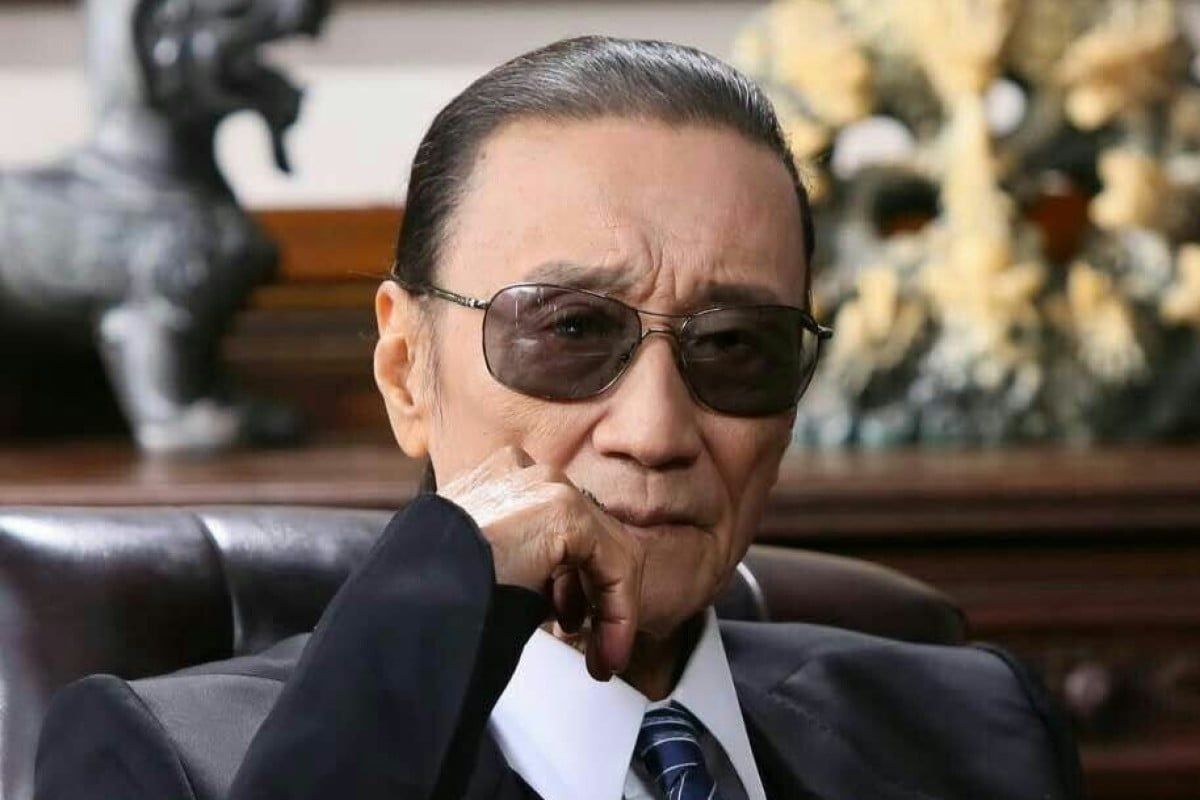
Patrick Tse Yin, the veteran Hong Kong actor whose career spanned decades and whose presence helped establish the city as the "Hollywood of the East," has died at the age of 89. His death, announced by his children Nicholas Tse Ting-fung and Jennifer Tse Ting-ting on Monday, signals the departure of one of the last surviving pillars from Hong Kong's cinematic golden age—a transformative period when the territory's film industry wielded considerable cultural influence throughout Southeast Asia and beyond. Tse passed away peacefully at a hospital surrounded by family after a period of declining health, according to statements from his children.
Born in the 1930s, Tse emerged as a defining figure during the formative years of Cantonese-language cinema, when the industry was still establishing its aesthetic and narrative conventions. Unlike later generations of Hong Kong filmmakers who would build upon established formulas, Tse belonged to the cohort that essentially invented those formulas in real time. He embodied a particular vision of modernity—urbane, stylish, and distinctly Hong Kong—that resonated across Chinese-speaking communities. His on-screen persona, affectionately known as "Sei Gor" (Fourth Brother) in Cantonese, transcended individual roles to become a cultural archetype, a self-mythologizing image that audiences came to associate with Hong Kong cinema itself during its formative decades.
Charles Cheung Chi-wai, an associate professor at Baptist University's department of humanities and creative writing, contextualised Tse's significance within the broader arc of Hong Kong film history. The constellation of major stars that emerged during the 1960s—Tse among them—proved instrumental in cementing the territory's international reputation as an entertainment powerhouse. This was the era when Hong Kong cinema developed a distinctive visual language and thematic preoccupations that would later be refined and exported globally, establishing the city as a major creative force competing with established Hollywood centres.
Jennifer Tse, speaking through a Facebook post, described her father as someone whose "passion, charisma and contributions to Hong Kong cinema had touched generations." She emphasised that Tse had lived "a remarkable and accomplished life, not only as an actor and artist, but as someone who brought joy to everyone around him with his unmistakable spirit." His son Nicholas, himself a prominent Hong Kong pop star and film actor, asked friends and associates to honour his father's memory by retaining his "forever charming and smiling image in our hearts," framing the loss as an invitation to celebrate rather than mourn.
Tse's influence on Hong Kong cinema extends beyond his acting work, though that dimension often receives insufficient recognition. In 1967, he starred in Patrick Lung Kong's "The Story of a Discharged Prisoner," a crime drama that explored themes of redemption and moral failure through the trajectory of an ex-convict struggling to reintegrate into society. Nearly two decades later, director John Woo would essentially reprise this narrative template—both thematically and structurally—in his landmark 1986 film "A Better Tomorrow," widely regarded as the founding text of Hong Kong's later action cinema renaissance. This genealogy reveals that the heroic violence and moral ambiguity that became synonymous with Hong Kong's international cinema brand were already present, incipient, within the Cantonese cinema that Tse had embodied. He was the conduit through which earlier traditions flowed into what the world would later recognise as Hong Kong's distinctive cinematic signature.
Tse also worked behind the camera during the 1970s, directing films including "If Tomorrow Comes" and "Love in Hawaii," though these directorial efforts have largely receded from contemporary film discourse. What remained culturally resonant was not necessarily his body of work as a director but rather his crystallised on-screen persona—the immaculately groomed "Sei Gor" whose image became increasingly detached from any particular narrative context. In this sense, Tse functioned as a fixed point of reference, a living embodiment of continuity that the rapidly evolving Hong Kong film industry could measure itself against. As styles shifted and new genres emerged, the figure of Patrick Tse remained recognisable, providing audiences with a thread of continuity through transformative decades.
The relationship between Tse and his son Nicholas further illustrates how the father's generation established the foundational grammar upon which subsequent eras of Hong Kong entertainment would build their success. While popular accounts often frame Nicholas Tse as the more internationally prominent figure—a pop star and film actor whose career arguably eclipsed his father's in terms of contemporary visibility—this narrative inverts the actual historical relationship. It was the father's cinema, the aesthetic and thematic vocabulary of Cantonese cinema that Tse helped pioneer, that created the conditions under which his son's generation could inherit and monetise those cultural assets. Understanding Nicholas Tse's success requires recognising the patrimony of cinematic infrastructure his father's generation had constructed.
Perhaps most poignantly, in 2020 at the age of eighty-five, Tse won the Best Actor award at the Hong Kong Film Awards for his role in the film "Time," in which he portrayed an aging contract killer drawn back into his profession. This achievement made him the oldest recipient of the Best Actor prize in the history of the Hong Kong Film Awards. The industry narrative surrounding this moment presented it as a triumphant comeback, a final recognition of Tse's enduring stature. Yet another reading suggests something more sobering—that a contemporary Hong Kong cinema so depleted in creative momentum and contemporary vitality that it reached backward to its founding generation for validation was, in effect, singing an elegy to its own past. The absence of comparable achievements from younger cohorts made Tse's recognition less a triumph of his resurgence than a symptom of the industry's diminished present.
The actual closure of Hong Kong's cinematic golden age occurred not with Tse's death but decades earlier, when the institutional structures that had produced the industry's distinctive output began to dissolve. The studios that discovered and developed Tse as a star have largely ceased operations; the volume and confidence of Hong Kong's film production contracted significantly over the past two decades; the era now commonly referenced in industry discourse exists primarily as memory and nostalgia rather than as living creative practice. The market had been living off accumulated cultural capital rather than generating new reserves of innovation. In this context, Tse's passing does not fundamentally alter the historical equation—it merely confirms, with symbolic finality, that the transition had already been completed long before.
His son's statement that "the show must go on" encapsulates both appropriate sentiment and problematic diagnosis. The show that produced Patrick Tse and made his particular kind of stardom possible concluded some years ago, the stage now occupied by different forms of entertainment and different market dynamics. What persists is the act of remembrance itself—the industry and audiences keeping alive the imagery and mythology of that earlier era as a form of cultural inheritance. Tse's death marks not the end of an era but rather the confirmation of an ending that had already occurred, leaving behind a legacy that subsequent generations will continue to measure themselves against, even as the conditions that made such a career possible have fundamentally transformed.

