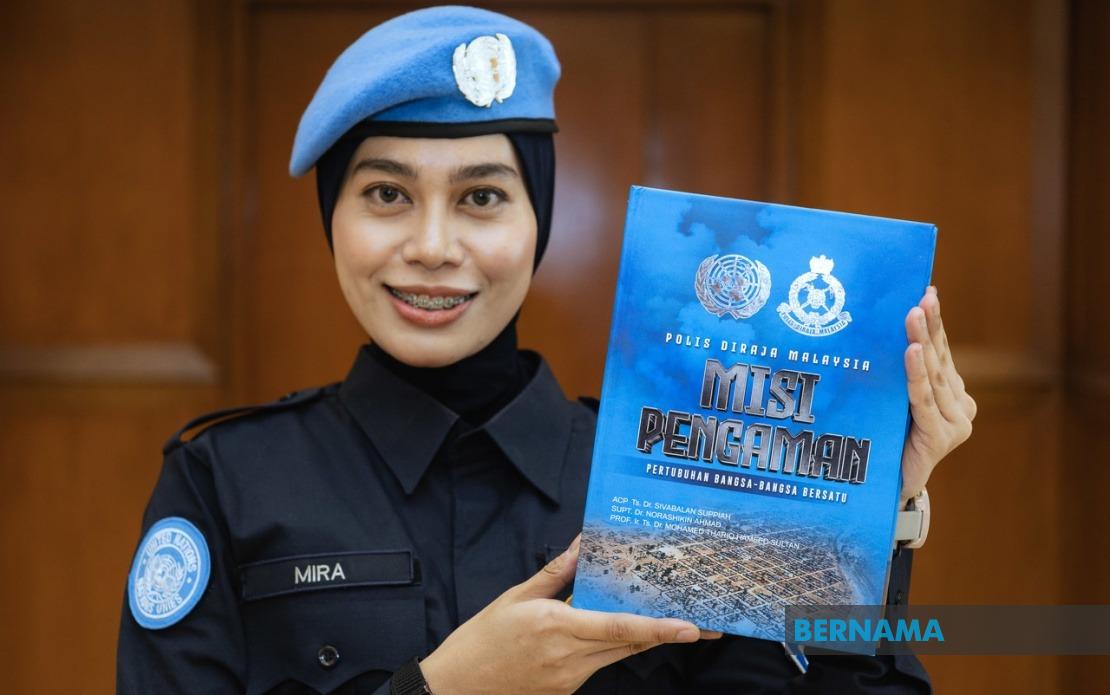
Malaysia's police force took centre stage in Kuala Lumpur this week with the formal launch of a sweeping historical account detailing the Royal Malaysia Police's participation in thirteen United Nations peacekeeping operations. The occasion marked more than a simple publication event; it represented an official recognition of how the PDRM has evolved from a domestically-focused constabulary into an internationally recognised security provider operating under the UN banner across conflict zones globally.
Inspector-General of Police Tan Sri Mohd Khaled Ismail characterised the 500-page volume as essential reading for understanding modern crisis management and strategic leadership in unpredictable environments. Speaking at the launch ceremony, he drew connections between the practical experiences documented within its pages and the leadership principles required to navigate zones of conflict, instability and severe logistical constraint. The book's significance extends beyond mere historical documentation, according to the IGP, encompassing a deeper commentary on how Malaysian personnel have embodied humanitarian values while maintaining operational effectiveness in some of the world's most challenging settings.
The transformation chronicled in the book reflects a fundamental shift in Malaysia's security doctrine over several decades. What began as a police apparatus designed primarily to counter domestic threats has matured into a professional force capable of deploying sophisticated policing techniques in multinational environments. This institutional evolution speaks to Malaysia's broader positioning within the international community, where the nation has sought to contribute meaningfully to global stability and peacekeeping efforts through carefully selected deployments. The PDRM's adaptation of methods and approaches to different cultural contexts and operational theatres demonstrates an institutional learning process that extends well beyond textbook theory.
The collaborative nature of the book's production underscores the importance Malaysian authorities place on knowledge sharing and institutional memory. Contributions came from UPM Press, the Yayasan Generasi Malaysia and the National Board for Book Development, bringing together academia, civil society and government institutions in a joint endeavour to preserve and communicate important national experiences. This multi-stakeholder approach reflects contemporary thinking about how security institutions should engage with broader society to build understanding and document lessons learned from complex international operations.
According to Mohd Khaled, the practical frameworks outlined throughout the chapters demonstrate the effectiveness of Malaysia's 'Acuan Kepolisian Watan', or national policing model, when applied internationally. The accounts show how cross-cultural cooperation and decisive decision-making translate into concrete results even when resources are limited and circumstances are fluid. By positioning these experiences within a broader narrative of Malaysia's policing evolution, the book effectively argues that Malaysian standards and operational practices have earned recognition and respect in the international sphere, positioning the nation as a credible contributor to global peacekeeping architecture.
A critical dimension of the PDRM's UN involvement, as highlighted during the launch, concerns the human dimension of peacekeeping work. Rather than viewing security operations purely through a lens of physical protection and tactical effectiveness, the book frames the PDRM's missions within a humanitarian context emphasising dignity, hope and the fundamental rights of affected populations. This framing aligns the force's international work with Malaysia MADANI, the government's broader development agenda centred on human-centric governance and inclusive progress. Such positioning helps situate security operations within a wider narrative of national values and development aspirations.
The recognition bestowed upon the PDRM by ASEAN Records during the launch ceremony carried particular significance for regional observers. The notation that Malaysian police have deployed the largest national contingent to any host country across the complete series of UN missions represents a quantifiable measure of Malaysia's commitment to international peacekeeping. Such comparative metrics matter within ASEAN diplomacy and broader international relations, where contribution levels to multilateral operations inform perceptions of a nation's reliability and capacity as a responsible stakeholder in global governance structures.
For Malaysian readers and regional observers, the book's emergence reflects growing recognition that security institutions contribute to national development and international standing in ways extending far beyond traditional law enforcement. The PDRM's UN experiences represent investments in institutional capacity, diplomatic relationships and soft power that complement Malaysia's broader foreign policy objectives. By documenting these experiences comprehensively, the force creates a foundation for institutional continuity and institutional learning that benefits future generations of personnel.
The intellectual property created through these peacekeeping experiences holds value extending into Malaysia's strategic competition for influence and respect within ASEAN and the wider Indo-Pacific region. Nations that can point to extensive practical experience in complex multilateral security operations gain credibility in discussions about regional architecture, conflict resolution and stability mechanisms. Malaysia's documented involvement in thirteen separate UN operations positions the nation as a serious participant in international security governance, despite the country's relatively modest military footprint compared to certain regional peers.
Looking forward, the book's publication may catalyse deeper engagement between the PDRM and academic institutions interested in studying peacekeeping operations, crisis management and institutional adaptation. The 500 pages of documented experience provide raw material for researchers, policymakers and security professionals seeking to understand how professional police forces operate effectively in unfamiliar and challenging circumstances. Such knowledge transfer strengthens Malaysia's position as a contributor to international security thinking and practice, not merely as a troop contributor but as an institution capable of generating insights applicable across diverse operational contexts worldwide.

