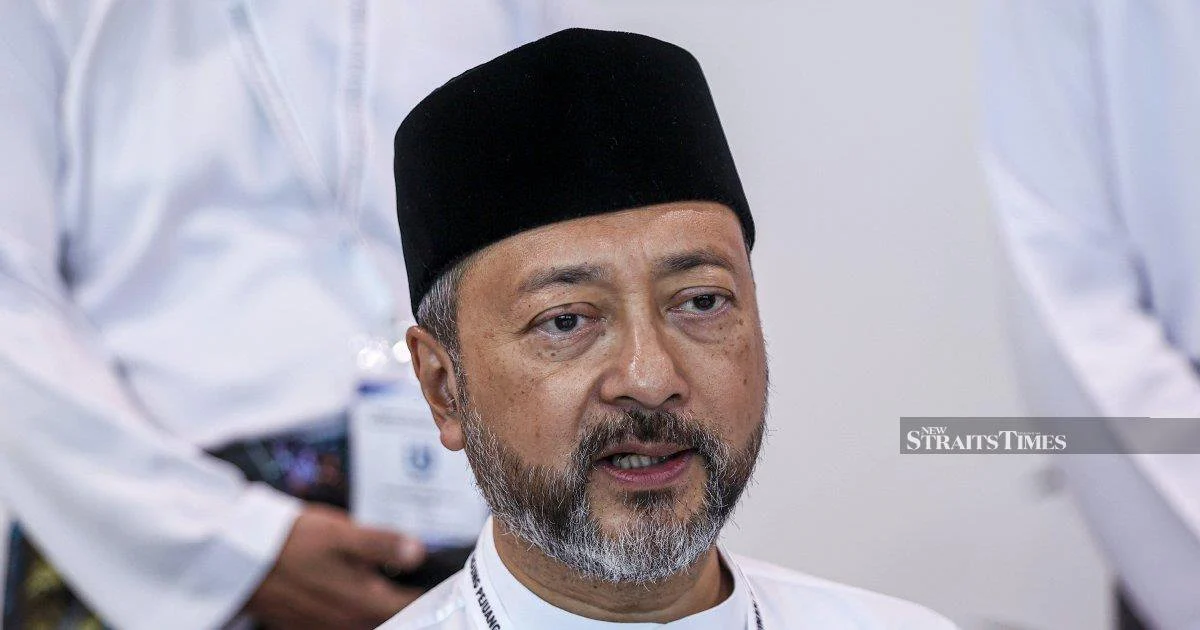
Parti Pejuang Tanah Air's formal entry into Perikatan Nasional represents a pivotal moment in Malaysia's fractured political landscape, according to the party's president Datuk Seri Mukhriz Mahathir, who characterises the development as the first stage of a wider consolidation strategy. Speaking on the move, Mukhriz framed the coalition expansion not merely as an opportunistic alliance but as a deliberate effort to create stronger institutional arrangements capable of responding to pressing challenges confronting the nation.
The inclusion of Pejuang broadens Perikatan Nasional's membership base and signals an ongoing realignment within Malaysia's opposition and anti-establishment political sphere. Since its founding in 2020 following the collapse of the Pakatan Harapan government, Perikatan Nasional has evolved from an informal coalition into a more structured entity, with successive party admissions reflecting deepening cooperation among disparate political actors. Mukhriz's remarks suggest this trajectory will continue, with further consolidation efforts anticipated as various parties assess their positions within the broader competitive landscape.
The timing of Pejuang's accession carries particular significance given Malaysia's ongoing political instability and the persistent challenge of governance. Over the past several years, the country has experienced multiple changes in federal administration, repeated ministerial reshuffles, and recurring disputes over constitutional interpretation and executive authority. These conditions have fuelled public frustration and highlighted the costs of chronic political fragmentation. By moving to strengthen internal unity within opposition or alternative political coalitions, parties like Pejuang are responding to implicit pressure from voters and institutional stakeholders to create more stable, coherent governing alternatives.
Pejuang itself has occupied an unconventional position in Malaysian politics since its establishment. Formed by Mahathir Mohamad and led by his son Mukhriz, the party emerged partly as a vehicle for expressing grievances within the Bersatu orbit and partly as an attempt to reposition Mahathir's political legacy after his departure from Bersatu. Despite intermittent high-profile activity, however, the party has struggled to establish deep organisational roots or achieve substantial electoral success. Its entry into Perikatan Nasional thus represents both a strategic repositioning and a pragmatic acknowledgment that remaining isolated carries inherent disadvantages in Malaysia's electoral system.
Perikatan Nasional itself has evolved considerably since its formation. Initially anchored by Parti Islam Se-Malaysia (PAS) and Bersatu, the coalition expanded in 2022 to include Gabungan Rakyat Sabah (GRS) and Progresive Democratic Party (WARISAN) in East Malaysia. The coalition has functioned variously as a governing coalition, opposition grouping, and informal alliance depending on shifting parliamentary configurations and political circumstances. This flexibility has been simultaneously a strength, enabling adaptation to changing circumstances, and a weakness, creating perceptions of unprincipled opportunism. The Pejuang accession must be understood within this context of ongoing coalition engineering.
For Malaysian observers, the development underscores several important considerations about the state of the political system. First, it reinforces the reality that Malaysia's major political coalitions—Perikatan Nasional, Pakatan Harapan, and various independent configurations—remain porous and subject to regular reconfiguration. Mergers, admissions, and exits among constituent parties continue reshaping these groupings with notable frequency. Second, the move reflects persistent uncertainty about which coalition or configuration might represent a credible alternative government or executive arrangement. Rather than gravitating toward one clearly dominant opposition bloc capable of presenting a unified governing platform, Malaysia's fractious opposition continues splintering into multiple competing entities, each seeking advantageous positioning.
Mukhriz's articulation of the rationale focuses on addressing national challenges, suggesting that Pejuang's decision reflects substantive policy considerations rather than naked power-seeking. The party has positioned itself as concerned with governance quality, institutional integrity, and addressing economic inequality. Whether these commitments prove sufficient to generate sustained membership growth and electoral competitiveness remains uncertain. Perikatan Nasional similarly emphasises alternative approaches to critical issues, though specific policy differentiation from other coalitions sometimes proves elusive in practise.
The implications for Malaysian governance remain complex and contingent on subsequent developments. Stronger, more unified political coalitions could theoretically improve policy coherence and executive stability. Conversely, coalitions constructed primarily through serial admissions of small parties without corresponding organisational integration may prove fragile and susceptible to renewed fragmentation. The quality of governance depends not merely on coalition size but on institutional cohesion, programmatic clarity, and leadership capacity—factors not guaranteed by formal structural changes.
For Southeast Asian political observers more broadly, Malaysia's ongoing coalition dynamics illustrate persistent challenges in managing democratic competition across ethnically and religiously diverse societies. The region's various democracies continue grappling with questions of power-sharing, representation, and institutional stability. Malaysian political configurations, while distinctive in their specifics, reflect broader regional patterns of coalition volatility and the perennial search for durable governing arrangements.
The coming months will test whether Pejuang's Perikatan Nasional membership catalyses the broader political consolidation Mukhriz envisions or represents merely another incremental adjustment in Malaysia's perpetually shifting political terrain. The success of this effort will depend substantially on whether constituent parties develop genuine policy alignment and disciplined organisational coordination, or whether competing leadership ambitions and divergent ideological orientations prove ultimately divisive. Malaysia's political future remains open and contested, shaped by ongoing strategic choices made by parties, politicians, and voting publics navigating complex democratic and constitutional terrain.