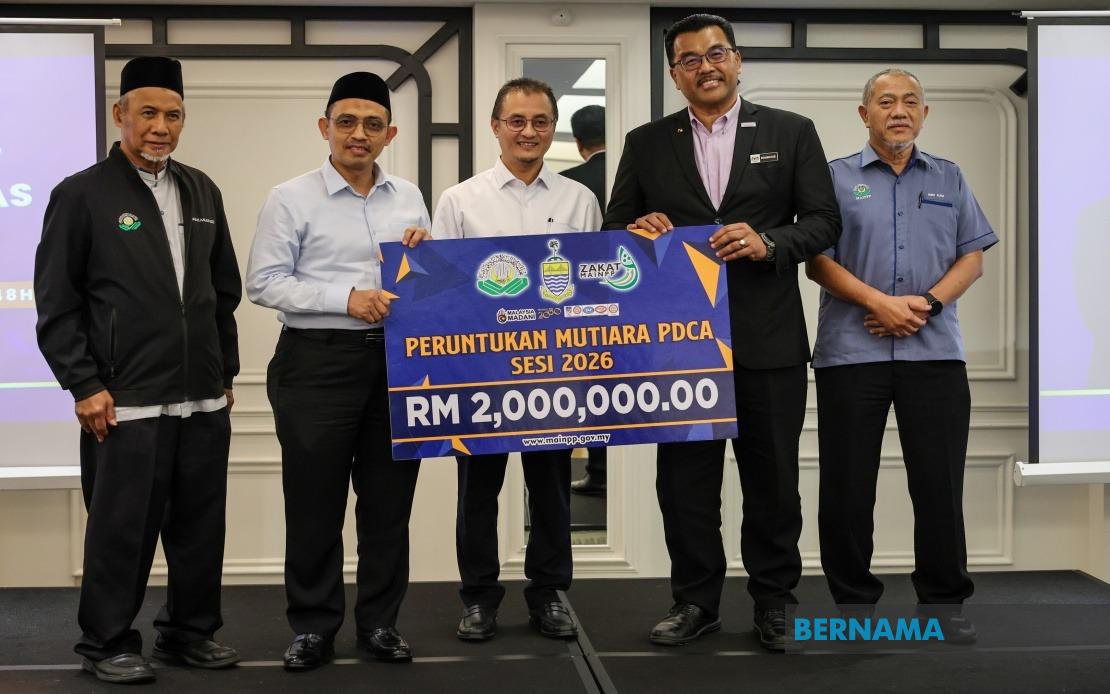
The Penang State Islamic Religious Council (MAINPP) is channelling RM2 million into its flagship academic support initiative this year, extending enhanced tuition and learning resources to more than seven thousand Bumiputera pupils and students across the state. Datuk Dr Mohamad Abdul Hamid, the state's Deputy Chief Minister and MAINPP president, unveiled the commitment at a coordination briefing in Kepala Batas, signalling the continuation of a two-decade effort to narrow educational gaps among disadvantaged students in one of Malaysia's most developed states.
The Mutiara Didik Cemerlang Akademik (MPDCA) programme, established in 2006, represents a collaborative model spanning multiple government agencies and the state education department. This year's iteration involves 698 coordinating teachers deployed across 71 primary schools and 38 secondary schools throughout Penang. The funding supports structured tuition classes, customised learning materials, academic seminars, and examination preparation workshops designed to strengthen foundational and examination skills.
For primary students, the initiative concentrates on four core subjects—Bahasa Melayu, English, Mathematics and Science—reflecting the critical role these fundamentals play in subsequent academic progression. Upper secondary students participating in SPM preparation gain access to thirteen subjects including sciences, mathematics, languages, and for those enrolled in religious schools, specialised Islamic curriculum components. This differentiated approach acknowledges varying educational pathways while maintaining rigorous academic standards across both secular and religious educational institutions.
Mohamad's presentation of the RM2 million allocation to the Penang State Education Department represents tangible state commitment amid broader economic pressures on household budgets. For families with limited resources, private tuition remains financially inaccessible, creating achievement disparities that persist into tertiary education. By providing free, professionally coordinated academic support, MAINPP addresses this structural disadvantage while building human capital within Penang's Bumiputera community.
Educators directly involved in the programme have documented measurable improvements in student engagement and performance. Hartina Arjan, a Bahasa Melayu instructor at Sekolah Kebangsaan Permai Indah, emphasises how systematically developed learning modules enable students from varied academic backgrounds to develop proficiency through focused skill-building in speaking, reading and writing. Similarly, Sadiah Roslan at Sekolah Rendah Islam Al-Masriyah Halimatun in Bukit Mertajam notes that interactive, quiz-based activities have substantially increased classroom participation rates, particularly among students from economically disadvantaged households who would otherwise lack access to supplementary instruction.
The MPDCA initiative operates within a significantly broader financial ecosystem supporting Muslim educational advancement in Penang. Beyond the RM2 million allocated to tuition support, MAINPP is dedicating RM22.36 million to tertiary education bursaries, RM6.3 million to early higher education entry schemes, RM3 million to primary school assistance, and RM3 million to school uniform provision. This RM36.66 million aggregate annual investment underscores institutional recognition that educational access barriers operate across multiple levels—from primary registration through university completion.
The programme's longevity since 2006 provides meaningful data on effectiveness. Internal education department records indicate consistent academic improvements among participating students, though comprehensive comparative analysis against control groups remains undocumented in available public assessments. Nevertheless, teacher testimony and sustained government funding across three administrations suggest genuine perceived impact and political commitment to the model's continuation.
From a Malaysian policy perspective, MAINPP's approach offers instructive lessons for nationwide educational equity discussions. Penang's reliance on religious council infrastructure and coordination with state education authorities creates institutional redundancy while leveraging established community networks. This structure differs markedly from centrally administered federal programmes, potentially explaining both MPDCA's longevity and occasional implementation variations across participating schools.
The programme's emphasis on examination technique and subject-specific skill development reflects Malaysia's assessment-driven educational culture. Critics might argue this focus prioritises credential attainment over deeper conceptual mastery, yet within Malaysia's competitive tertiary entrance framework, examination performance remains a primary determinant of educational trajectory. MPDCA essentially acknowledges this reality while mitigating disadvantage.
For Southeast Asian context, Penang's investment is noteworthy given regional disparities in public education funding. The state's relative wealth enables sustained commitment to supplementary academic support—a luxury many provincial areas across the region cannot sustain. Yet the structural design—leveraging religious institutions, coordinating multiple government agencies, recruiting teacher volunteers—remains potentially transferable to resource-constrained educational systems seeking cost-effective equity interventions.
The 2026 programme expansion encompassing 7,403 students represents meaningful scale, though it serves perhaps fifteen to twenty percent of Penang's eligible Bumiputera student population. This ratio suggests selective participation, raising questions about targeting mechanisms and equitable access across geographic zones within the state. Rural Penang's participation rates merit examination against urban concentrations.
Looking forward, programme sustainability depends on consistent financial commitment as MAINPP navigates competing demands on limited institutional resources. Demographic shifts, changing educational needs, and evolving examination frameworks will require periodic programme recalibration. The 2006 founding date means the initiative has survived multiple state administrations and education department restructurings—a testament to durable political consensus around Bumiputera educational advancement within Penang's governance landscape.

