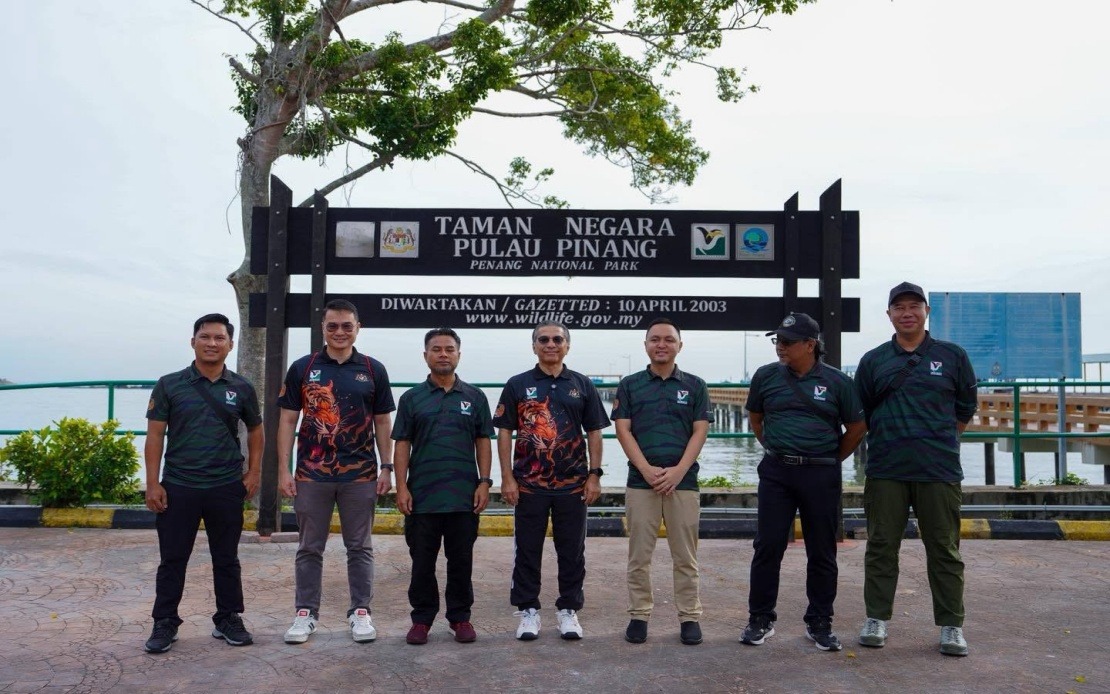
The ecosystems within Penang National Park represent some of Malaysia's most ecologically significant landscapes, combining pristine forests, coastal environments, and distinctive aquatic systems that support diverse wildlife populations. Deputy Minister of Natural Resources and Environmental Sustainability Syed Ibrahim Syed Noh recently conducted an inspection of conservation operations across the park's Teluk Bahang location, highlighting how Malaysia is evolving its approach to environmental stewardship by positioning communities as essential partners rather than mere observers in preservation efforts.
The visit underscored a fundamental shift in conservation philosophy that extends beyond traditional fortress approaches to protecting nature. Syed Ibrahim emphasized that safeguarding biodiversity cannot succeed through isolation of natural areas from public participation. Instead, effective preservation requires building bridges between government agencies, environmental institutions, and local communities who develop genuine investment in the natural world around them. This integrated model recognizes that sustainable conservation ultimately depends on widespread public understanding and commitment to environmental values.
Penang National Park's remarkable ecological features make it an ideal demonstration site for this comprehensive strategy. The park encompasses forest ecosystems that provide habitat corridors for native wildlife, coastal zones supporting marine and terrestrial species interactions, and critically, a meromictic lake—a rare body of water with distinct layers that do not mix, creating unique conditions for specialized organisms. The interconnection of these varied habitats illustrates how biodiversity depends on maintaining ecological integrity across different environments rather than protecting individual species in isolation.
During his tour of Kerachut Beach, the deputy minister visited the Turtle Conservation Centre operated by the Department of Fisheries Malaysia, where ongoing efforts protect Green Turtles and Olive Ridley Turtles. These species face mounting pressures from habitat degradation, fishing activities, and climate-related changes affecting nesting and feeding grounds throughout Southeast Asian waters. The centre's work demonstrates how targeted species protection must complement broader habitat conservation to achieve meaningful results in reversing population declines.
Educational initiatives emerged as a central theme throughout the inspection. The deputy minister observed interactive learning programs at Entopia Penang that enable visitors to engage with biodiversity concepts through direct experience rather than passive information consumption. Syed Ibrahim identified such educational approaches as particularly vital for developing environmental consciousness among younger generations who will inherit the responsibility for Malaysia's natural heritage. When people directly experience the wonder and complexity of ecosystems, they develop personal motivation for conservation that persists beyond formal environmental messaging.
Responsibly managed ecotourism represents another critical mechanism for aligning community interests with conservation objectives. The deputy minister articulated how tourism can function as an economic incentive for maintaining ecosystem health, channeling visitor interest and spending into communities neighboring protected areas. This approach addresses a persistent challenge in developing nations where local populations living adjacent to conservation zones may perceive nature protection as restricting their economic opportunities. When ecotourism generates genuine income benefits flowing to adjacent communities, support for conservation strengthens substantially.
The meromictic lake inspection highlighted the complexity of ecosystem management in Penang National Park. This unusual water body requires specialized monitoring and protection protocols because its stratified layers support organisms found nowhere else, representing irreplaceable biological resources. The interconnectedness of the park's various habitats means that impacts in one zone—whether pollution reaching coastal areas or forest degradation affecting water cycles—cascade through the entire system. Comprehensive conservation therefore demands integrated management across forests, wetlands, and marine components.
Syed Ibrahim's comments positioned the Natural Resources and Environmental Sustainability Ministry as committed to grounding conservation strategy in field realities rather than purely theoretical frameworks. This emphasis reflects recognition that policies developed without understanding on-the-ground conditions often prove ineffective or generate unintended consequences. Regular ministerial engagement with conservation sites and local stakeholders ensures policies remain responsive to evolving environmental challenges and emerging best practices.
The preservation of natural treasures carries profound implications for Malaysia's regional standing in environmental leadership. As Southeast Asian nations confront accelerating biodiversity loss and climate pressures, demonstrating effective conservation models becomes increasingly consequential. Penang National Park's comprehensive approach combining species-specific protection, habitat management, community engagement, and educational programming offers a template applicable to other Malaysian protected areas facing similar management challenges.
Looking forward, the success of Penang's conservation model depends on sustained institutional commitment and adequate resource allocation. Community participation cannot substitute for professional management, scientific research, and long-term funding security. The challenge involves maintaining public enthusiasm for conservation while ensuring the technical expertise and financial resources necessary for rigorous ecosystem management. This integration of grassroots engagement with professional conservation expertise represents the most promising path forward for protecting Malaysia's biological heritage.

