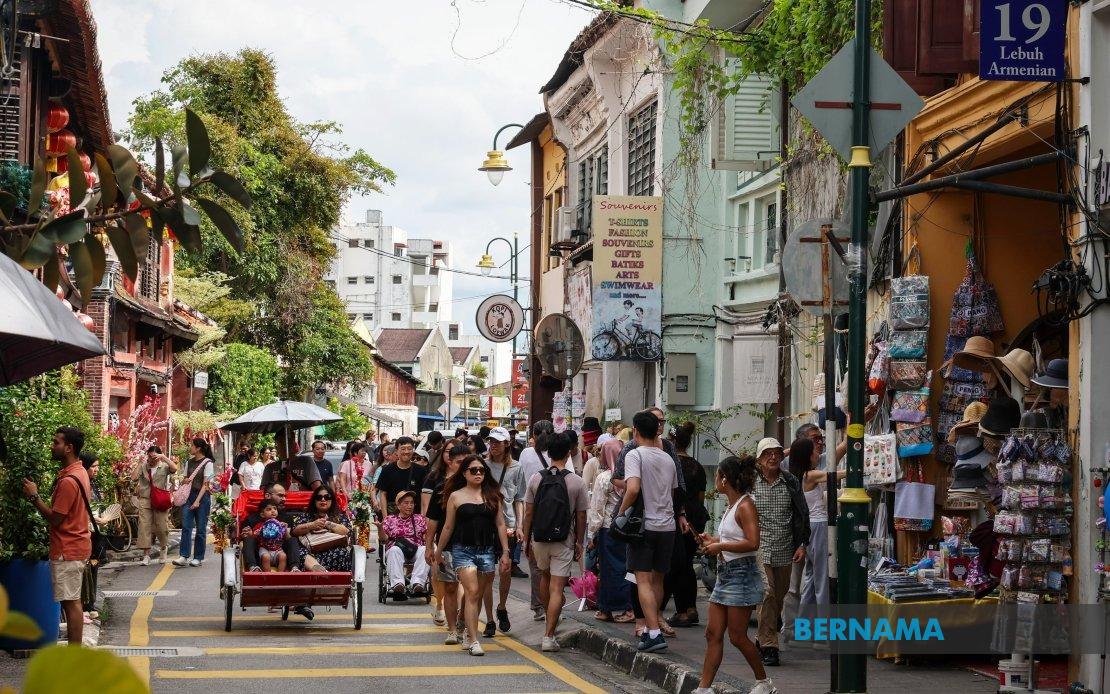
Penang has initiated a statewide review of heritage building safety standards after a dangerous structural failure in George Town's historic Armenian Street left two tourists injured when wooden beams and concrete debris collapsed from a shophouse. The incident, attributed to termite damage during preliminary investigation, has prompted state officials to establish a systematic approach to identifying and addressing safety risks across the state's aging stock of conservation buildings.
The two victims, identified as 66-year-old Mohamad Ammtar and 55-year-old Fatimah, were both Sri Lankan nationals visiting the UNESCO World Heritage site. The male tourist has since been discharged from Penang Hospital following treatment, while Fatimah remains under medical care and is scheduled for a computerised tomography scan to evaluate the full extent of her injuries. The incident underscores the vulnerability of George Town's built heritage to structural degradation, a concern shared across Southeast Asia's heritage-listed cities where colonial-era buildings face mounting maintenance challenges.
Jason H'ng Mooi Lye, chairman of Penang's Local Government and Town and Country Planning Committee, announced that the state government would partner with the National Heritage Department to engage an independent engineer for a comprehensive structural study. This assessment aims to systematically catalogue heritage buildings across Penang that present safety hazards or are deteriorating beyond acceptable standards. The appointment of an external professional, rather than relying on internal assessments, signals an attempt by state authorities to ensure objective and credible evaluation of conditions across dozens of protected buildings, many dating back to the nineteenth century.
Once the independent study concludes, H'ng indicated that the Penang Island City Council will have the authority to issue formal notices to property owners requiring restoration and safety remediation work. This regulatory approach balances heritage conservation principles with public liability concerns, though enforcement will depend on owners' financial capacity and willingness to undertake often expensive restoration. The policy framework reflects broader regional tension between preserving architectural heritage and ensuring contemporary safety standards in structures never designed for modern usage patterns or building codes.
H'ng emphasised that heritage preservation cannot proceed at the expense of public safety, a principle that carries particular weight given the steady stream of domestic and international tourists visiting George Town. The statement suggests official acknowledgment that previous conservation efforts may have prioritised aesthetic authenticity over structural integrity. This philosophical reorientation has practical implications for how future restoration projects are approved and monitored within the state's heritage management framework.
The committee chairman noted that conservation protocols traditionally require restoration work to maintain original architectural features and construction methods. However, H'ng advocated for greater flexibility in material selection when original materials—particularly timber prone to termite infestation and decay in Malaysia's tropical climate—no longer provide adequate safety margins. This pragmatic approach acknowledges that strict adherence to original materials in a humid equatorial environment creates unnecessary risk, particularly for buildings hosting tourists or serving commercial functions.
State Tourism and Creative Economy Committee chairman Wong Hon Wai has instructed both George Town World Heritage Incorporated and the Penang Island City Council to circulate safety advisories to heritage property owners. These communications will alert owners to potential vulnerabilities and encourage voluntary remedial action ahead of formal notices. The initiative appears designed to encourage proactive rather than reactive responses to deterioration, though compliance will vary depending on owner resources and motivation.
The Armenian Street incident arrives amid broader regional concerns about heritage building maintenance. Other Southeast Asian cities with extensive colonial heritage, including those in Indonesia, Thailand, and Vietnam, face similar challenges maintaining aging structures. The termite damage diagnosis in this instance reflects a persistent problem in tropical climates where traditional timber components require intensive monitoring and intervention. Malaysia's experience managing this issue could offer insights for neighbouring heritage preservation programmes.
Penang's approach suggests a three-tiered response: first, comprehensive independent assessment; second, owner notification and remediation requirements; and third, ongoing monitoring through local authorities. This structure acknowledges that heritage conservation responsibility involves state oversight, professional expertise, and private property owner investment. The system's effectiveness will ultimately depend on funding availability for owners facing substantial restoration costs and enforcement consistency from local authorities when compliance proves incomplete.
The broader implications for Malaysia's heritage sector are significant. George Town's status as a UNESCO World Heritage site means any safety failures generate international scrutiny and potential reputational damage. Other Malaysian heritage districts—including Malacca's historic core and Kuala Lumpur's colonial quarter—face similar pressures to balance conservation with contemporary standards. Penang's response may establish benchmarks for how other states approach heritage building audits and safety management across the country's protected architectural stock.

