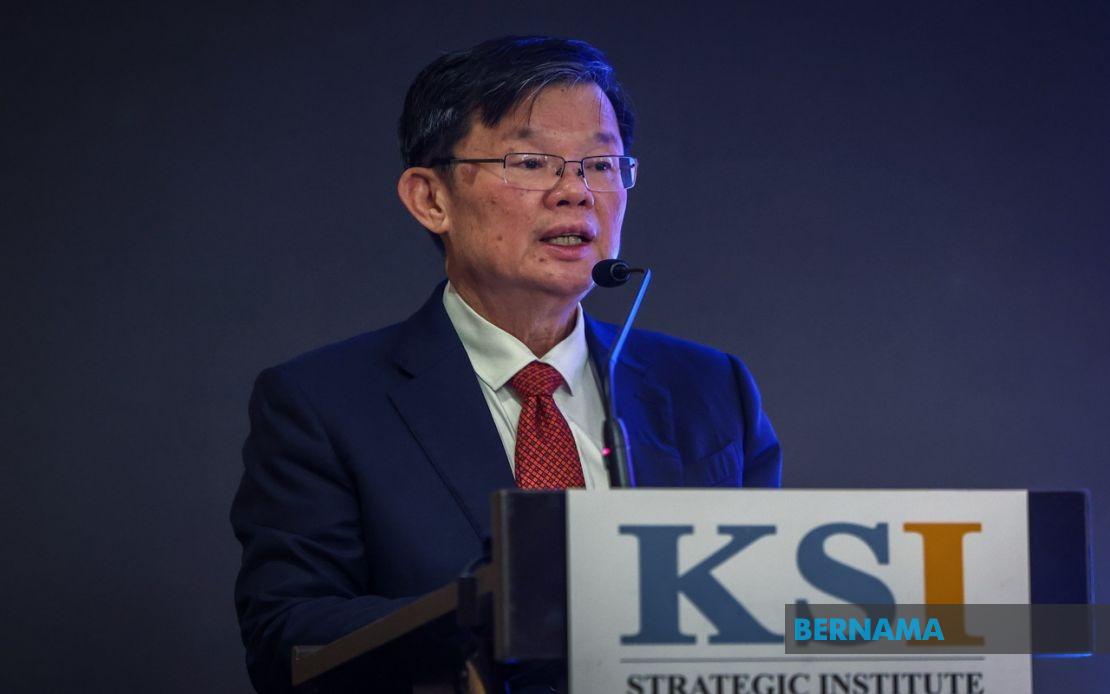
Penang's ruling Pakatan Harapan coalition intends to boost the number of women candidates contesting in the next state election, though party chairman and Chief Minister Chow Kon Yeow acknowledged that locating a sufficient pool of suitable and motivated candidates remains a persistent challenge. Speaking at the World Women Economic and Business Summit 2026 in George Town on June 15, Chow outlined the party's aspirations while being candid about the practical constraints that limit progress toward greater female representation in electoral politics.
The 30 per cent women participation benchmark, which Penang PH continues to champion as a core political objective, has become something of a rallying cry across Malaysian politics since its introduction in 2009. Yet the gap between aspiration and reality remains stark. Nationwide, women account for merely 13.5 per cent of Members of Parliament and 12 per cent of state assemblypersons, a sobering reminder that nearly 15 years after the target was established, Malaysia's political landscape remains predominantly male-dominated. Penang, as a more progressive state within the federation, has positioned itself as a pace-setter on this issue, yet even here the path forward proves complicated.
Chow's remarks reveal an often-overlooked tension within electoral politics: the distinction between institutional willingness and grassroots readiness. Political parties cannot simply appoint female candidates into existence. The bottleneck appears upstream, in the recruitment and encouragement phase where potential candidates decide whether to enter a space fraught with unique pressures. While women have demonstrated substantial capability and advancement in education, business, engineering, and public service sectors, the translation of professional success into political candidacy involves a different calculus entirely. The pressures and challenges specific to political participation—heightened scrutiny, security concerns, work-life balance complexities, and entrenched party dynamics—apparently deter many qualified women from putting their names forward.
This recognition positions the challenge not as a shortage of capable women but rather as a systemic issue embedded within how political parties operate and how politics itself functions as a domain. Chow suggested that parties should institutionalise the 30 per cent target within their formal candidate selection procedures, moving beyond rhetorical commitment to structural mechanisms that would guarantee consideration and evaluation of female aspirants. Such an approach would create enforceable benchmarks rather than aspirational targets left to chance and individual initiative.
Beyond candidate selection, Chow advocated for complementary reforms across party structures. Equal representation of women on decision-making committees would signal genuine power-sharing rather than token inclusion. Additionally, strengthening access to mentoring and resources for emerging female leaders could help bridge the confidence and experience gap that often undermines the pool of ready candidates. These interventions address not the absence of potential but the absence of supportive infrastructure that enables that potential to translate into political activity.
The Penang Chief Minister's candid acknowledgement of these difficulties reflects a maturation in how the issue is being discussed. Rather than proclaiming success or blaming women for lack of ambition, the conversation now centres on systemic and structural barriers. This framing opens space for concrete remedies: revised recruitment strategies, mentorship programmes, resource allocation, and internal party culture shifts that acknowledge and address the specific challenges women face in political spaces.
For Malaysian readers and regional observers, Penang's experience illustrates a broader pattern across Southeast Asia. Even in jurisdictions where progressive governance is otherwise evident, achieving gender balance in elected office proves stubbornly difficult. The region's most advanced economies have not solved this puzzle, suggesting that solutions require more than simply waiting for social progress to generate qualified candidates. Active institutional intervention is necessary, and Penang's willingness to articulate the problem provides a template for other states and countries wrestling with similar disparities.
The implications extend beyond symbolic representation. Women's participation in legislatures influences policy priorities, resource allocation, and the quality of democratic deliberation itself. A legislative body that excludes half the population's perspectives inevitably produces less comprehensive governance. Moreover, the lived experience of women—whether regarding childcare provision, workplace protections, or safety concerns—receives inadequate attention when women are underrepresented in decision-making forums. Penang's commitment to the 30 per cent target thus reflects recognition that inclusive democracy produces better outcomes.
Moving forward, the real test will lie in whether Penang PH translates these acknowledgements into actionable reforms. Simply repeating the 30 per cent aspiration has proven insufficient over the past 15 years. What Chow's statements suggest is readiness to adopt a more comprehensive approach: mandating targets in selection procedures, building institutional supports, and acknowledging that women's political underrepresentation reflects structural constraints rather than individual deficiencies. Whether other Malaysian states and the federal government adopt similar frameworks will determine whether the 2009 target eventually transitions from perpetual aspiration to achieved reality.