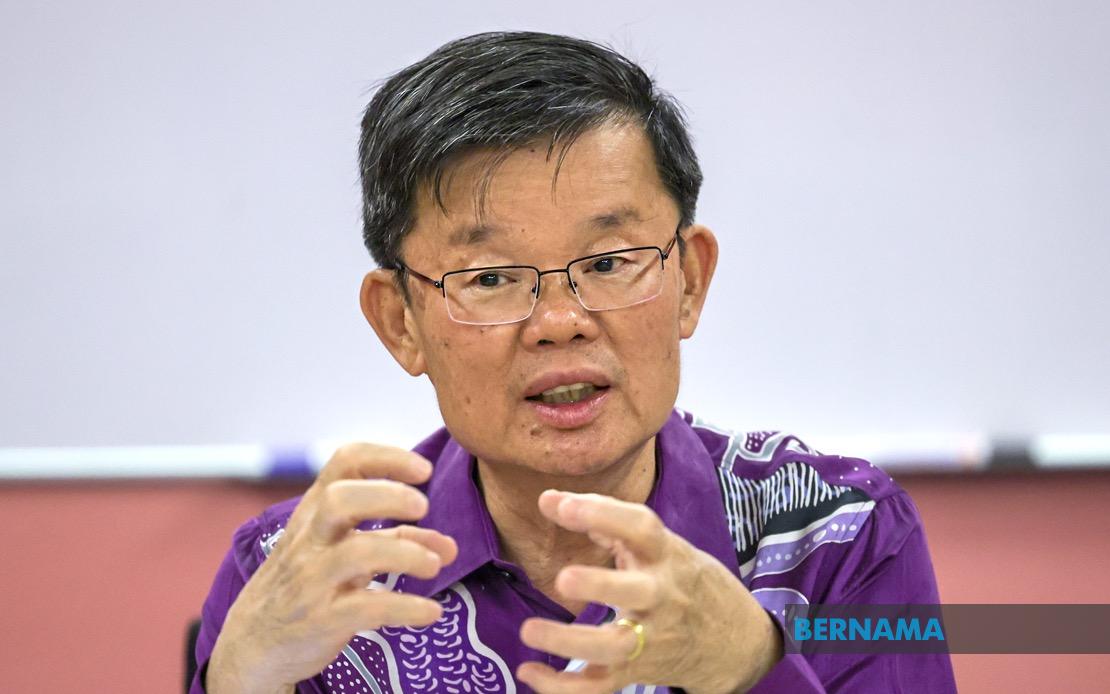
Penang's ruling Pakatan Harapan coalition has confirmed it will keep the Barisan Nasional state executive councillor within its cabinet through the next general election, according to a decision announced by PH chairman and Chief Minister Chow Kon Yeow at a press conference in George Town on August 8. The commitment reflects the coalition's determination to honour the Unity Government arrangement forged during the 2023 state election, which fundamentally reshaped Penang's political landscape and created an unusual partnership between two traditionally opposing blocs.
The retained executive councillor is Datuk Rashidi Zinol, who currently chairs the State Rural Development, Agrotechnology and Food Security Committee. His continued presence in the Penang cabinet represents a calculated political choice by PH leadership to maintain stability and demonstrate good faith in the cross-party cooperation model that has defined Malaysian politics since the 2023 polls. Chow framed the decision as part of a broader strategy to strengthen inter-party ties among PH's component parties and accelerate the reform agenda that underpins the coalition's political mission.
For Malaysian observers tracking the evolution of coalition politics, the Penang decision carries significant implications. The 2023 state election delivered a decisive 29 of 40 seats to the Unity Government, with DAP commanding all 19 contested seats, PKR securing seven, Amanah claiming one, and BN capturing two. This result cemented PH's dominance in one of Malaysia's most economically important states while simultaneously offering BN a lifeline through ministerial representation. The choice to maintain this arrangement despite PH's overwhelming electoral strength suggests pragmatism rather than ideological surrender—a recognition that governing stability sometimes requires sharing power even when numerical advantage permits exclusion.
Chow's statement comes as the coalition absorbs lessons from other recent state elections, particularly the contested results in Johor and Negeri Sembilan. The Penang leadership has undertaken systematic analysis of electoral dynamics across all 40 state seats, examining performance metrics from multiple angles to identify vulnerabilities and opportunities ahead of GE16. This methodical approach reflects mature political calculation, acknowledging that yesterday's electoral victories do not guarantee tomorrow's outcomes and that complacency represents the greatest threat to incumbent coalitions.
The coalition's strategy also emphasises narrative refinement and technological engagement with voters. PH intends to strengthen its political messaging by candidly addressing areas where performance has fallen short of expectations, moving beyond defensive postures to engage voters with greater honesty about governance challenges. Simultaneously, the coalition plans to deepen its digital presence, recognising that modern electoral campaigns increasingly pivot on social media penetration, online content distribution, and real-time voter engagement rather than traditional grassroots canvassing alone.
Particularly noteworthy is the coalition's explicit focus on cultivating relationships with the Undi18 voting bloc—Malaysian citizens aged 18 to 21 who can vote for the first time. This demographic, newly enfranchised through the lowering of voting age requirements, represents a substantial electoral constituency whose political preferences remain largely unformed and contestable. Early engagement with this cohort, through platforms and messaging tailored to their communication preferences and policy priorities, represents strategic foundation-building for electoral success in an increasingly youth-conscious political environment.
Chow articulated confidence in the coalition's fundamental strength, pointing to the Penang state administration's demonstrated stability, institutional integrity, and measurable achievements in economic growth, investment attraction, employment creation, and policy implementation benefiting ordinary citizens. These material accomplishments provide tangible evidence of governance competence that extends beyond political rhetoric and speaks to PH's capacity to deliver concrete improvements in residents' lives. The emphasis on stability proves particularly important in Southeast Asia, where volatile governance creates investor uncertainty and economic volatility that directly impacts ordinary workers and families.
Yet the Penang CM also issued a calibrated warning about electoral overconfidence. He observed that public perceptions and sentiments frequently shift more rapidly than underlying facts change, suggesting that even strong administrative records cannot guarantee electoral success if political communication fails to effectively translate achievements into voter understanding and appreciation. This observation reflects hardened political wisdom gained through multiple electoral cycles and underscores the ongoing tension between what governments actually accomplish and how voters perceive that performance through media filters, social networks, and personal experience.
The decision to retain BN representation carries broader implications for Malaysia's emerging model of multi-party governance. Rather than the winner-take-all approach that historically dominated Malaysian politics, the Unity Government framework institutionalises power-sharing, consensus-building, and inter-party negotiation as governing principles. For Penang, this model has delivered both substantive governance outcomes and political stability, suggesting that even political rivals can cooperate effectively when motivated by shared interest in administrative competence and economic performance.
Looking toward GE16, the Penang configuration offers a template that other PH-led states may emulate, or conversely, a cautionary tale about the costs of compromise. The coalition's commitment to maintaining the BN executive councillor signals that pragmatic governance architecture may prove more sustainable than ideological purity, particularly in Malaysia's plural society where regional political dynamics shift rapidly and unexpected electoral outcomes periodically reshape parliamentary mathematics. For Malaysian voters and analysts, Penang's experience illuminates how contemporary Malaysian politics increasingly demands flexibility, negotiation, and acceptance of power-sharing arrangements that would have seemed unthinkable in earlier decades.

