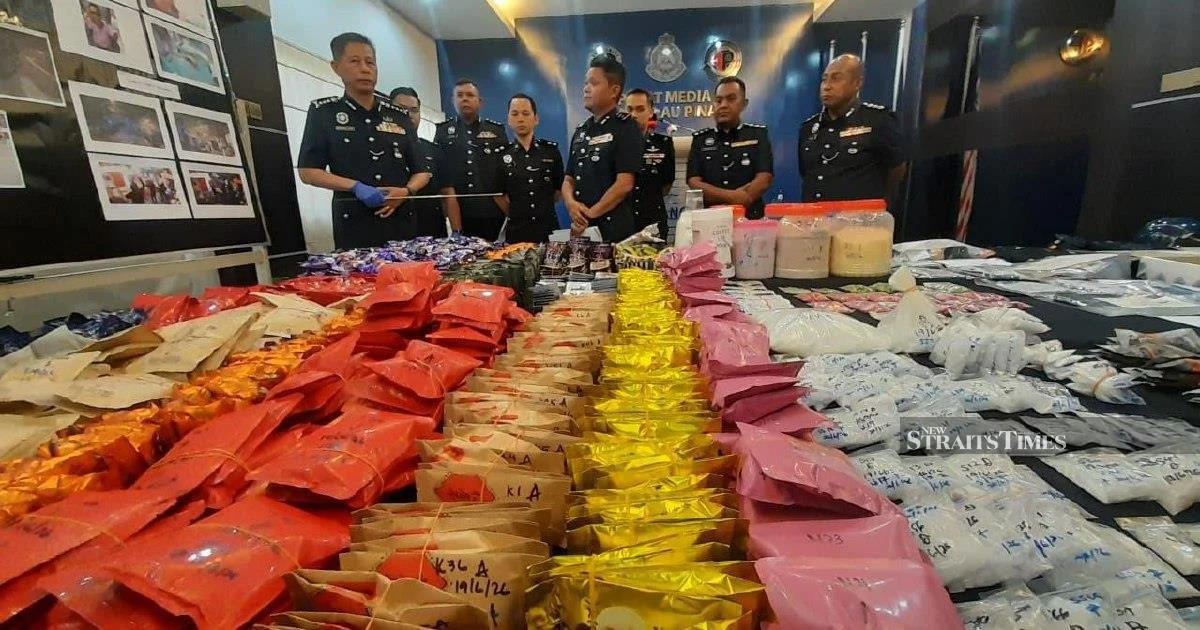
Authorities in Penang have dealt a substantial blow to organised drug trafficking in the state following the discovery and seizure of narcotics valued at RM9.7 million from a condominium unit in Butterworth. The operation, which culminated in the arrest of a romantic couple, has exposed what police describe as an active drug-processing and distribution facility operating within a residential building in the commercial heartland of the northern zone. The breakthrough represents one of the more significant drug busts recorded in the region this year, highlighting the persistent challenge posed by clandestine manufacturing operations embedded within urban residential spaces.
The investigative operation that led to the arrest required careful coordination between different police units tracking the movement of precursor chemicals and the distribution of finished product to street-level dealers across Penang and potentially beyond. Police identified the condominium as a focal point of suspicious activity following weeks of intelligence gathering, with observations of unusual visitor patterns and late-night movements suggesting something beyond ordinary residential occupation. The decision to move on the location came after officers had accumulated sufficient evidence to warrant immediate action and secure the premises before any contents could be destroyed or relocated.
The couple taken into custody are now facing serious charges related to drug manufacturing and trafficking, offences that carry substantial prison sentences under Malaysian law. Their apprehension removes two key operatives from the supply chain, though police investigators are actively pursuing other individuals believed to have been part of the broader distribution network. The fact that the operation was being conducted from within a residential condominium unit underscores the challenge facing law enforcement: drug manufacturers have become increasingly sophisticated in disguising their activities within ordinary urban environments where such operations can operate with minimal suspicion from neighbours or building management.
The confiscated drugs represent not merely a financial loss to traffickers but a significant quantity of narcotics that would have reached users throughout Penang and the surrounding regions. The street value assigned to the seizure—RM9.7 million—reflects the retail price these substances would have commanded once distributed through the street-level market. Breaking down this supply chain at the manufacturing and mid-level distribution stage prevents the drugs from filtering downward through multiple layers of dealers, thereby reducing overall availability within communities and potentially decreasing the harm associated with widespread substance abuse.
This bust arrives amid ongoing concerns about drug-related crime in Penang, an issue that has received heightened attention from state law enforcement leadership. The volume of narcotics seized suggests the operation had achieved meaningful scale, likely supplying multiple distribution networks rather than serving a purely local clientele. The establishment of such a facility within an urban residential setting reveals how trafficking organisations have adapted to enforcement pressures by operating from locations that blend seamlessly into normal city environments, avoiding the conspicuous rural or industrial settings that might attract immediate police attention.
For residents of condominium complexes and high-rise residential buildings throughout Malaysia, the discovery carries a cautionary message about the potential hidden activities occurring within their residential communities. Building management companies increasingly face pressure to implement stricter access controls and monitoring protocols, though distinguishing between legitimate visitors and those arriving for illicit purposes presents a genuine challenge. The operation at Butterworth demonstrates that vigilance and unusual observations—such as frequent short-duration visits, deliveries arriving at irregular hours, or chemical odours emanating from units—can form the basis of intelligence that leads to police action.
The investigation also touches on the supply of precursor chemicals needed for drug manufacturing, a critical vulnerability in the production chain. Police enforcement against precursor trafficking has emerged as a complementary strategy to disrupting finished product distribution, attempting to cut off manufacturing at its source by limiting access to the chemical inputs required for narcotics production. The Butterworth case likely involved the manufacture of methamphetamine or similar synthetic drugs, which require access to specific controlled precursor compounds increasingly subject to regulatory monitoring and trafficking prevention measures.
Regional implications of such operations deserve consideration, particularly given Penang's geographic position along major trafficking corridors connecting Thailand and Myanmar with southern Malaysian markets and Singapore. Clandestine laboratories in the state can supply not only local consumption but also serve as production hubs servicing demand across the southern region. The arrest of the operating couple and seizure of their product potentially disrupts multiple downstream distribution chains spanning different geographical markets, illustrating how single enforcement operations can have multiplicative effects across regional drug markets.
The Penang police commend the collaborative intelligence work that enabled the operation, suggesting coordination between district-level officers and specialised drug enforcement units. Such cases typically require sustained surveillance, informant development, and careful documentation of observed patterns before moving to arrest stage. The decision to execute the operation publicly and allow media coverage, including video documentation, reflects a law enforcement strategy emphasising public communication about enforcement success as a deterrent against other would-be traffickers and a reassurance to residents about police operational capacity.
Looking forward, this seizure represents a temporary disruption rather than an elimination of trafficking activity in the state. Manufacturers and distributors operate with understanding that enforcement losses are routine business costs, and existing supply networks will likely attempt to reconstitute their operations through other operatives and locations. The broader drug control challenge facing Malaysian authorities requires sustained investment in intelligence gathering, community reporting mechanisms, and international cooperation with neighbouring countries to disrupt trafficking at source rather than managing consequences at the retail level.