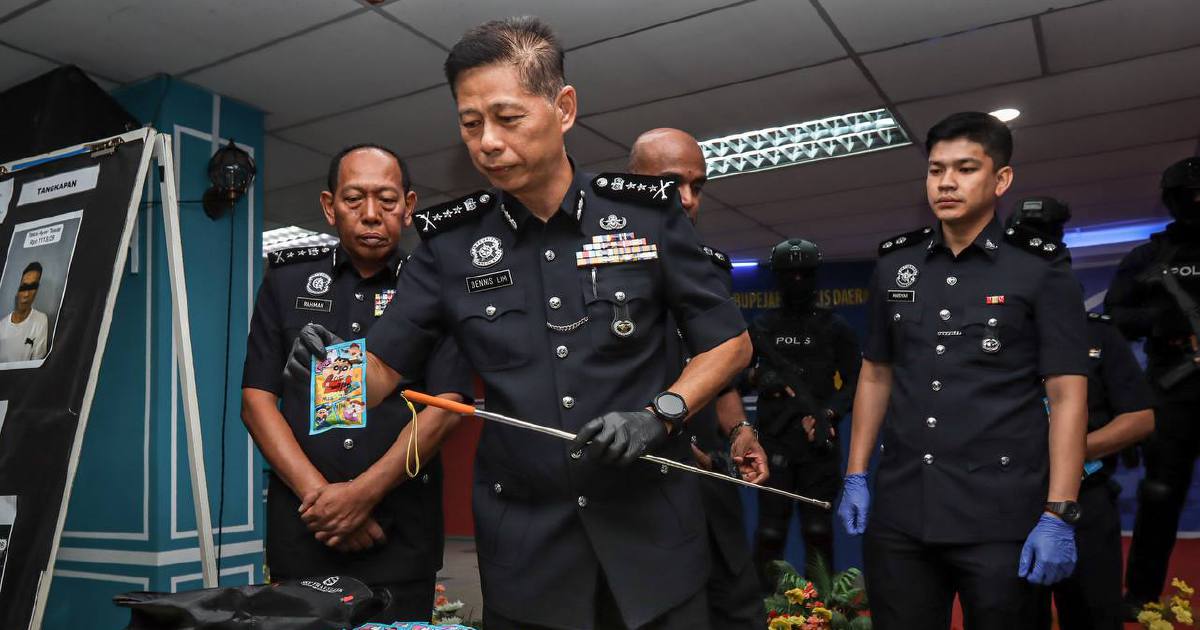
Penang police have dismantled another significant drug trafficking operation after recovering more than three kilograms of ecstasy during a targeted enforcement action at Teluk Air Tawar. The seizure, totalling 3.1kg of MDMA with an estimated street value of RM470,000, represents one of the state's notable drug interdictions in recent months and underscores ongoing efforts by law enforcement to disrupt the supply chains that feed recreational drug markets across northern Malaysia.
The operation, which unfolded on Sunday, resulted in the immediate arrest of one individual suspected of involvement in the distribution and trafficking of the controlled substance. Authorities have moved quickly to process the suspect through the criminal justice system, with investigations proceeding under relevant narcotics legislation that carries substantial penalties upon conviction. The successful interception of such a large quantity reflects improved intelligence gathering and coordination among Penang's drug enforcement units.
Ecstasy, chemically known as methylenedioxy-methamphetamine or MDMA, remains one of Southeast Asia's most problematic recreational drugs despite decades of prohibition efforts. The substance has pervasive appeal across major urban centres and entertainment districts throughout Malaysia, particularly among younger demographics attending nightclubs, music festivals, and private gatherings. The street price of RM470,000 for approximately three kilograms indicates the drug commands a significant markup as it moves through distribution networks, reflecting both scarcity created by enforcement actions and sustained demand in local markets.
The Teluk Air Tawar area, situated in Penang's western zone, has occasionally featured in police reports relating to drug-related activities. The targeting of this specific location suggests authorities had developed actionable intelligence pointing to trafficking activity in the neighbourhood, a pattern consistent with how Malaysian narcotics agencies prioritise their limited enforcement resources. Such operations typically follow months of surveillance, informant tips, or digital monitoring that eventually culminate in coordinated raids designed to maximise the probability of successful seizures and arrests.
Penang's strategic location along major transportation corridors linking Thailand, Malaysia's west coast, and international ports makes it an inevitable transit point and distribution hub for trafficking networks supplying drugs throughout the region. Illicit substances flowing through the state often originate from production facilities in Myanmar and Thailand before being repackaged and distributed to Malaysian cities including Kuala Lumpur, Selangor, and Johor. The comparatively large quantities sometimes intercepted in Penang suggest criminal organisations maintain significant inventory locally to service retail-level dealers operating across the peninsula.
The economic dimensions of this seizure warrant consideration beyond the headline figures. The RM470,000 valuation represents profit that will not reach criminal syndicates, nor will it fund further importation and distribution infrastructure. From a public health perspective, preventing this quantity from reaching end-users eliminates thousands of potential consumption incidents that might otherwise strain emergency medical services, generate psychiatric complications, or contribute to traffic accidents and workplace injuries. However, enforcement analysts recognise that single operations, however successful, produce limited long-term disruption unless complemented by sustained intelligence work dismantling the organisational structures behind trafficking.
Drug enforcement in Malaysia operates within a regulatory environment that carries among the world's most severe penalties for trafficking offences. Individuals convicted of possessing MDMA with intent to distribute face potential capital punishment in cases involving quantities exceeding four kilograms, while smaller quantities incur lengthy prison sentences and mandatory maximum fines. This harsh legal framework reflects Malaysia's zero-tolerance stance toward narcotics trafficking, though criminological evidence from comparable jurisdictions suggests deterrent effects plateau beyond certain severity thresholds unless accompanied by certainty of apprehension.
The Penang police operation demonstrates the state's law enforcement capacity to execute sophisticated drug investigations resulting in significant seizures. Such capability matters considerably within Malaysia's federal structure, where state police forces bear primary responsibility for narcotics enforcement within their respective jurisdictions. Penang's constabulary has in recent years developed specialised drug investigation units equipped with modern investigative techniques, though resource limitations occasionally constrain their operational scope compared to counterparts in larger, more densely populated states.
Looking beyond this singular incident, the seizure reflects broader regional trends regarding synthetic drug trafficking through Southeast Asia. MDMA importation into Malaysia has grown substantially over the past decade as supply routes have diversified and production capacity in clandestine laboratories throughout the region has expanded. The drug's relatively compact form and high unit value make it particularly attractive to trafficking organisations compared to heroin, methamphetamine, or cannabis, which require greater storage space and generate larger interdiction footprints. Malaysian authorities consequently expect continued pressure on MDMA trafficking pathways as criminal enterprises adapt to enforcement patterns.
The arrested individual now faces prosecution under the Dangerous Drugs Act, with the seized MDMA serving as material evidence in forthcoming legal proceedings. Beyond this case, the intelligence derived from the operation—contact networks, suppliers, distribution methods, and retail customer bases—will inform ongoing investigations targeting higher-level operatives within trafficking syndicates. Police investigations extending weeks or months following high-profile seizures frequently culminate in additional arrests and further drug interdictions as investigators methodically work backward through distribution chains toward supply sources.

