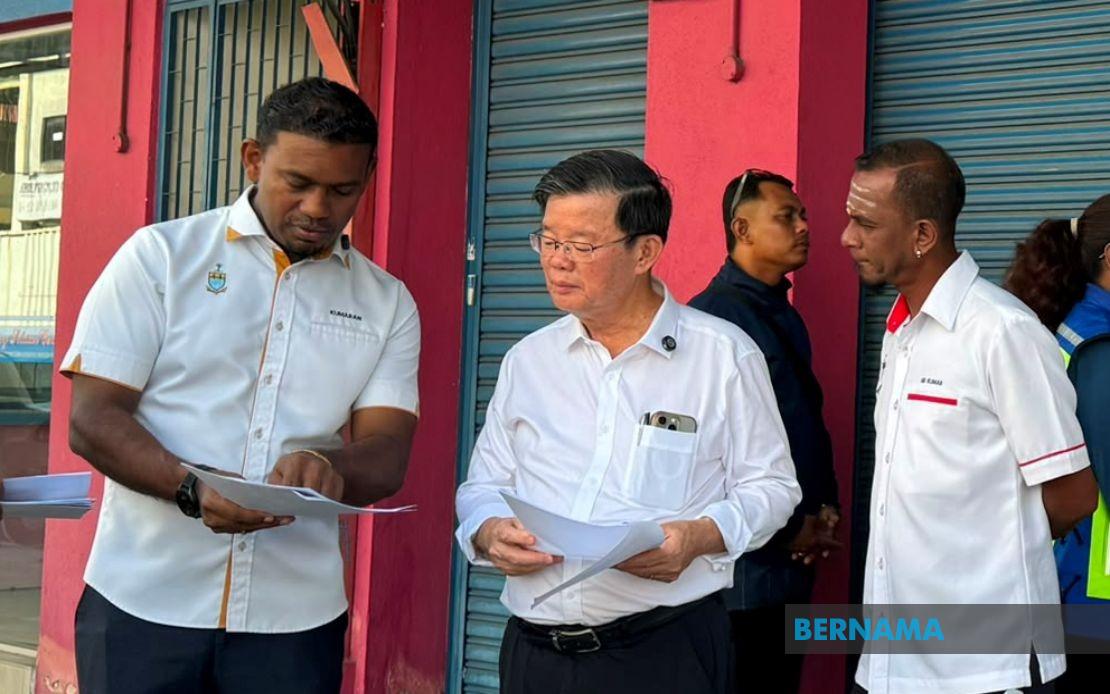
Penang's government has resolved to move forward with a water tariff increase that commenced on July 1, refusing to yield to pressure from opposition lawmakers and consumer advocates demanding additional time before implementation. Chief Minister Chow Kon Yeow made the position clear during remarks to journalists in Butterworth, emphasizing that the decision followed extensive deliberation and that the state had already granted consumers considerable latitude by deferring the rise from its originally scheduled introduction date. The federal regulatory body responsible for water pricing, SPAN, had initially set an enforcement date of July 30, 2025, but Penang chose to advance this and implement the new rates nearly a year earlier than mandated, a concession that Chow highlighted when rejecting further delay.
At the heart of the government's determination lies a pressing infrastructure crisis across Penang's water sector. The Penang Water Supply Corporation, known locally as PBAPP, faces an estimated capital requirement approaching RM2 billion to execute critical water security initiatives throughout the state. Beyond these immediate projects, substantial additional financing is needed for an ambitious water sourcing initiative drawing supply from Perak, which itself demands investments measured in billions of ringgit. The tariff increase is expected to generate approximately RM20 million in new annual revenue, providing essential seed funding for these transformative initiatives. Without this revenue stream, PBAPP would struggle to progress on infrastructure modernization necessary to meet Penang's growing water demands and enhance supply resilience.
Chow's explanation revealed how Malaysia's water pricing mechanisms operate across states, with SPAN setting uniform tariff-setting principles that all state operators must follow. Under this framework, water companies may petition for rate reviews every three years, calibrating charges to reflect operational expenses and capital development requirements. This mechanism ensures that tariff adjustments are tied to demonstrable financial needs rather than arbitrary increases. Penang's application for review followed established protocols, and the resulting new structure represents a systematic response to genuine cost pressures rather than opportunistic revenue-raising by either PBAPP or the state government.
The affordability picture for typical Penang households differs substantially from the perspective sometimes presented in public debate. Chow emphasized that domestic consumers continue to benefit from artificially depressed water rates that fail to reflect the genuine expense of supplying treated water. The actual production cost has exceeded RM1 per cubic metre, yet household consumers pay only approximately 65 sen per cubic metre under the new arrangement. This disparity reflects a sophisticated cross-subsidy mechanism wherein commercial and industrial water users effectively bankroll domestic affordability, paying significantly elevated rates to subsidize household consumption. Without this ongoing subsidy from the business sector, true cost-reflective pricing for domestic consumers would be substantially higher.
The practical financial impact on ordinary households will remain modest for the vast majority of consumers in Penang. PBAPP chief executive Datuk K. Pathmanathan noted that roughly 82 percent of residential households, those consuming 35 cubic metres or less monthly, will experience a daily increase of RM0.08, translating to RM2.55 additional per month. For perspective, this represents approximately 8 sen per day for typical family use, a marginal adjustment unlikely to generate significant household budget stress. Non-domestic consumers face proportionally larger increases; commercial operations consuming 500 cubic metres monthly will pay an additional RM77.70 per month, reflecting their elevated consumption levels and reduced eligibility for domestic subsidies.
The political dimension became visible when Bagan Member of Parliament Lim Guan Eng, representing the opposition Democratic Action Party, publicly appealed to the state government to postpone the 20 sen per cubic metre tariff increase for an additional year. His intervention typifies how water pricing decisions, whilst fundamentally technical and financial matters, intersect with electoral politics. Lim's request implicitly questioned whether the urgency of infrastructure funding justified immediate consumer burden, a calculation that Chow's government rejected based on the timeline pressures surrounding major water projects requiring prompt capital mobilization.
The Water Contingency Plan 2030, referred to as WCP 2030, forms the strategic framework guiding how PBAPP will deploy revenues from the tariff increase. This comprehensive blueprint encompasses multiple critical initiatives designed to fortify Penang's water infrastructure against future supply pressures. Construction of new water treatment facilities at both Mengkuab Dam and Sungai Perai represents significant capacity expansion, whilst the Sungai Dua Water Treatment Plant requires substantial land acquisition and upgrading work to enhance its operational capability. The Sungai Muda Water Treatment Plant project necessitates property acquisition in preparation for future development. Additionally, the Macallum-Bukit Dumbar pipeline project will enhance distribution network resilience by connecting major treatment facilities with densely populated areas.
For Malaysian readers across Southeast Asia's region, Penang's water infrastructure challenges carry broader significance. The state functions as one of Malaysia's most economically dynamic regions, hosting a substantial portion of the country's semiconductor manufacturing sector and serving as a major industrial hub. Water supply security directly impacts Penang's capacity to retain and attract foreign direct investment in water-intensive industries. Insufficient or unreliable water supply could undermine competitiveness relative to alternative manufacturing destinations across Southeast Asia, threatening employment and economic growth. PBAPP's infrastructure investments therefore transcend parochial state concerns, touching upon Malaysia's regional economic standing.
The tariff structure itself reflects mature policy thinking regarding water resource economics. By maintaining substantial subsidies for domestic consumption whilst charging commercial users closer to full costs, Penang balances equity considerations with fiscal realities. Households, particularly lower-income families, retain access to affordable water essential for health and dignity, whilst businesses and industries bear pricing that acknowledges the genuine scarcity value of water resources. This approach contrasts with some jurisdictions that implement flat cost-reflective pricing regardless of consumer category, which would dramatically increase household water bills whilst possibly encouraging inefficient consumption patterns among price-insensitive commercial users.
Chow's public explanation of the government's decision attempted to address legitimate consumer concerns whilst establishing a clear rationale for proceeding despite political pressure. His statement acknowledged that the state government had already demonstrated considerable flexibility by advancing implementation ahead of federal timelines, signaling responsiveness to cost-of-living pressures. However, he simultaneously conveyed that infrastructure imperatives could not be indefinitely deferred without consequence to long-term water security. This framing positions the tariff increase not as an isolated price adjustment but as an essential mechanism enabling investments that ultimately serve all Penang residents through enhanced supply reliability.
Looking forward, the tariff increase and resulting infrastructure investments will likely reshape water supply dynamics across Penang over the remainder of the decade. The new treatment plants and pipeline improvements will increase total production capacity and enhance distribution efficiency, potentially moderating pressure for further tariff increases in subsequent review cycles. The effectiveness of WCP 2030 implementation will therefore influence the trajectory of water pricing in Penang and potentially inform policy approaches across other Malaysian states facing analogous infrastructure financing challenges. For residents and businesses in Penang, the next several years will reveal whether the tariff sacrifice translates into meaningfully improved water security and supply reliability.

