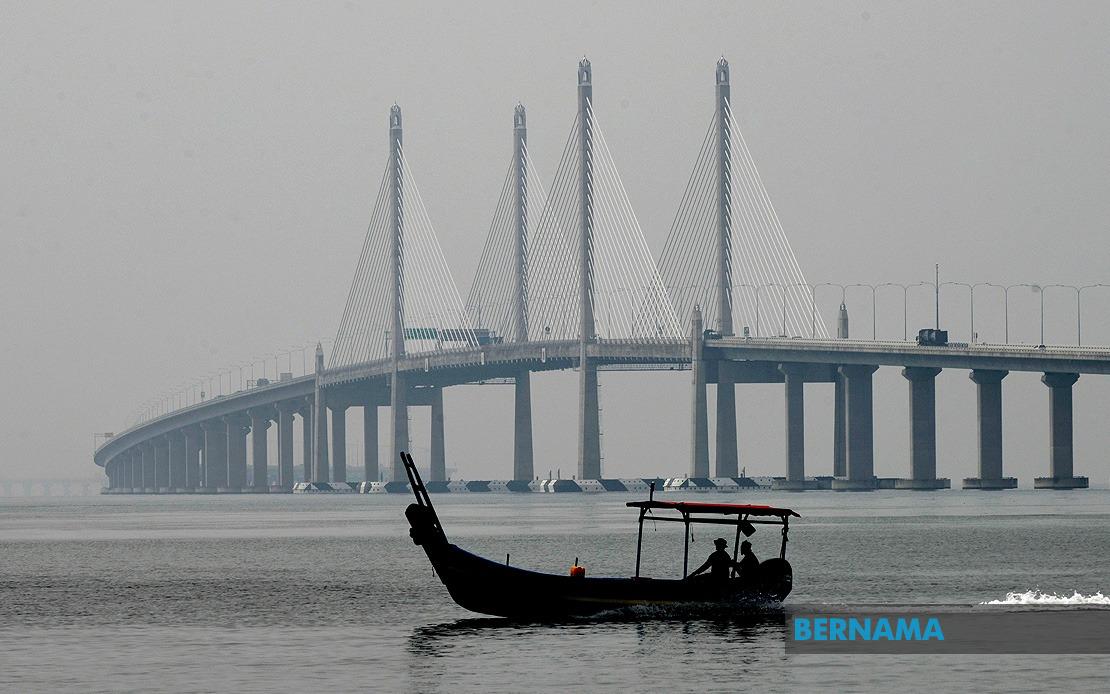
Penang state authorities are preparing to engage stakeholders in discussions aimed at resolving growing tensions around fishing restrictions imposed under two of the state's most critical infrastructure corridors. The Penang Rural Development, Agro-technology and Food Security and Entrepreneurship Committee will convene meetings with relevant parties in the coming week to develop what officials characterise as a balanced approach to enforcing the fishing ban under both the Penang Bridge and the Sultan Abdul Halim Mu'adzam Shah Bridge, commonly referred to as the Second Penang Bridge.
Datuk Rashidi Zinol, chairman of the committee, explained that the initiative emerged directly from concerns raised by fishing boat and tourist boat operators during recent consultations. These operators have complained that the implementation of the fishing restrictions has begun to squeeze their operations, with several reporting a noticeable decline in business activity since the ban took effect. The enforcement action, they argue, has created a ripple effect that extends well beyond the immediate operators affected.
The restrictions stem from official gazettement of the areas beneath both bridges as protected areas and prohibited places under the Protected Areas and Protected Places Act 1959, with both corridors designated as National Key Points. This classification reflects the strategic importance of these structures to Malaysia's transport infrastructure and national security framework. The dual designations impose legal restrictions on activities in these zones, with the fishing ban serving as a key enforcement mechanism to maintain controlled access and prevent potential security threats.
What particularly concerns Rashidi is the collateral damage the ban has inflicted on a broader ecosystem of dependent businesses and workers. Beyond the direct impact on boat operations, the restrictions have begun to constrain supply chains throughout the fishing industry. Equipment suppliers, ice producers, food vendors, and numerous small enterprises that rely on fishing activity have all experienced reduced demand as fishing crews find themselves unable to work their traditional grounds. This economic cascading effect threatens livelihoods across an interconnected network of micro and small businesses that form the backbone of Penang's informal maritime economy.
The core tension Penang faces mirrors challenges across Southeast Asia where security imperatives increasingly collide with economic realities in coastal regions. National Key Point designations exist for legitimate reasons—protecting critical infrastructure from security threats has become progressively important in a region managing various transnational challenges. Yet the blanket application of such protections can inadvertently displace communities and activities that have operated sustainably for generations, creating social friction and economic hardship that eventually becomes politically costly.
Rashidi's commitment to examining the issue from multiple angles suggests recognition that sustainable policy requires accommodation of genuine stakeholder concerns rather than rigid enforcement divorced from context. The committee chairman indicated that upcoming discussions would specifically weigh three considerations: the legitimate safety and regulatory requirements that necessitated the restrictions in the first place; the operational and financial impact on affected boat operators and their crews; and the broader economic implications for supporting businesses dependent on fishing activity.
For Malaysia's maritime regions, this situation illustrates a recurring policy challenge: how to implement necessary security measures while preserving economic opportunities for communities whose survival depends on open access to traditional fishing grounds. Penang's decision to pursue dialogue rather than entrench positions offers a potential model for other states facing similar tensions between infrastructure protection and coastal livelihoods.
The fishing ban under both bridges represents a classic case where well-intentioned security protocols, when implemented without sufficient stakeholder consultation, can generate unintended economic consequences. The lack of advance discussion with affected communities before implementation likely contributed to the current friction. Moving forward, Penang's approach underscores the importance of designing restrictions with built-in flexibility and transition support mechanisms rather than imposing blanket prohibitions.
For Southeast Asian policymakers more broadly, the Penang situation carries an instructive lesson: critical infrastructure protection and community economic interests need not be mutually exclusive. Designating an area as a National Key Point and restricting certain activities remains valid, but the manner of implementation and the availability of alternative arrangements for displaced workers can significantly affect overall policy success and public acceptance.
The upcoming committee meetings will likely explore whether partial restrictions, designated fishing zones, or temporary operating windows might satisfy both security requirements and economic needs. Such creative solutions have worked in other jurisdictions facing comparable constraints. Whether Penang's discussions yield concrete policy adjustments will indicate how seriously state authorities take the accumulated impact on maritime livelihoods.

