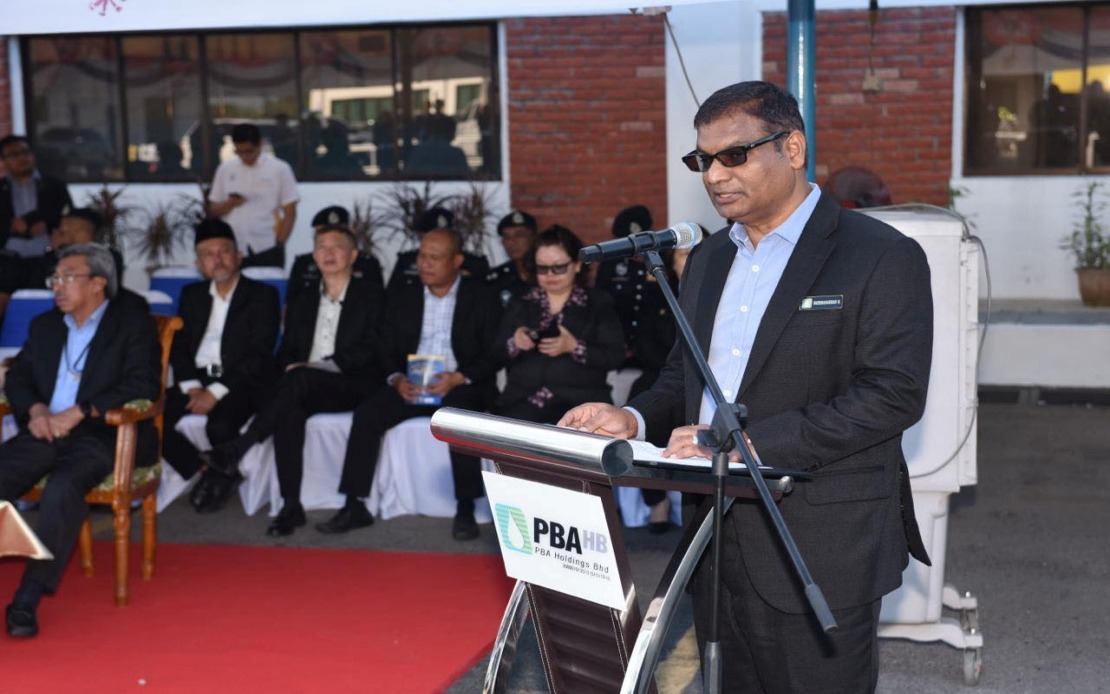
Penang Water Supply Corporation (PBAPP) has announced plans to commission an 80 million litres-per-day (MLD) water treatment facility in Seberang Perai Selatan (SPS) by 2027, marking a significant step in the state's effort to secure adequate water resources for continued economic expansion. The project represents a comprehensive response to mounting supply pressures across the district, where rapid industrial growth and population increases are straining existing infrastructure. Chief Executive Officer Datuk K. Pathmanathan outlined the facility as part of an integrated, long-term water security framework designed to position Penang for sustained development throughout the 2030s.
The new treatment plant will operate under a Build-Operate-Transfer (BOT) model and draw its raw water supply from Sungai Kerian, a strategic source that connects to existing water infrastructure in the region. The corporation has flagged that additional specifics regarding the facility's design, location, and implementation timeline will be disclosed at a later date, suggesting that detailed engineering and tender processes remain ongoing. This phased approach to information release is typical for major infrastructure projects in Malaysia, where environmental impact assessments, land acquisition, and stakeholder consultations must precede formal announcements.
The 80 MLD facility functions as a medium-term intervention within a broader water master plan spanning the next several years. SPS currently serves 87,611 registered water users who collectively consumed an average of 116.8 MLD in 2025, accounting for approximately 13.5 per cent of Penang's state-wide consumption. However, demand projections indicate substantially higher requirements ahead as major industrial and residential projects advance. The compact treatment plant that PBAPP commissioned in March 2024 at a cost of RM8.1 million demonstrates the corporation's commitment to interim solutions, with that facility producing up to 6.4 MLD and currently serving roughly 4,000 users over a three-year deployment window.
The pipeline of infrastructure development in SPS is substantial and varied. The RM2.2 billion Batu Kawan Industrial Park 3 (BKIP3) project encompasses approximately 165 hectares and is projected to generate water demand around 220 MLD once fully operational in the 2030s. Beyond this, residential and commercial initiatives including SkyWorld Cassia are advancing concurrently, while a proposed Siliconware Precision semiconductor manufacturing facility would introduce significant industrial water requirements. Collectively, these ventures underscore why water security has become critical to Penang's competitive positioning as a regional industrial hub and why state authorities view infrastructure expansion as essential rather than optional.
The corporation's strategy extends beyond 2027. Under PBAPP's Water Contingency Plan 2030, an additional Sungai Kerian treatment plant with 114 MLD capacity is scheduled to commence operations in 2030, further reinforcing supply stability for the southern district. This phased commissioning approach allows the corporation to match supply increments with actual demand growth rather than over-investing in infrastructure that might sit underutilised. The staggered timeline also distributes capital expenditure across multiple budget cycles, easing financial planning for both PBAPP and the state government.
Most ambitiously, the Perak-Penang Water Project represents a transformative undertaking that will channel between 300 and 500 MLD of treated water from Perak into SPS by 2031, with additional supply also supporting Seberang Perai Tengah (SPT). This inter-state water cooperation initiative reflects recognition that individual state boundaries cannot constrain resource management in the context of integrated economic zones and supply-demand dynamics. The project's scale and complexity suggest years of negotiation between Penang and Perak administrations, technical planning, and infrastructure construction. For Malaysia's broader regionalism agenda, such cross-boundary water sharing arrangements exemplify cooperative federalism applied to critical utilities.
Chief Minister Chow Kon Yeow has positioned these water security initiatives within a wider narrative of sustainable and resilient development. The messaging from PBAPP emphasises that future growth should not be constrained by resource scarcity, reflecting a mindset that adequate water supply is prerequisite infrastructure for attracting investment and enabling socio-economic advancement. This framing carries particular resonance in Southeast Asia, where water stress is increasingly recognised as a limiting factor for industrialisation in certain regions. By securing supply now, Penang is attempting to eliminate water as a competitive disadvantage and instead leverage its position as a state with assured utility provision.
The investments also signal shifting patterns in Malaysian infrastructure procurement. The Build-Operate-Transfer model for the 80 MLD plant indicates reliance on private sector expertise and capital, with eventual transfer to public ownership. This arrangement differs from traditional direct government construction and reflects global best practices in project delivery, though it necessarily involves higher financing costs and requires robust regulatory frameworks to protect public interests during the operation phase. The RM8.1 million compact plant demonstrates PBAPP's willingness to deploy smaller, modular facilities as transitional measures, which offers flexibility in response to demand fluctuations.
For Malaysian readers and policymakers, Penang's approach offers instructive lessons regarding water infrastructure planning in high-growth regions. The state recognises that industrial parks and manufacturing hubs generate disproportionately large water demands relative to their footprint, necessitating dedicated supply arrangements. The multi-phase strategy spanning 2027 to 2031 reflects mature infrastructure planning that balances immediate pressures with long-term stability. As other Malaysian states pursue similar industrialisation and urbanisation, the governance frameworks and investment models PBAPP is implementing may provide templates for replication elsewhere.
The broader context involves Malaysia's vulnerability to climate variability and the increasing imperative for water security planning. Penang's approach of diversifying raw water sources, expanding treatment capacity, and building inter-state cooperation mechanisms responds to recognised risks of supply disruption. The projects outlined through 2031 collectively represent a substantial financial commitment and institutional coordination effort, underscoring how seriously the state government views water infrastructure as foundational to economic competitiveness. For investors considering operations in Penang's industrial corridors, the certainty of adequate water supply—backed by concrete investment and timeline commitments—constitutes a material competitive advantage relative to regions where such assurances remain uncertain or contested.
The announcement also reflects political economy considerations within Malaysia's federal system. By demonstrating capacity to plan, finance, and execute major infrastructure projects, Penang authorities strengthen their claim for continued autonomy in utility management and positioning in negotiations with federal agencies over resource allocation. The ability to announce multi-billion-ringgit projects with specific timelines enhances the state government's standing with constituents and investors alike, reinforcing perceptions of competent administration. Chief Minister Chow Kon Yeow's leadership role in championing these initiatives builds his profile as a development-oriented administrator committed to removing constraints on growth.
Looking forward, the trajectory of water infrastructure investments in SPS will serve as a useful barometer for broader economic trajectories in northern Peninsular Malaysia. If Batu Kawan Industrial Park 3, SkyWorld Cassia, and the Siliconware Precision facility all advance as projected, the demand forecasts underlying these water supply plans will be validated, and the timing of successive facility commissioning will prove appropriately calibrated. Conversely, if economic headwinds slow industrial development or if global semiconductor market conditions deteriorate, actual demand may trail projections, potentially rendering some facilities temporarily underutilised. Either way, the infrastructure investments represent tangible evidence of state commitment to positioning Penang as a location where resource constraints will not impede growth.

