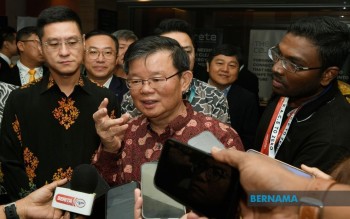
The Penang state government is witnessing strong corporate interest in its newly established Climate Mitigation Fund, with 25 enterprises expressing interest in accessing preferential financing for sustainability projects. According to Chief Minister Chow Kon Yeow, five applications have already advanced to the assessment stage, signalling rapid momentum in the fund's roll-out. The initiative represents a significant pivot in how the state approaches industrial competitiveness, moving beyond traditional cost and infrastructure considerations to embrace environmental credibility as a core business advantage.
The Climate Mitigation Fund operates through the Penang Green Industry Programme in partnership with Alliance Bank, starting with RM20 million in available capital—RM5 million contributed by the state government and RM15 million from the banking partner. The framework allows for potential expansion up to RM100 million, suggesting both stakeholders view this as a long-term commitment rather than a temporary initiative. This structure demonstrates recognition that sustainable transformation requires sustained financial backing and institutional cooperation, combining government resources with commercial banking expertise to evaluate and support viable green projects.
The programme offers eligible small and medium enterprises as well as mid-tier companies access to preferential financing of up to RM500,000 per applicant, coupled with grants, sustainability assessments, and expert advisory services. This comprehensive package addresses a common barrier to green transitions: the upfront technical and financial complexity of assessing environmental performance and implementing improvements. By bundling finance with technical support, the initiative removes friction that often prevents companies from pursuing sustainability improvements, even when long-term benefits are clear. The involvement of the Penang Green Council further ensures that recommendations reflect local conditions and industry-specific challenges.
Chow framed the fund's importance within a broader competitive reality increasingly shaping international supply chains. Global multinational corporations are imposing carbon reduction targets on their suppliers, making environmental credentials a commercial necessity rather than a discretionary advantage. Penang's manufacturers, particularly those in the electrical and electronics sector, face direct pressure from overseas clients demanding renewable energy sourcing and lower scope 2 emissions. For a state that exported RM436.9 billion in E&E products last year—representing approximately 68 per cent of Malaysia's total E&E exports—the stakes are substantial. Losing market share to competitors in jurisdictions perceived as greener would directly threaten Penang's economic foundation.
This competitive pressure has reshaped how state leadership discusses energy policy. Rather than emphasising environmental stewardship alone, officials now emphasise that clean energy access directly determines whether major international corporations maintain or expand operations in Penang. Companies evaluating manufacturing locations increasingly scrutinise the source of grid electricity alongside traditional factors such as talent availability, infrastructure quality, logistics efficiency, and operational costs. For Penang's industrial base, this shift means that lagging on renewable energy deployment risks competitive disadvantage in attracting and retaining high-value manufacturing investment.
The Penang Energy Framework, launched in November 2024, establishes concrete targets driving this transition. The state aims for a 25 per cent reduction in energy intensity across the economy and seeks to increase the renewable energy share in its electricity mix to at least 10 per cent by 2030. These targets align with Malaysia's broader National Energy Efficiency Action Plan 2.0, which targets an 11.6 per cent reduction in national energy demand by 2035. By integrating state objectives with federal goals, Penang positions itself as a leader in the national energy transition, strengthening its case for continued industrial investment and potentially accessing additional federal support for green initiatives.
Rooftop solar emerges as Penang's most practical renewable energy solution, given the state's geographic constraints and limited available land. New commercial and industrial buildings must now dedicate at least 75 per cent of roof area to solar panels or meet equivalent renewable energy sourcing targets based on their TNB tariff classification. This regulatory approach incentivises distributed solar generation without requiring large-scale land acquisition, a critical advantage in densely populated, developed regions. The requirement applies across new construction, embedding solar capacity into the state's industrial expansion rather than treating it as an afterthought to existing structures.
Beyond rooftop solar, Penang is exploring additional renewable solutions tailored to specific opportunities. The Penang Water Supply Corporation is studying floating solar installations on its reservoir surfaces, a proven technology that maximises land-use efficiency by harnessing water bodies for energy generation. Silicon Island, a major economic development project, will incorporate renewable energy into its masterplan design, including a dedicated Green Tech Park powered by on-site solar generation. These initiatives demonstrate systematic thinking about renewable integration across multiple sectors and geographies within the state.
Energy efficiency standards represent the complementary pillar of Penang's transition strategy. The state is implementing energy intensity benchmarking systems that allow companies to measure, compare, and progressively improve their energy consumption patterns. Government buildings and local authority facilities are undergoing assessment to identify renewable energy and efficiency opportunities. For new state government and local authority buildings, the target requires renewable sources to supply at least five per cent of total energy consumption, with existing government facilities encouraged to move toward the same benchmark. This approach ensures the government leads by example, building credibility for private sector requirements.
The broader significance of Penang's Climate Mitigation Fund extends beyond the state's borders, offering a model for other Malaysian regions seeking to industrialise sustainably while maintaining competitive advantages in global supply chains. Many Southeast Asian economies face similar pressures: multinational corporations demanding cleaner manufacturing locations, limited land for utility-scale renewable installations, and the need to attract high-value industrial investment. Penang's combination of preferential financing, technical assistance, regulatory requirements for new buildings, and government leadership provides a comprehensive blueprint that other states could adapt. The willingness to commit significant government resources alongside private banking partnerships suggests that policymakers view green industrialisation as essential to long-term economic resilience rather than an optional environmental initiative.
The fund's early traction—with 25 companies already expressing interest and five undergoing assessment—indicates that Malaysian manufacturers recognise the competitive imperative of sustainability adoption. The challenge now lies in converting approved financing into tangible emission reductions and renewable energy deployment. Success will require consistent implementation of the energy efficiency standards, sustained government commitment to the framework, and continued partnership with financial institutions willing to develop expertise in green project evaluation. For Penang, transforming from a state facing competitive pressure around climate and energy into one setting the pace for green industrial development could strengthen its position as Malaysia's premier manufacturing hub while addressing the mounting environmental imperatives shaping global commerce.

