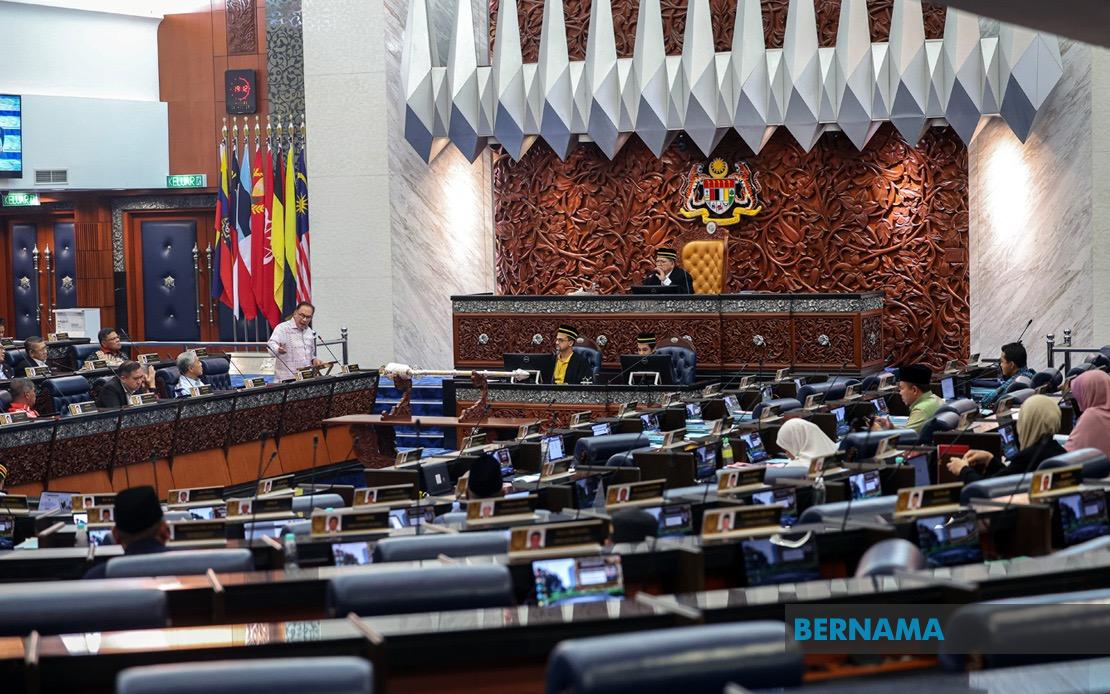
Malaysia's flagship poverty-reduction scheme, the People's Income Initiative (IPR), has extended support to 7,787 households since launching nearly three years ago, demonstrating measurable traction in the government's broader effort to narrow income inequality and strengthen social safety nets. According to the Economy Ministry's recent parliamentary response, the programme has generated what officials describe as "highly encouraging results," marking a significant milestone in an initiative designed to complement rather than replace existing welfare mechanisms across the country.
The IPR was conceived as a multifaceted response to interconnected challenges facing lower-income Malaysians. Beyond its core objective of alleviating poverty, the scheme targets three distinct but related outcomes: strengthening household food security in an environment of persistent commodity price volatility, generating sustainable employment pathways, and cushioning vulnerable families against the grinding pressures of rising living costs. This triangulated approach reflects recognition that poverty is rarely a single-dimensional problem, and that effective interventions must address both immediate material needs and longer-term economic mobility.
Among the programme's documented achievements, the Economy Ministry highlighted that some participants have crossed a critical income threshold, earning monthly incomes exceeding RM2,000. This figure, while modest by middle-class standards, represents substantial progress for households that were previously trapped in subsistence-level economics. The RM2,000 benchmark is particularly significant in Malaysia's context, as it approaches the recognised living wage threshold in several metropolitan areas and suggests that IPR beneficiaries are transitioning from emergency poverty assistance towards genuine self-sufficiency. However, the ministry's use of the word "some" leaves the overall proportion unexplained, raising questions about the distribution of outcomes across the beneficiary cohort.
The three-year implementation window offers preliminary evidence about the programme's design and execution. The fact that nearly 7,800 households have accessed support—a figure that neither explodes nor stagnates—suggests a programme of moderate scale operating with reasonable efficiency. For Malaysian policymakers tracking international best practices in conditional cash transfers and income-support schemes, this represents a useful data point, though comparisons with similar initiatives in Thailand, Indonesia, or the Philippines would require more granular details about programme structure, targeting mechanisms, and cost-per-beneficiary metrics.
A parliamentary question from Wan Ahmad Fayhsal Wan Ahmad Kamal, the PN-Machang MP, prompted the ministry's detailed response, signalling sustained legislative interest in evaluating whether the IPR represents money well spent. The questioner specifically sought evidence of success and effectiveness, a framing that suggests some parliamentarians remain unconvinced that current outcomes justify continued funding or expansion. In Malaysia's increasingly competitive budget environment, where multiple ministries compete for resources and fiscal space remains contested, such scrutiny is likely to intensify.
Beyond the IPR itself, the Economy Ministry's response touched on the National Data Management Architecture (PADU), a centralised data-sharing platform designed to enable more sophisticated, evidence-based policy implementation. The ministry reported that 204 government agencies have achieved continuous data integration with PADU, with 27 data-sharing applications already approved for policy deployment. This bureaucratic infrastructure is essential for programmes like the IPR to function efficiently, as it allows administrators to identify eligible households, track programme outcomes, and prevent duplicate or fraudulent claims. The scope of PADU's adoption suggests that Malaysia's public sector has made considerable progress in digital governance transformation, though implementation quality across 204 agencies almost certainly varies.
The ministry's statement that approved data-sharing applications serve purposes ranging from "improving effectiveness of public service delivery" to "service digitisation innovation" indicates that PADU is being positioned as a foundational infrastructure for Malaysia's broader digital economy ambitions. For Malaysian citizens and businesses, this centralisation of government data represents both opportunity and concern. On one hand, better-integrated data could streamline access to services and reduce administrative friction. On the other, the concentration of personal information within a single platform raises privacy and security questions that have intermittently surfaced in public discourse but rarely translated into robust legislative safeguards.
The timeline embedded in the ministry's response—referring to June 2026 as the reporting date—appears to contain a clerical error, as the original statement was dated July 1, and June 2026 lies in the future. This suggests either a mistranscription in the source material or a hypothetical projection, a minor detail that nonetheless raises questions about documentary accuracy in parliamentary responses. In an era when policy effectiveness increasingly depends on reliable data and transparent reporting, such slippages matter, particularly when they occur in official government communications.
Looking forward, the IPR faces several strategic questions. The programme's modest beneficiary base—7,787 households across a nation of approximately 17 million people—represents penetration of roughly 0.045 percent. Even accounting for targeting constraints and budgetary limitations, this suggests either that the programme reaches only a fraction of eligible households, or that eligibility criteria are narrower than Malaysia's broader poverty rate might suggest. The official poverty line in Malaysia stood at approximately 2.3 million people in 2022, meaning that even if the IPR were operating at full capacity, it would likely never accommodate all households in need without substantial budget expansion.
For Malaysian observers monitoring regional trends in social protection policy, the IPR's approach offers useful lessons. Unlike some Southeast Asian countries that have experimented with universal basic income pilots, Malaysia has adopted a targeted approach, concentrating resources on identified poor households. This strategy maximises fiscal efficiency but risks leaving behind marginal groups who fall just above poverty thresholds or whose vulnerabilities stem from factors other than income insufficiency. The question of whether IPR should eventually expand, contract, or restructure remains unresolved in current policy discourse.
The programme's integration with PADU also positions it as a potential model for other government assistance schemes seeking to improve targeting and reduce waste. As Malaysia's social security architecture evolves—with various ministries administering multiple overlapping programmes—the capacity to link beneficiary data across systems becomes increasingly valuable. Whether the IPR eventually becomes a vehicle for consolidating fragmented assistance mechanisms, or remains a standalone initiative, will likely depend on political will and bureaucratic capacity over the coming years.

