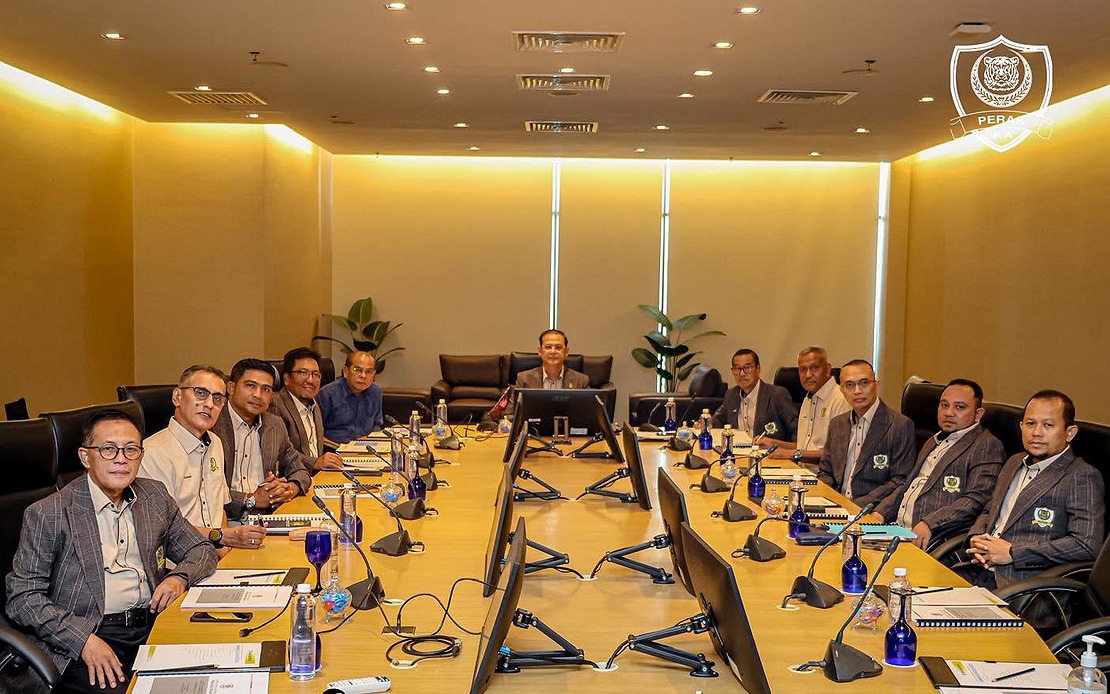
The Perak Football Association has committed to appointing a new head coach to lead the state team through the 2026-2027 Liga A1 Semi-Pro campaign, signalling a strategic shift in the organisation's coaching structure and competitive ambitions. The decision emerges from a mandatory requirement introduced by the Amateur Football League that compels all participating teams to employ head coaches holding the AFC Pro Diploma Coaching License, a credential designed to elevate the technical calibre of semi-professional football in Malaysia.
The recruitment process will prioritise candidates who transcend mere licensing compliance, with PAFA seeking individuals who bring substantial credentials in grassroots football development, contemporary coaching methodologies, and demonstrable success across state, national, and international platforms. This elevated standard reflects a broader philosophy within Malaysian football administration to professionalise the semi-pro tier, bridging the gap between amateur and elite competitions while establishing clearer pathways for emerging talent.
The timing of this managerial transition follows a respectable campaign under Syamsul Saad, the former player-turned-coach who steered Perak to a fifth-place league finish last season whilst navigating the team through the MFL Challenge Cup semi-finals and the Malaysia Cup quarter-finals. Despite these achievements, the regulatory landscape demanded the upgrade, prompting PAFA to recalibrate its coaching apparatus in compliance with league directives.
Crucially, PAFA has signalled that the incoming head coach will operate within an expanded technical framework rather than in isolation. The existing coaching personnel will remain embedded within the organisational structure, working alongside the new appointment to create a multi-layered coaching hierarchy. This approach acknowledges the value of institutional continuity whilst introducing fresh strategic vision, a pragmatic balance between change and stability that many regional football bodies struggle to maintain.
The coaching overhaul sits within Perak's broader ambition to integrate competitive football with systematic player development, a philosophy crystallised through the state's football development agenda that dovetails with the Perak Sejahtera 2030 Plan. Rather than treating semi-professional football as an isolated competition, PAFA conceptualises Liga A1 as a nodal point within an interconnected development ecosystem spanning grassroots, semi-professional, and elite levels. This structural thinking distinguishes Perak's approach from some regional counterparts that compartmentalise different tiers of the game.
The association has committed to retaining players from last season's squad who successfully navigated the internal performance evaluation process, providing continuity of playing personnel whilst demonstrating fiscal responsibility in contract management. This selectivity ensures that squad stability coexists with competitive renewal, preventing the wholesale roster overhauls that often destabilise team cohesion and tactical development in semi-professional leagues.
Beyond Liga A1, Perak's expanded fixture calendar will include participation in the Liga A2 Amateur and the President's Cup, tournaments designed to generate playing opportunities for younger talent emerging from the state's developmental pipeline. These additional competitions serve multiple functions: they provide exposure for aspiring players, offer alternative pathways to traditional league structures, and generate meaningful competitive experience for squad depth that might otherwise languish on substitutes' benches.
The architectural underpinning of this multi-tier engagement becomes evident when examining Perak's production statistics. Through coordinated development programmes encompassing SUKMA participation, Liga A1 Semi-Pro involvement, and the Liga Perak Sejahtera 2030, the state has cultivated approximately 70 players aged between 18 and 24 over recent seasons. This cohort represents the human capital upon which Perak's football aspirations rest, and their systematic exposure through varied competitive environments addresses a persistent Malaysian football challenge: the shortage of match-sharp young players capable of bridging semi-professional and elite football.
The strategic framework also acknowledges political constituencies that have become increasingly important to regional football governance. Menteri Besar Datuk Saarani Mohamad's consistent support, publicly recognised by PAFA, illustrates how state leadership has become integrated into football administration across Malaysia. This alignment between political authority and sporting bodies reflects contemporary Malaysian governance patterns, where football development receives investment as a component of broader state development agendas rather than purely commercial considerations.
For Malaysian football observers, Perak's coaching recruitment and integrated development strategy offers instructive lessons about managing the semi-professional tier during a period of regulatory tightening. The AFC Pro Diploma requirement represents an internationalisation of standards, pushing Malaysian football administration toward global norms even as domestic competitions struggle with inconsistent funding and operational standards. How Perak executes this transition—whether the new coach successfully synthesises state development objectives with competitive results—will likely influence other states' approaches to the mandatory licensing framework.
The appointment also reflects broader conversations within Malaysian football about how semi-professional competitions can serve both immediate competitive functions and longer-term developmental missions. Unlike purely commercial football operations in stronger leagues, Liga A1 teams navigate dual mandates: generating competitive results whilst incubating talent for the senior national structure. Perak's investment in layered coaching, expanded fixture participation, and systematic player evaluation suggests an institution attempting to balance these inherently tension-laden objectives through structural sophistication rather than resource accumulation alone.

