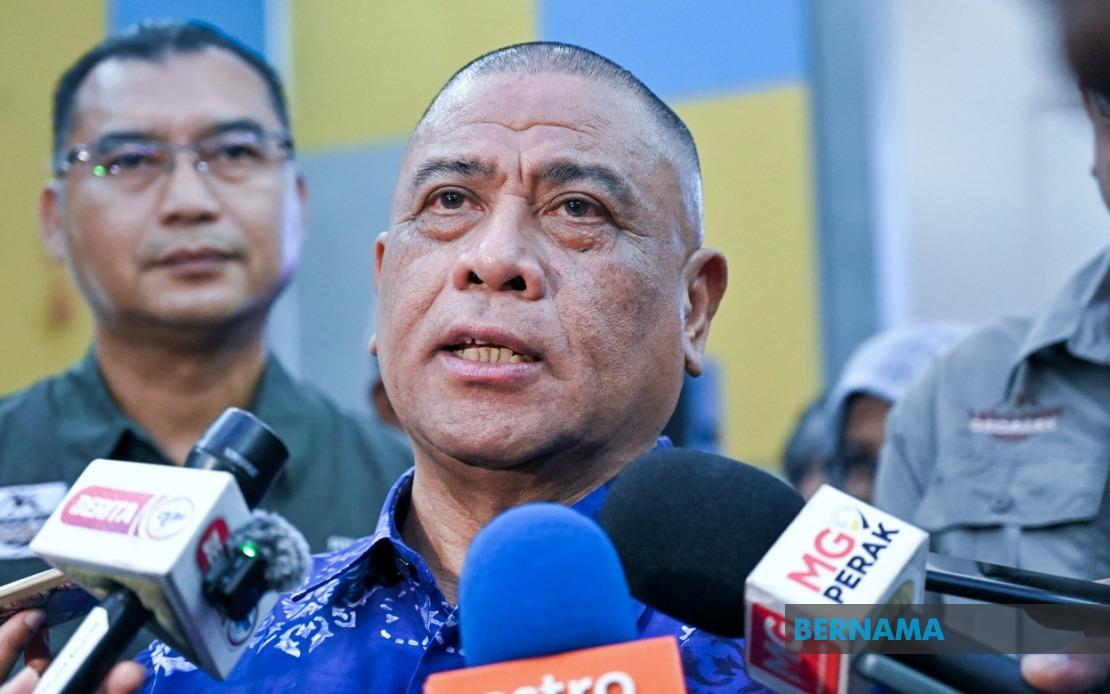
Religious authorities in Perak have moved to reassure the public that the state is effectively containing the dissemination of teachings regarded as deviating from mainstream Islamic doctrine, even as these movements increasingly exploit digital channels and international networks to reach followers. Menteri Besar Datuk Seri Saarani Mohamad made the assertion while addressing concerns about propaganda efforts that utilise social media platforms and messaging applications, underscoring the state government's commitment to maintaining religious orthodoxy within its jurisdiction.
The Perak administration's monitoring framework operates through a multi-layered governance structure centred on the State Security Committee, which Saarani chairs. This institutional arrangement ensures that developments relating to unorthodox religious movements are tracked systematically and escalated through appropriate channels. The Perak Islamic Religious Department (JAIPk) and the Perak Mufti Department feed regular intelligence and assessments into this coordinating body, providing state leaders with comprehensive situational awareness regarding emerging religious movements and their activities throughout the state.
Religious leadership within the sultanate remains directly engaged with these governance processes. Sultan Nazrin Shah, holding the constitutional position of head of religion for Perak, receives regular briefings on developments concerning deviant teachings. Recent consultations between the Deputy Mufti Datuk Zamri Hashim and JAIPk Director Datuk Harith Fadzilah Abdul Halim have kept the ruler informed of the current landscape, reflecting the integration of traditional religious authority with contemporary administrative oversight mechanisms.
The complaint and investigation infrastructure represents a critical component of the state's response strategy. Members of the public who harbour concerns about specific teachings or practices they perceive as inconsistent with Islamic principles can lodge complaints that trigger formal investigation procedures. Both JAIPk and the Perak Mufti Department are tasked with examining such reports according to established protocols, ensuring that enforcement actions are grounded in proper institutional procedures rather than reactive populism. This structured approach aims to distinguish between legitimate doctrinal diversity and teachings that authorities determine genuinely contravene accepted Islamic principles.
At the federal level, Minister in the Prime Minister's Department (Religious Affairs) Datuk Zulkifli Hasan has articulated a broader national strategy framed around whole-of-government coordination. The Department of Islamic Development Malaysia (JAKIM) operates as the primary federal agency, working in conjunction with state-level Islamic religious departments to maintain consistent monitoring and enforcement efforts across Malaysia's diverse Islamic landscape. This federated structure recognises both the constitutional role of states in religious affairs and the need for national consistency in addressing movements perceived as theologically problematic.
The tactical evolution of deviant teaching propagation has shifted the nature of state responses in fundamental ways. Historical enforcement efforts focused on identifying and disrupting physical gatherings where heterodox teachings were disseminated, concentrating resources on surveillance of specific locations and communities. Contemporary challenges operate along entirely different vectors. Organisations promoting teachings authorities classify as deviant have become sophisticated at operating through superficially innocuous frameworks—marketing themselves as self-improvement programmes, charitable initiatives, wellness and alternative medicine schemes, or informal religious study circles. This strategic rebranding complicates the identification and regulation of such movements, requiring authorities to develop more nuanced assessment capabilities.
Digital platforms and encrypted messaging applications have created unprecedented challenges for religious regulation frameworks designed for a pre-internet era. The decentralised and borderless nature of online communication means that teachings originating in other countries can reach Malaysian audiences within seconds, rendering traditional geographic containment strategies obsolete. Groups can maintain tight operational security while reaching broad audiences, and the algorithmic amplification inherent in social media platforms can rapidly expand the reach of heterodox content among vulnerable populations. Zulkifli acknowledged that this shifting landscape has made enforcement increasingly difficult, requiring authorities to adapt investigative methodologies and develop capacity in digital monitoring and online counter-messaging.
The cross-border dimension introduces additional complexities that regional cooperation frameworks are still developing capacity to address. Deviant teachings emanating from organisations based in other countries, or promoted by diaspora communities with international networks, present jurisdictional questions that single-state responses cannot adequately resolve. Malaysia's integration into the global digital ecosystem means that isolationism is not a viable regulatory strategy; instead, policymakers must develop mechanisms for identifying and countering transnational propagation of teachings classified as deviant while maintaining respect for legitimate international religious discourse and scholarly exchange.
The framing of these efforts as essential to protecting Islamic orthodoxy reflects particular theological and institutional perspectives that carry their own political dimensions. What authorities classify as deviant teachings may be viewed by adherents as legitimate interpretations or reform movements within Islamic tradition. The state's monopolisation of religious authority and regulatory power, while institutionally centralised and bureaucratically sophisticated, operates within a contested terrain where questions of religious authenticity and doctrinal legitimacy remain substantively debated among Malaysian Muslims themselves. This creates an inherent tension between administrative efficiency and theological pluralism that Malaysian policymakers have not fully resolved.
Looking forward, the effectiveness of Perak's and Malaysia's broader religious regulation frameworks will depend substantially on how successfully authorities adapt to rapidly evolving digital environments. Traditional bureaucratic approaches, however well-intentioned, may prove inadequate to the challenge of monitoring and responding to decentralised online networks operated by geographically dispersed actors. Simultaneously, maintaining public confidence in these regulatory systems requires demonstrating that enforcement actions are proportionate, procedurally fair, and genuinely directed at protecting Islamic principles rather than suppressing legitimate theological debate or minority perspectives. The balance between these imperatives remains a central challenge facing religious authorities across the region.

