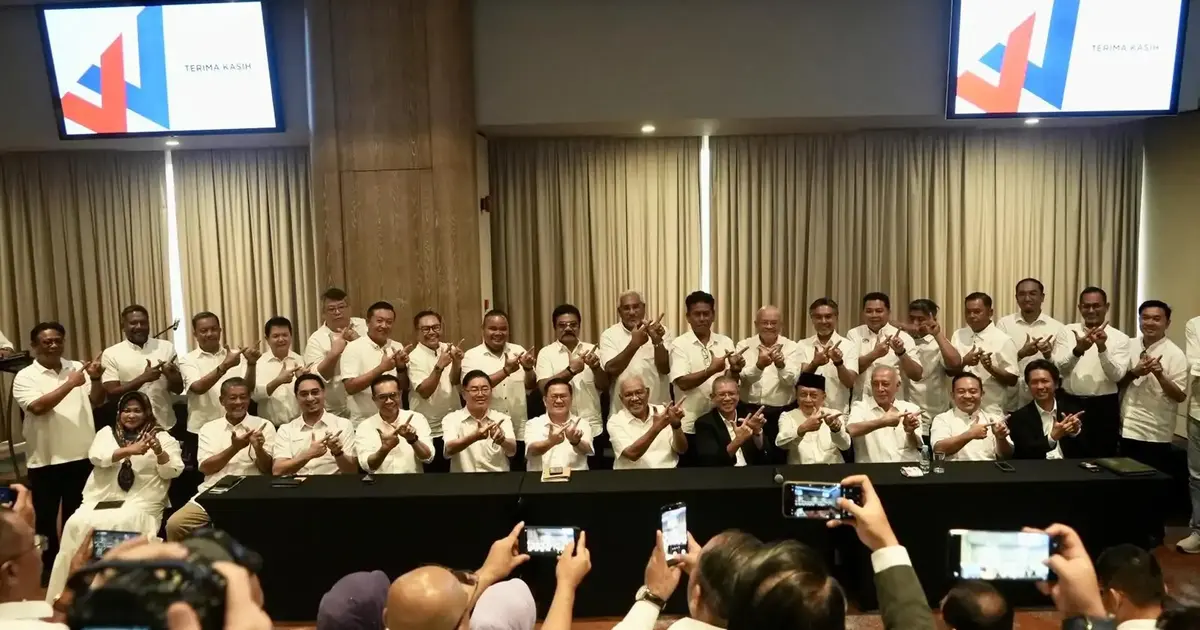
Perak Menteri Besar Sanusi Md Nor has moved to resolve uncertainty surrounding Wawasan's integration into Perikatan Nasional, declaring that the matter was conclusively determined through a majority decision reached within the PN Supreme Council. Speaking in his capacity as the coalition's election director, Sanusi provided clarity on a controversial expansion that has generated friction within PN's ranks, particularly from Bersatu, the party that forms the coalition's core.
The admission of Wawasan, a political entity backed primarily by former PKR figures who broke away from the parent organisation, represents a significant strategic shift for Perikatan Nasional. This development comes at a time when the coalition is undergoing internal recalibration, seeking to broaden its electoral appeal and consolidate support across diverse voter demographics ahead of forthcoming electoral contests. For observers monitoring PN's cohesion and direction, Wawasan's entry signals an attempt to absorb disaffected PKR members and potentially capture swing voters in key constituencies.
Sanusi's statement underscores the formal legitimacy of the decision despite apparent procedural tensions. By framing the outcome as a Supreme Council verdict reached through majority vote, the Perak leader emphasises that standard coalition governance mechanisms were followed rather than bypassed. This procedural emphasis matters considerably in Malaysian coalition politics, where perceptions of legitimacy and inclusive decision-making often prove as important as the substantive outcomes themselves. Coalitions that appear to impose changes unilaterally rather than through established channels risk fracturing along ideological and personality-based fault lines.
The objections raised by Bersatu, however, deserve examination for what they reveal about underlying tensions within Perikatan Nasional. Bersatu's concerns likely stem from apprehension about diluting the coalition's political identity and decision-making power if membership expands beyond its traditional component parties. As the largest and most established party within PN, Bersatu has legitimate concerns about its relative influence if newer entrants bring substantial parliamentary representation or grassroots machinery. Additionally, Bersatu may worry that Wawasan's proximity to PKR-affiliated networks could complicate PN's broader political positioning and electoral strategy.
Wawasan's membership represents a calculated bet on expanding PN's territorial and demographic reach. The party's roots within the PKR ecosystem mean it potentially brings access to networks, voter bases, and organisational structures that PN might otherwise struggle to penetrate. In Malaysian electoral mathematics, even modest gains in previously hostile constituencies can shift crucial seats from one coalition to another, particularly in three-cornered contests where vote fragmentation determines outcomes. This explains why, despite reservations, PN's majority chose to proceed with the admission.
The timing of this decision carries broader implications for Malaysia's political landscape heading toward the next general election cycle. By absorbing Wawasan, Perikatan Nasional signals confidence in its competitive position relative to Pakatan Harapan and UMNO's Barisan Nasional alternative. The move simultaneously demonstrates PN's pragmatism—a willingness to set aside historical grievances and ideological distinctions when electoral advantage beckons. For Malaysian voters, this suggests that traditional coalition boundaries may become increasingly fluid as political parties prioritise seat acquisition over structural purity.
The Supreme Council mechanism through which this decision passed deserves scrutiny as well. PN's internal governance structures reflect the coalition's diverse composition, balancing the interests of larger and smaller member parties while maintaining overall coherence. When contentious decisions require Supreme Council votes, they generate detailed records that party members can examine and debate. Sanusi's readiness to cite this voting outcome indicates confidence in procedural transparency and willingness to stand behind the decision in public discourse.
Bersatu's formal objection, while noted within PN's decision-making process, did not prove sufficient to block the majority's will. This outcome suggests that other PN component parties—likely Berjaya, possibly independent-aligned members, and potentially Perikatan Nasional's other affiliated structures—voted to approve Wawasan's integration. The coalition's complex composition, featuring parties from different peninsular regions and perspectives, means that majority coalitions within the Supreme Council can form around specific policy questions without necessarily reflecting uniformity in party ideology or long-term strategy.
For Malaysia's broader political ecosystem, this development underscores how fluid modern coalition politics has become. The formation and reformation of political alliances increasingly follow electoral logic rather than ideological consistency or historical allegiances. Wawasan's entry into Perikatan Nasional exemplifies this trend, with a party of PKR heritage joining a coalition that historically positioned itself partly in opposition to PKR-led governments. This pragmatism may strengthen PN's short-term electoral competitiveness but raises questions about coalition coherence and whether member parties can sustain unified messaging when their intellectual traditions and voter bases remain diverse.
Sanusi's role as both Perak Menteri Besar and PN election director adds another dimension to his pronouncement. His authority to speak definitively on coalition decisions reflects his standing within the PN hierarchy and his presumed influence in PN strategy-setting. By personally confirming the Supreme Council decision, Sanusi lends his political weight to legitimising Wawasan's membership, potentially helping to reconcile Bersatu and other sceptical parties to the coalition's chosen direction. This personal endorsement matters in Malaysian political culture, where individual leader credibility often influences party members' acceptance of decisions they might otherwise question.
Looking forward, the success of this expansion depends substantially on how effectively Wawasan integrates into PN's operational structures and electoral machinery. Admission into a coalition represents a formal beginning rather than a guarantee of successful collaboration. Parties must coordinate campaign strategies, allocate contested seats through negotiation, and maintain unified messaging across diverse grassroots organisations. For Perikatan Nasional, these practical integration challenges may prove more consequential than the Supreme Council vote that authorised Wawasan's entry in the first place.