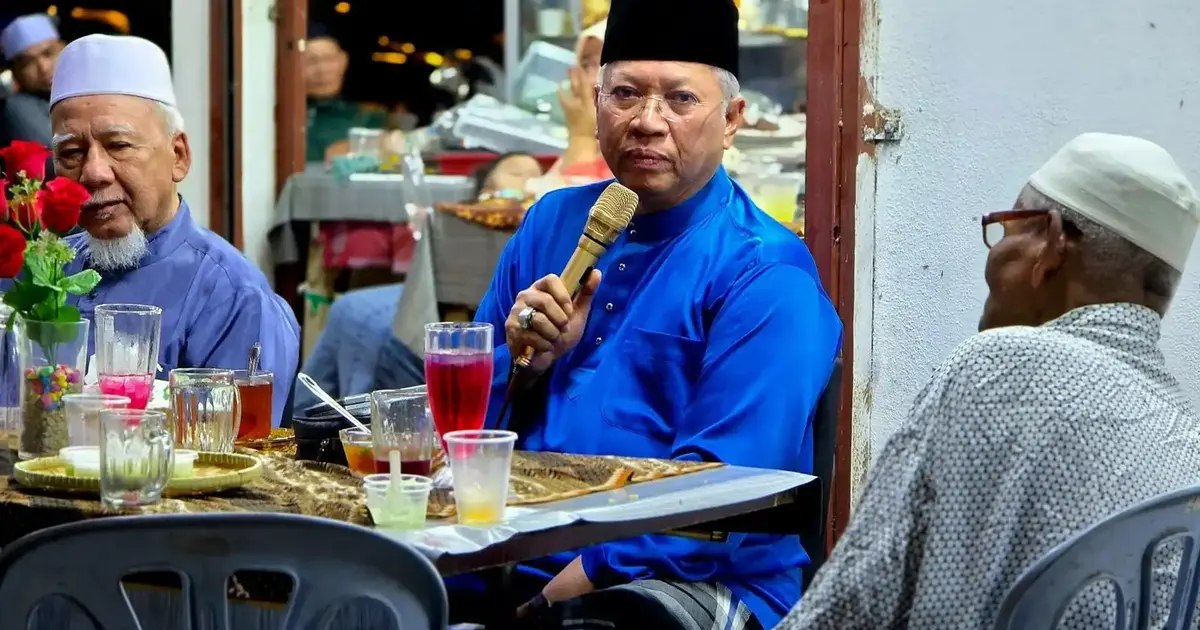
Friction within Malaysia's ruling Perikatan Nasional coalition has surfaced publicly, with PAS challenging the feasibility of accommodating Bersatu's territorial ambitions in Negeri Sembilan ahead of the state election. The Islamic party's information chief Annuar Musa declared that honouring Bersatu's demand for 15 state assembly seats would place impossible constraints on the broader coalition strategy, raising fresh questions about the stability of the three-party alliance that governs the nation.
Bersatu's push for a significant seat allocation reflects the party's determination to consolidate its foothold in Negeri Sembilan, where it currently holds influence but lacks the dominant position it enjoys in certain other states. The quest for 15 seats represents a substantial claim on the state's 36 assembly constituencies, leaving limited room for PAS and UMNO—PN's two largest components—to field competitive candidates. For a coalition government to function effectively across multiple states, the distribution of candidacies must balance party ambitions with electoral mathematics and regional political realities.
Annuar's public pushback signals that internal PN negotiations have reached an impasse on seat division. Coalition partners typically negotiate fiercely over seat allocations, as these directly translate to parliamentary and state assembly representation, ministerial opportunities, and local patronage networks. Bersatu, though numerically smaller than PAS and UMNO in parliamentary terms, wields outsized political leverage given its control of the Perikatan presidency and its role in stabilizing the federal government. However, that influence does not automatically translate into unlimited seat concessions, particularly in states where other parties maintain stronger grassroots organisation.
Negeri Sembilan has traditionally been contested terrain for Malaysia's major coalitions. The state's political dynamics hinge on a blend of urban and rural constituencies, each with distinct electoral preferences and demographics. PAS maintains pockets of support in certain Negeri Sembilan districts, while UMNO retains traditional support in others. Bersatu's claim to 15 seats would substantially reshape this landscape, potentially sidelining established party strongholds and alienating incumbent representatives whose seats might be redistributed.
The episode illustrates a persistent challenge for Malaysia's coalition-based political system: managing the competing interests of partners with divergent organisational strengths and geographic bases. In two-coalition systems where multiple parties must govern together, seat negotiations often test the bonds holding alliances together. PN has already weathered internal strains over federal cabinet positions and parliamentary support, and state-level seat disputes can amplify those tensions, particularly when multiple states head toward elections simultaneously.
For Malaysian voters and observers, the disagreement underscores that even within a coalition officially in government, party rivalries remain intense and unresolved. Bersatu's push for 15 seats, should it materialise, would represent a dramatic reallocation of Negeri Sembilan's political landscape. Such a shift could displace sitting representatives from PAS or UMNO who currently represent those constituencies, creating internal PN grievances that could have ripple effects on cooperation at the federal level. Conversely, if Annuar's resistance prevails and Bersatu receives fewer seats, the party may feel sidelined and grow resentful of its coalition partners' reluctance to expand its state-level presence.
The timing of Annuar's statement—a direct public challenge rather than quiet behind-the-scenes negotiation—suggests that informal talks may have stalled. Public criticism of coalition partners typically emerges when backroom compromise becomes elusive, signalling to party cadres and supporters that leadership is standing firm on principles or interests. This approach also pressures other PN leaders to respond, either defending their seat allocations or attempting to broker a middle ground that satisfies multiple factions.
Regionally, the PN coalition's internal discord carries implications for Southeast Asian politics. Malaysia's stability depends partly on coalition coherence, and recurring public disputes about seat distribution can undermine confidence in the government's ability to function smoothly. Foreign observers and potential investors track such signals closely, interpreting them as indicators of governance resilience or fragility.
Moving forward, the coalition faces pressure to resolve the Negeri Sembilan seat dispute through negotiation or through a compromise formula that prevents further public acrimony. One possibility involves Bersatu accepting a lower total number while securing specific constituencies where party strength is concentrated. Another approach could involve PN leadership convening senior figures to hammer out a coalition-wide protocol for seat distribution that applies consistently across states, reducing ad-hoc disputes. Whatever the outcome, Annuar's declaration that Bersatu's demands are impossible to fulfil has set a public boundary that will complicate backroom negotiations and test the coalition's capacity to absorb internal disagreements without fracturing.

