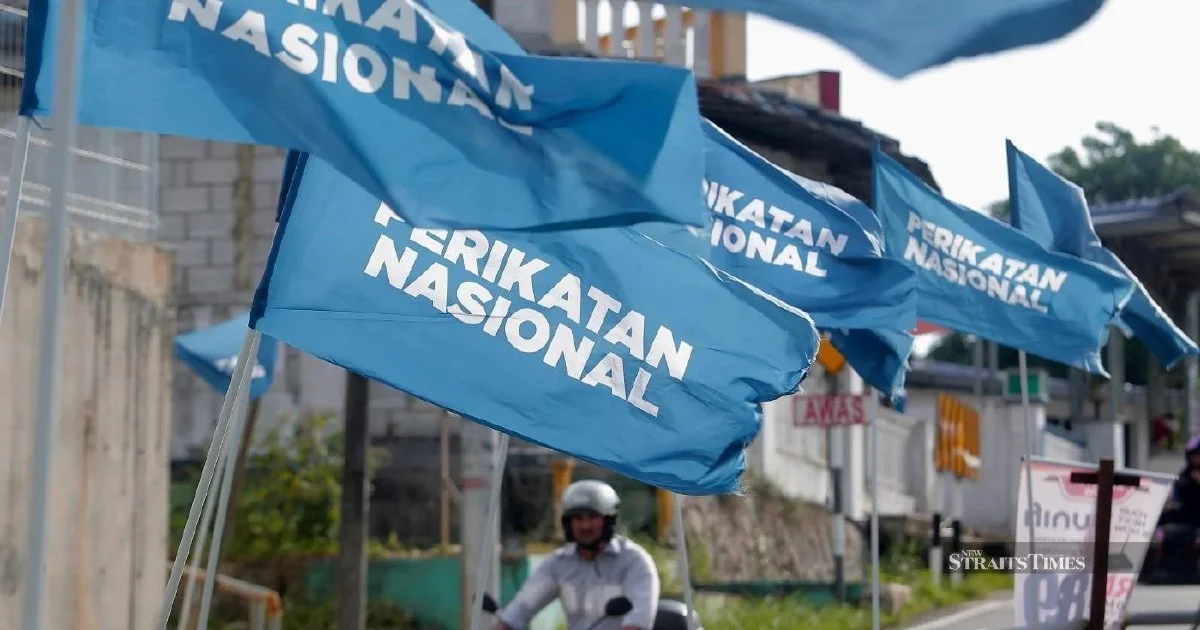
Perikatan Nasional (PN) has forcefully denied a viral online claim that the coalition intends to abstain from the forthcoming Johor state election, with party leadership moving swiftly to counter what it characterizes as deliberate misinformation. Deputy chairman P. Punithan publicly rejected the false narrative circulating across social media platforms, emphasizing that the allegations represent a complete distortion intended to mislead the public and undermine the coalition's electoral preparations.
The emergence of such claims underscores the fraught information environment surrounding Malaysian electoral politics, where unverified statements can gain rapid traction through digital channels before official corrections reach audiences. The viral rumour, which had propagated across multiple social media platforms without any substantive source or corroboration, prompted the coalition to issue an emphatic clarification. Punithan's intervention signals PN's determination to control its own messaging and prevent false narratives from shaping public perception of its political strategy.
For PN, the denial carries strategic weight beyond mere reputation management. As an opposition coalition seeking to expand its parliamentary and state-level influence, maintaining credibility and demonstrating active engagement in electoral contests remains fundamental to its political viability. A coalition perceived as passive or reluctant to contest elections would face severe legitimacy challenges among supporters and potential voters. The false claim, had it remained unchallenged, could have generated confusion about the coalition's commitment to competitive politics and damaged its standing with constituencies where it hopes to gain ground.
The incident reflects broader concerns within Malaysian politics about the manipulation of information during electoral cycles. Opposition coalitions, in particular, frequently find themselves navigating terrain where unsubstantiated allegations and leaked documents circulate with alarming speed, sometimes traceable to rival camps and sometimes simply emerging from the chaotic ecosystem of online discourse. PN's proactive response demonstrates awareness that allowing such narratives to metastasize unchallenged poses real risks to organizational cohesion and public messaging.
Johor's electoral significance makes this clarification especially important. As Malaysia's second-largest state by population and a traditional political battleground, Johor elections typically generate substantial national attention and serve as barometers of broader electoral sentiment. The state has witnessed dramatic political shifts in recent years, with various coalitions gaining and losing ground. Against this backdrop, PN's active participation in the contest carries implications beyond Johor's borders, potentially influencing perceptions of the coalition's trajectory across the federation.
The coalition's denial also speaks to internal cohesion within PN's component parties. Uncertainty about whether the alliance would contest elections could have triggered anxiety among member parties and their grassroots supporters regarding campaign preparations, resource allocation, and future electoral prospects. By immediately rejecting the claim, party leadership reassured stakeholders about the coalition's operational continuity and electoral intentions.
Furthermore, the viral rumour's circulation highlights the vulnerability of political organizations to digital-age disinformation tactics. In an era when false information can reach millions within hours, political parties must maintain robust communication infrastructure and rapid-response capabilities to counter misleading narratives. The speed with which PN's deputy chairman addressed the claim suggests the coalition possesses such mechanisms, though the initial propagation of the rumour without immediate contradiction had already allowed false information to establish footing among sections of the online public.
The incident also illuminates the challenge facing Malaysian voters in distinguishing between credible political information and manufactured rumors. In an increasingly polarized political landscape where competing coalitions deploy various communication strategies, citizens encounter a bewildering array of claims and counter-claims. Media literacy becomes essential, yet many voters lack the tools to verify information sources or assess credibility systematically. This environment benefits those willing to spread false claims while undermining genuine political discourse.
Looking forward, the episode reinforces that PN intends to prosecute electoral competition vigorously in Johor and presumably other contested territories. The coalition's leadership has demonstrated vigilance in protecting its public image and preventing misinformation from establishing itself as accepted fact. For Malaysian observers tracking opposition politics and electoral competition, the incident offers a reminder that controlling narrative in the digital age requires constant attention and rapid institutional responses to emerging false claims.
The broader implications extend to questions about electoral integrity and information governance in Malaysian democracy. As technological capabilities enable increasingly sophisticated information warfare, political institutions and electoral authorities face mounting pressure to help distinguish credible from false political information. The viral rumour, however ultimately inconsequential, exemplifies how digital platforms can amplify falsehoods with potential consequences for electoral legitimacy and public confidence in political institutions.