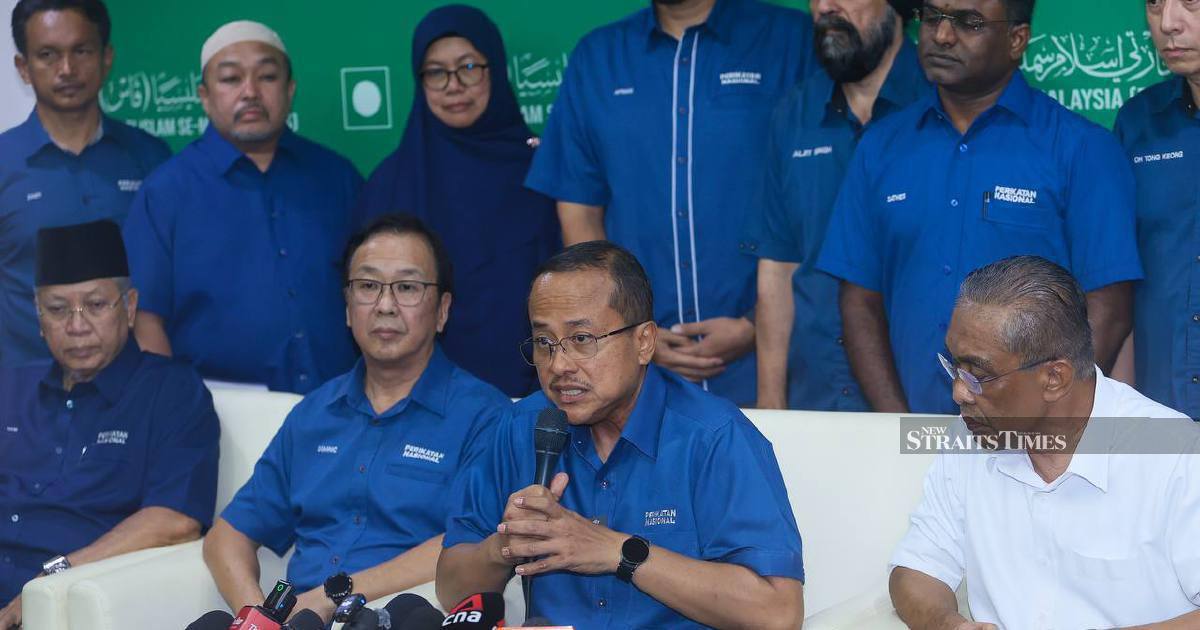
Perikatan Nasional has formally welcomed two additional political parties into its coalition fold, expanding its parliamentary representation following an unscheduled emergency meeting of its Supreme Council in Kuala Lumpur. The decision to absorb these parties marks a strategic expansion at a moment when the coalition has been navigating internal tensions and external political pressures, according to PN chairman Datuk Seri Dr Ahmad Samsuri Mokhtar, who disclosed the outcome to the media immediately after the closed-door gathering concluded.
The timing of this expansion acquisition appears strategically significant given Malaysia's fluid political landscape. Coalition membership drives tangible parliamentary numbers, which translate directly into political leverage in government formation, policy negotiations, and budget allocations. By broadening its party base, Perikatan Nasional aims to strengthen its bargaining position within the broader political ecosystem and cement its role as a central player in Malaysian politics beyond the 2023 general election outcome.
What distinguished this particular Supreme Council gathering was its emergency classification, suggesting that the admission of these two parties had achieved sufficient urgency or consensus to warrant calling an unscheduled meeting. Such procedural expedience indicates that key PN figures—including Datuk Seri Muhammad Zahid Hamidi, Tan Sri Muhyiddin Yassin, and other principal stakeholders—deemed the timing of these party accessions important enough to interrupt regular meeting schedules. The mechanics of coalition expansion typically involve complex negotiations around portfolio distribution, decision-making influence, and resource allocation, yet the public disclosure remained limited to the bare fact of acceptance.
However, the expansion announcement simultaneously illuminated deeper divisions within Perikatan Nasional that leadership has evidently chosen to suppress rather than resolve. Datuk Seri Dr Ahmad Samsuri Mokhtar conspicuously stated that discussions about Perikatan Nasional's foundational vision statement and its organisational branding—symbolised by the coalition logo—did not feature in the evening's agenda. This deliberate omission speaks volumes about the coalition's internal fault lines and differing perspectives on strategic direction among its constituent parties.
These unaddressed issues carry considerable weight for a political coalition attempting to project unity and coherent governance philosophy. A shared vision statement typically articulates a coalition's principles, long-term objectives, and policy commitments to the electorate. The absence of consensus around this foundational document suggests that member parties harbour significantly different views about what Perikatan Nasional ultimately represents and aims to achieve. Some parties may prioritise conservative social policies, others may emphasise economic development, and still others might focus on regional autonomy or identity politics—areas where consensus proves elusive.
The logo issue carries similarly substantial symbolic and practical implications. Political branding directly affects voter perception, media coverage, and coalition cohesion. A unified logo represents organisational identity and collective brand recognition. The fact that Perikatan Nasional leadership decided to postpone logo discussions while proceeding with party admissions suggests a pragmatic approach: expand the coalition's parliamentary footprint now, defer ideological and branding clarity to an unspecified later date. This sequencing strategy prioritises numerical strength over philosophical alignment—a common approach in coalition politics, but one that risks internal fragmentation if deeper matters remain unresolved indefinitely.
For Malaysian voters and political observers, the significance of these developments extends beyond mere institutional mechanics. A coalition's ability to articulate and maintain a coherent vision distinguishes it from a purely transactional alliance of convenience. Perikatan Nasional's expansion without simultaneous resolution of foundational questions invites scrutiny about whether the coalition represents a genuinely shared political project or primarily a collection of parties seeking ministerial positions and resource distribution. This distinction profoundly affects electoral credibility and governing effectiveness.
The Southeast Asian context amplifies these considerations. Regional political coalitions in Thailand, the Philippines, and Indonesia have frequently struggled when expansion prioritises numerical advantage over ideological coherence. The resulting coalitions often prove unstable, vulnerable to defection, and prone to policy incoherence. Malaysia's multiethnic, multireligious composition makes coalition stability particularly consequential, as fragmented coalitions risk becoming vehicles for competing communal interests rather than instruments of inclusive governance.
Perikatan Nasional's leadership has implicitly acknowledged that resolving vision and logo disputes requires deeper conversations than a single emergency meeting could accommodate. Yet by publicly deferring these matters while announcing expansion, they have signalled that immediate coalition-building takes precedence over internal alignment. Whether this proves strategically sound or ultimately destabilising will depend on whether these foundational issues can be satisfactorily resolved before they metastasise into more serious fractures affecting legislative cooperation and government stability.
The coming weeks will reveal whether Perikatan Nasional schedules specific sessions to address Wawasan and branding matters, or whether these items remain perpetually deferred. The coalition's ability to navigate this duality—expanding membership while managing underlying strategic divergences—will substantially determine its effectiveness as a political force and its durability as a governing instrument in Malaysia's intensely competitive political environment.