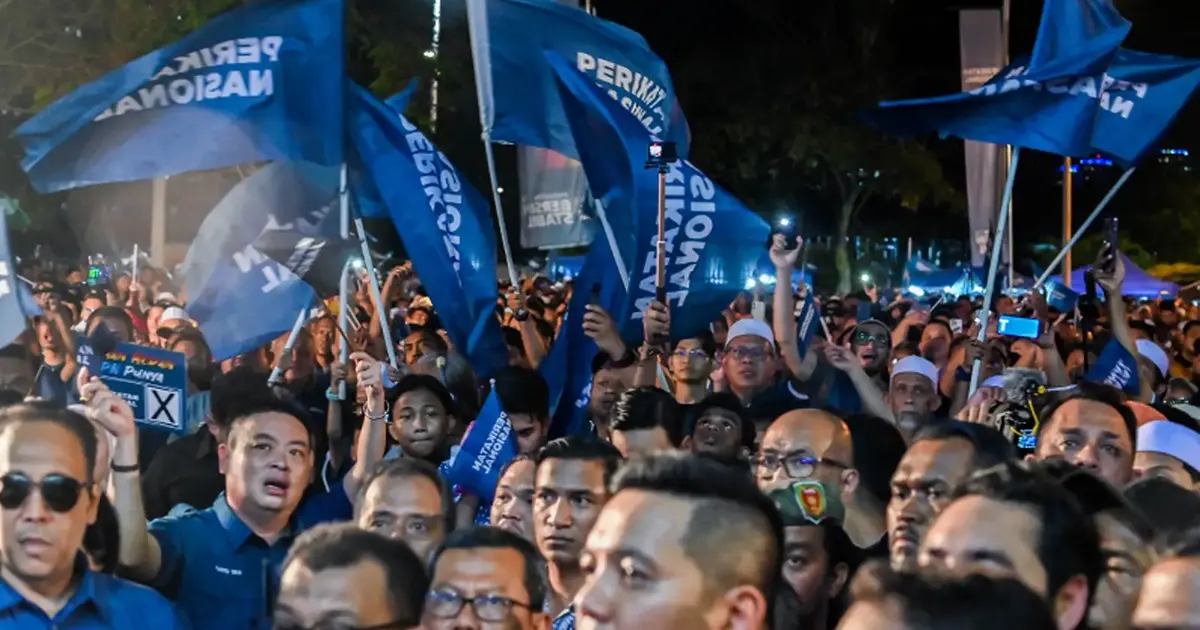
Malaysia's Perikatan Nasional coalition faces mounting pressure from internal rifts between its major components PAS and Bersatu, raising questions about the stability of an alliance that has emerged as a significant political force in recent years. According to observers tracking the bloc's dynamics, the relationship between the two parties has deteriorated markedly, moving beyond typical political disagreements into what analysts characterise as a more destructive phase of competition.
Yusri Ibrahim, chief researcher at the Ilham Centre, describes the current state of relations within Perikatan Nasional as having entered a "guerrilla war" stage, suggesting that the coalition's difficulties have become more entrenched and harder to resolve through conventional means. This assessment carries particular weight given the Ilham Centre's role as an independent think tank focusing on political analysis and governance issues. The characterisation implies that rather than open confrontation or formal disputes, the parties are now engaging in lower-intensity but sustained conflict that corrodes institutional cohesion.
The emergence of such tensions within Perikatan Nasional reflects broader patterns in Malaysian politics where coalitions often struggle to maintain unity once initial electoral objectives have been achieved. The bloc, which consolidated several opposition forces and Bersatu members following the 2022 elections, has positioned itself as an alternative to the Pakatan Harapan-led government. However, maintaining this position requires careful management of competing interests and ambitions among its constituent parties, a task that appears increasingly difficult.
PAS, as the dominant partner in several state governments and a significant force in federal politics, carries substantial weight within the coalition. The Islamist party's vision for governance and policy priorities does not always align seamlessly with Bersatu's positioning, creating friction points around resource allocation, candidate selection, and policy direction. These practical disagreements, when unresolved through dialogue, tend to fester and develop into personal rivalries and institutional hostilities that become harder to bridge over time.
Bersatu, which broke away from the United Malays National Organisation (UMNO) and subsequently formed Perikatan Nasional, brings a different power base and political philosophy to the partnership. The party's trajectory and its founder Muhyiddin Yassin's personal political ambitions can conflict with PAS's own goals and decision-making structures. When coalition partners pursue divergent strategies without clear coordination mechanisms, the resulting confusion weakens the entire bloc's coherence and public messaging.
For Malaysian observers and political analysts, the implications extend beyond academic interest in coalition management. The stability or instability of Perikatan Nasional affects the broader political balance in the country and influences which parties have credible claims to govern. A weakened or fractious coalition cannot effectively challenge a sitting government or provide voters with a compelling alternative vision. This dynamic potentially benefits the currently ruling parties, which face less organised opposition.
The timing of these tensions is noteworthy given Malaysia's political calendar and the upcoming opportunities for parties to reshape their positions and alliances. Coalition members typically use periods of negotiation before major electoral cycles to press their demands and secure advantages for their base supporters. If such negotiations proceed amid deep mistrust and parallel competition, they are unlikely to produce agreements that address underlying grievances or restructure incentives in ways that promote unity.
The "guerrilla war" characterisation also suggests that senior leaders may lack the authority or willingness to impose discipline and enforce coalition agreements. When mid-level party members, grassroots organisers, and state-level politicians begin operating independently rather than following coordinated strategy, the effect is corrosive to institutional effectiveness. Small incidents escalate into larger disputes, rumours spread and harden into perceived facts, and trust evaporates gradually across party structures.
For Southeast Asian observers of Malaysian politics, the Perikatan Nasional situation illustrates recurring challenges in maintaining multi-party coalitions in democratic systems. The bloc's potential unravelling would represent a significant development in Malaysian political competition, potentially reshaping the landscape for the next general election and altering the country's political trajectory. Whether the coalition's leadership can arrest this deterioration through renewed dialogue, restructured power-sharing arrangements, or other mechanisms remains uncertain, but the current trajectory as described by analysts suggests the problems have moved beyond the early warning stage into an active crisis phase requiring urgent intervention.
The stakes extend to governance and policy delivery, as uncertainty within the coalition affects its ability to coordinate on legislative priorities, hold the government accountable through parliamentary functions, and present coherent policy alternatives to voters. A divided opposition typically serves incumbent governments well, allowing them greater latitude in their own decision-making and reducing scrutiny from potential challengers.