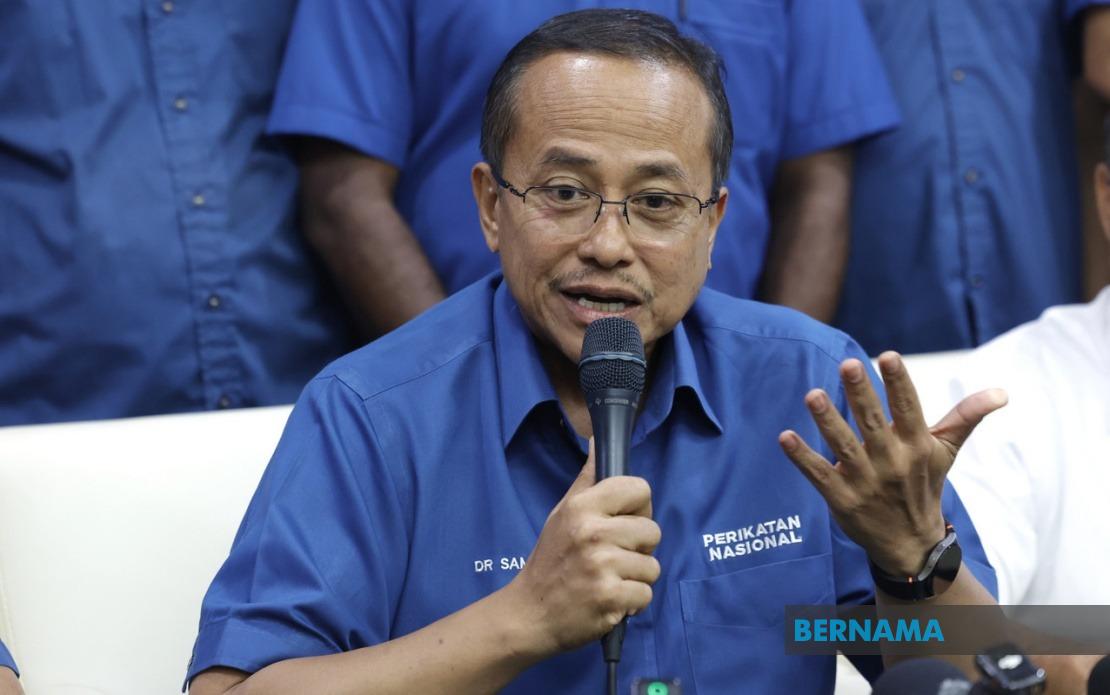
The Perikatan Nasional coalition has locked in its electoral blueprint for Negeri Sembilan's upcoming 16th state election, with its Supreme Council endorsing a carefully negotiated seat distribution among its four component parties. PN chairman Datuk Seri Dr Ahmad Samsuri Mokhtar announced that the coalition has unified behind a single branding strategy, with all PN-backed candidates standing under the Perikatan Nasional logo rather than their individual party insignias—a consolidation move designed to project cohesion in Malaysia's fractious opposition landscape.
The seat allocation framework encompasses PAS, Parti Gerakan Rakyat Malaysia (Gerakan), Parti Bumiputera Perkasa Malaysia (Wawasan), and the Malaysian Indian People Party (MIPP), each securing designated constituencies within the state's 36-seat legislature. This carving-up of electoral territory represents weeks of backroom negotiation, as PN attempted to maximise its collective firepower while maintaining internal equilibrium among partners with sometimes competing interests and geographical strongholds. By consolidating candidate announcements and unifying visual branding, the coalition leadership sought to avoid the appearance of factional division that might undermine messaging during the campaign.
Yet the carefully orchestrated unity announcement immediately unravelled with Bersatu's defection from the coalition's electoral arrangement. Tan Sri Muhyiddin Yassin, Bersatu's president, publicly declared that his party had been sidelined from seat allocation discussions and had received no meaningful consultation regarding the electoral strategy or potential partnerships with Barisan Nasional. This recrimination points to a fundamental structural weakness within PN: the coalition's inability or unwillingness to incorporate Bersatu, a party that has pivoted between opposition and government roles and retains significant parliamentary representation, into key decision-making forums.
Bersatu's decision to contest independently carries considerable implications for the opposition's electoral prospects in Negeri Sembilan. Rather than diluting anti-government votes through straight three-way competition with Barisan Nasional, a unified opposition would theoretically maximise seat capture by avoiding splits in constituencies where either PN or Bersatu candidates might otherwise split the opposition tally. Muhyiddin's public grievance—that discussions occurred without his knowledge as a coalition stakeholder—suggests deeper organisational dysfunction within the PN structure, where some partners appear to wield disproportionate influence in decision-making processes.
Dr Ahmad Samsuri's clarification that all preliminary discussions were conducted with his explicit knowledge and approval signals an attempt to close ranks following the Bersatu announcement. His assertion that the Supreme Council subsequently ratified these arrangements implies a procedural validation of actions already undertaken, perhaps indicating that the PN chairman had already secured buy-in from dominant coalition members before convening the formal council meeting. This sequence raises questions about whether smaller partners like Wawasan and MIPP received equal voice in allocating their own constituencies or whether larger players like PAS and Gerakan effectively dictated terms.
The coalition's articulated platform for the Negeri Sembilan election—centring on people's welfare, accelerating state development, and preserving inter-communal harmony—represents standard opposition messaging that attempts to position PN as a more inclusive alternative to the incumbent government. However, the jarring reality of Bersatu's estrangement complicates this narrative of unity and competence. Voters observing coalition partners unable to maintain organisational cohesion may question whether the opposition possesses the internal discipline to govern effectively should it achieve electoral victory.
For Negeri Sembilan specifically, the PN-Bersatu split introduces significant uncertainty into a state that has experienced considerable political volatility. With both the PN coalition and Bersatu fielding separate slates of candidates, and Barisan Nasional mounting what is presumably its standard campaign, the electoral terrain has become considerably more fragmented. Constituencies that might otherwise see a two-way contest between incumbent and opposition will now feature three-way or four-way races, where second-place finishes by opposition parties could hand seats to Barisan Nasional candidates despite strong anti-government sentiment.
The broader Southeast Asian context adds another dimension to this Malaysian coalition drama. As regional democracies grapple with opposition fragmentation and governmental consolidation, the Negeri Sembilan election offers a microcosm of opposition alliance-building challenges. Malaysia's experience demonstrates how personality-driven politics, historical grievances, and institutional exclusion can rapidly deteriorate coalition arrangements, even when partners theoretically share policy alignment and anti-incumbent incentives.
For Malaysian observers and political analysts, the coming weeks will reveal whether Dr Ahmad Samsuri can contain further defections or whether additional PN component parties might follow Bersatu's lead in reassessing coalition membership. The public announcement of approved seat allocations and a unified logo represents an attempt to project settled arrangements, yet the immediate eruption of discord suggests that internal negotiations remain unsettled. How effectively PN and Bersatu campaign—whether they pursue mutual attacks or maintain strategic separation—will substantially influence whether the fragmented opposition maximises its vote share or allows government candidates to capitalise on divided anti-incumbent votes.

