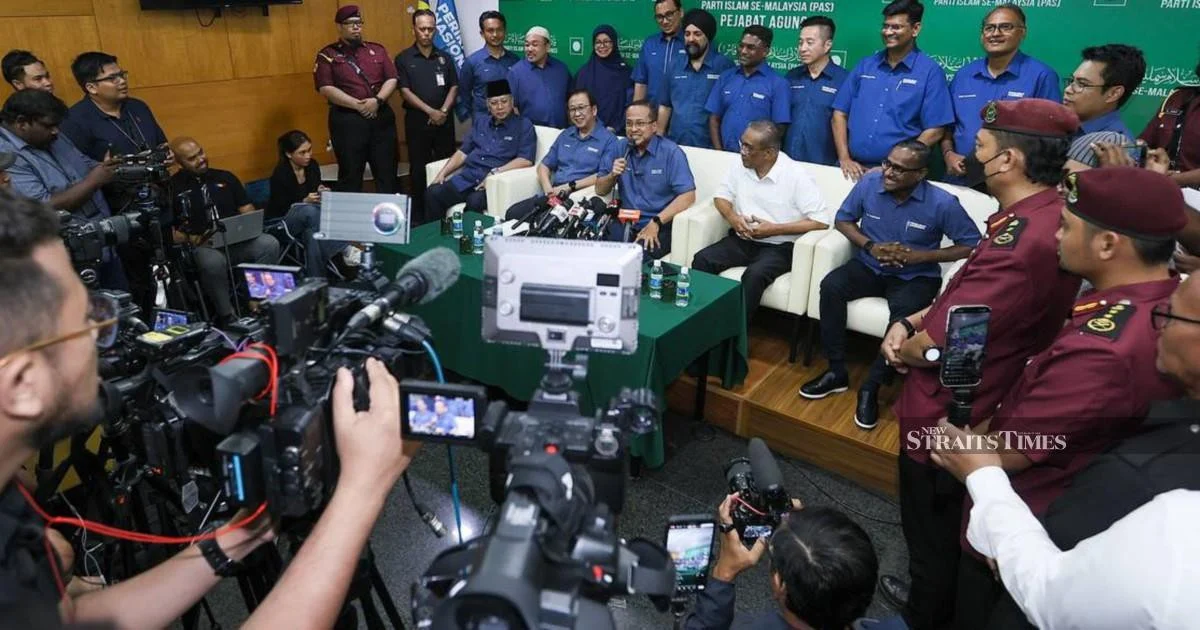
The Perikatan Nasional coalition moved swiftly to resolve internal negotiations surrounding the Johor state election by scheduling a critical meeting to lock in seat allocations across its component parties. This decisive step reflects the urgency within the opposition pact to present a unified front in one of Malaysia's crucial electoral battlegrounds, where state politics carry significant weight in national power dynamics.
The coalition's decision to convene an emergency gathering underscores the complexity of managing seat distributions when multiple parties with differing organisational strengths must reach consensus. Johor, historically a political stronghold and traditional Barisan Nasional territory until recent political upheavals, represents the type of contest where marginal gains or losses can substantially influence the broader political landscape. For Perikatan Nasional, demonstrating organisational competence through timely seat allocation sends important signals about the coalition's readiness to govern.
Johor's electoral significance extends beyond state-level considerations. As Malaysia's second-largest state by population and a major economic centre, election results there often provide early indicators of shifting voter sentiment that can reverberate through subsequent federal contests. The state has experienced dramatic political realignment in recent years, transitioning through various coalition arrangements and producing unexpected outcomes that confounded conventional predictions. This volatility means parties must calibrate their electoral strategies with precision, allocating resources where candidate quality and ground organisation can maximise returns.
Within Perikatan Nasional's structure, the seat-sharing discussion likely involves balancing the competing interests of Parti Islam Se-Malaysia, Bersatu, Pas, and potentially other affiliated parties or independent candidates who may contest under the coalition banner. Each component party brings distinct voter bases, regional strongholds, and organisational capabilities that must be weighed when determining optimal seat distributions. The challenge intensifies because different parties may hold overlapping aspirations for constituencies where they perceive genuine winning chances.
The timing of this decisive meeting suggests coalition leaders recognised that prolonged negotiations could undermine campaign momentum and create opportunities for internal dissatisfaction to leak into public discourse. Quick resolution allows parties to immediately mobilise their campaign machinery, recruit candidates, and begin grassroots organising without the distraction of unresolved seat disputes. In competitive electoral environments, this head start in campaign preparation can translate into measurable advantages.
For Malaysian observers monitoring opposition dynamics, the Perikatan Nasional seat allocation process illuminates how multi-party coalitions navigate internal governance challenges while maintaining sufficient cohesion to mount credible electoral challenges. Unlike single-party systems where leadership decisions face minimal internal friction, coalition politics requires continuous negotiation and compromise. The speed with which Perikatan resolved the Johor matter suggests relatively functional internal mechanisms, though whether all components accepted the final allocation without serious rancour remained to be seen.
The Johor election holds particular importance for Perikatan Nasional's broader strategic positioning. A strong performance could provide momentum for federal-level campaigns and demonstrate the coalition's capacity to deliver electoral victories in significant states. Conversely, disappointing results would invite questions about the coalition's viability and potentially trigger recriminations among member parties regarding seat allocation decisions.
Regionally, Southeast Asian observers and international analysts following Malaysian politics monitor state elections closely as indicators of governance transitions and electoral stability. How Perikatan Nasional performs in Johor offers insights into whether the coalition can consolidate its position as a credible alternative to the ruling coalition, or whether internal contradictions might limit its electoral ceiling.
The emergency nature of the meeting also suggests coalition leaders prioritised decisiveness over extended deliberation, a characteristic that could serve the coalition well if translated into campaign execution. Voters often respond positively to political actors projecting organisational confidence and purposeful direction, even when underlying disagreements persist within structures they cannot directly observe.
As Perikatan Nasional moved forward with finalising seat distributions, the broader political climate continued evolving. Economic pressures, governance performance, and federal-level dynamics would all influence voter calculations in Johor, regardless of which candidates each party ultimately fielded. The seat allocation meeting represented merely one necessary administrative step within a vastly more complex electoral competition.
The conclusion of seat negotiations opened new chapters in campaign strategy. Each party would now assess their allocated constituencies, evaluate incumbent performance where relevant, and determine whether current representatives possessed sufficient standing to retain support or whether new candidates might better position the party for victory. These secondary decisions, largely invisible to public view, would ultimately prove as consequential as the initial seat allocation itself.