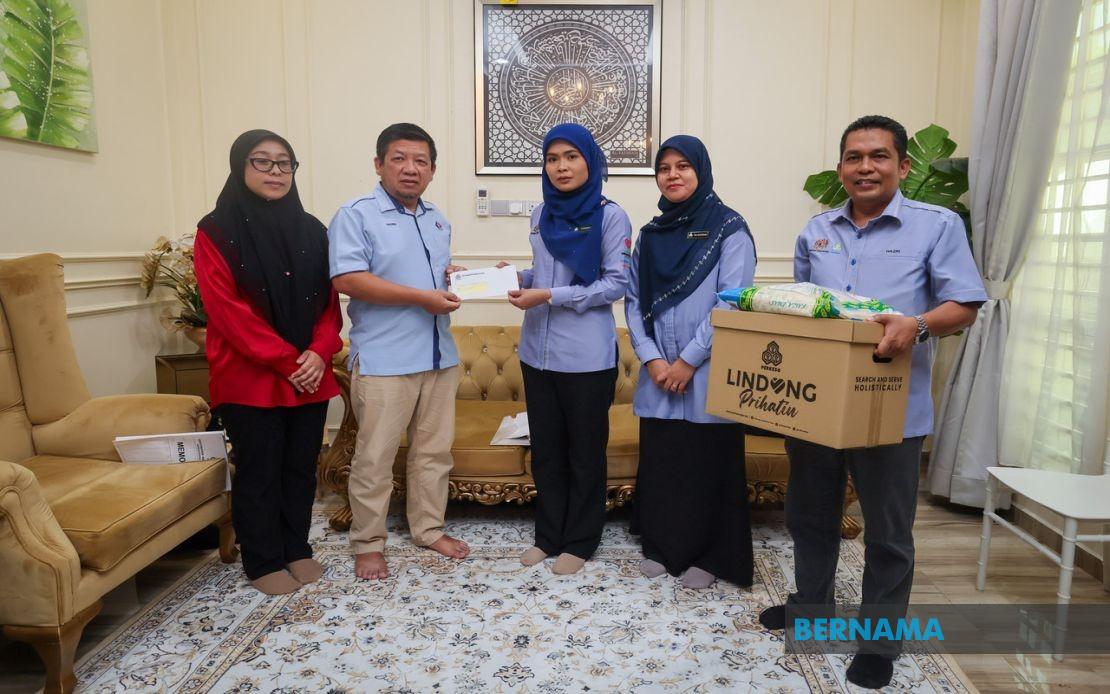
Malaysia's Social Security Organisation (PERKESO) has channeled almost RM3.5 million in various benefits to workers and their families across Kelantan during the first half of 2024, according to Nor Aziemah Ismail, the state's deputy director. The disbursement programme reflects PERKESO's commitment to providing financial protection for employees facing workplace challenges and their dependants during difficult circumstances.
The lion's share of this allocation, totalling RM2.388 million, went towards Temporary Disablement Benefit (TDB) payments made under the Employees' Social Security Act 1969. These payments support workers who suffer injuries or illnesses at work that temporarily incapacitate them from performing their regular duties. The TDB scheme represents a critical safety net for the working population, ensuring they receive income replacement during recovery periods before returning to productive employment. For many Kelantan workers in manufacturing, construction, and other hazardous occupations, this benefit provides essential financial stability when they cannot earn regular wages.
Beyond temporary disablement support, PERKESO distributed RM73,000 in Dependants' Benefit to the next of kin of workers who lost their lives due to employment-related accidents. These payments acknowledge the devastating impact workplace fatalities have on families left behind and provide immediate financial assistance during the grieving period. Kelantan's industrial workforce, particularly in sectors such as agriculture, rubber processing, and small-scale manufacturing, faces inherent occupational risks that can result in fatal accidents, making this component of PERKESO's coverage particularly vital for vulnerable families in the state.
Funeral assistance formed another substantial component of PERKESO's outreach, with approximately RM1 million distributed as Funeral Benefits to families of deceased workers during the six-month period. Each eligible claim receives RM3,000, recognising both the immediate financial burden funeral expenses place on grieving families and the cultural importance of proper burial rites in Malaysian society. PERKESO's commitment to processing these claims within twenty-four hours of complete documentation submission demonstrates institutional responsiveness to time-sensitive family needs. The expedited approval process reflects an understanding that funeral arrangements require rapid decision-making and cannot await lengthy bureaucratic procedures.
The organisation has also expanded coverage through its innovative 24-Hour Employment Injury Scheme, which fundamentally restructures workplace accident protection by extending coverage beyond traditional working hours. Unlike conventional schemes that recognise only incidents occurring at work premises or during scheduled work time, this approach acknowledges that injuries can compromise workers' capacity to earn income regardless of when they occur. The scheme protects contributors even when accidents happen during personal activities, provided they have not migrated from employment-related duties entirely. This progressive framework recognises modern employment realities where the line between work and personal time has blurred considerably, particularly for employees in service industries and those with flexible schedules.
Nor Aziemah highlighted nine approved claims under this expanded scheme in Kelantan, with total sick leave benefit payments reaching RM1,300 for eligible recipients. Among the approved cases were accidents occurring during motorcycle convoy participation and while transporting children to tuition classes—incidents that would traditionally fall outside conventional workplace injury coverage. These examples illustrate the scheme's practical value for ordinary workers facing unexpected circumstances that temporarily prevent them from generating income. By covering such incidents, PERKESO acknowledges that workplace protection must adapt to contemporary lifestyles rather than restricting itself to rigid historical definitions of what constitutes an employment-related injury.
The distribution of these benefits across Kelantan underscores the significant role PERKESO plays in the state's social security infrastructure. Kelantan's economic profile, characterised by substantial agricultural and light industrial activity alongside growing service sectors, exposes workers to varied occupational hazards. The substantial TDB payments indicate that workplace incidents occur with regularity, necessitating robust income replacement mechanisms to prevent affected workers from plunging into financial distress. For a state where many workers operate with limited financial reserves, the immediate availability of PERKESO benefits can mean the difference between maintaining household stability and facing severe hardship during recovery periods.
The efficient processing of funeral benefits within twenty-four hours reflects institutional capacity building that benefits from centralised procedures and dedicated staff training. PERKESO's Kelantan office has evidently developed streamlined workflows that balance thoroughness in verification with urgency in disbursement. This efficiency matters considerably in a cultural context where funeral arrangements typically occur within days of death and families face both emotional and financial pressures. The rapid approval timeline reduces administrative stress layered atop grief and enables families to focus on meaningful commemoration rather than navigating bureaucratic requirements.
The expansion of coverage through the 24-Hour Employment Injury Scheme represents a policy evolution reflecting feedback from claimants and changing workplace realities. Traditional schemes built around the assumption that accidents either occur at work or do not qualify fail to account for the interconnected nature of modern working life. Workers in transport, hospitality, and service sectors frequently encounter situations where personal activities directly relate to their capacity to work. The broadened scheme acknowledges these realities while maintaining reasonable safeguards—the requirement that incidents not stem from complete disengagement from employment duties prevents coverage creep into entirely unrelated activities. This calibrated expansion demonstrates policy adaptation to legitimate contemporary needs rather than wholesale dismantling of scheme boundaries.
For Malaysian workers and their families, PERKESO's Kelantan operations exemplify the importance of comprehensive social security mechanisms in a middle-income economy where formal employment relationships remain concentrated among specific demographics. The half-year figures suggest that workplace injuries and fatalities occur with regularity requiring sustained benefit administration capacity. As Malaysia continues industrialising and moving into higher-value manufacturing and services, ensuring robust occupational safety nets becomes increasingly critical. PERKESO's performance in Kelantan demonstrates that such systems can function effectively when adequately resourced and staffed, providing workers with the financial protection they need when facing employment-related misfortunes.
Looking forward, the scale of benefits distributed across various schemes suggests opportunities for preventive approaches that might reduce accident rates and dependence on income replacement programmes. While PERKESO's primary function remains providing social security coverage, collaborating with workplace safety regulators and industry associations could help reduce the incidents generating claims. Kelantan's specific risk profile—shaped by its economic structure and workforce composition—warrants targeted safety initiatives that complement rather than replace PERKESO's critical safety net functions. The organisation's efficiency in claim processing and expanding coverage demonstrates its institutional capacity for undertaking even more comprehensive occupational health and safety promotion alongside benefit administration.

