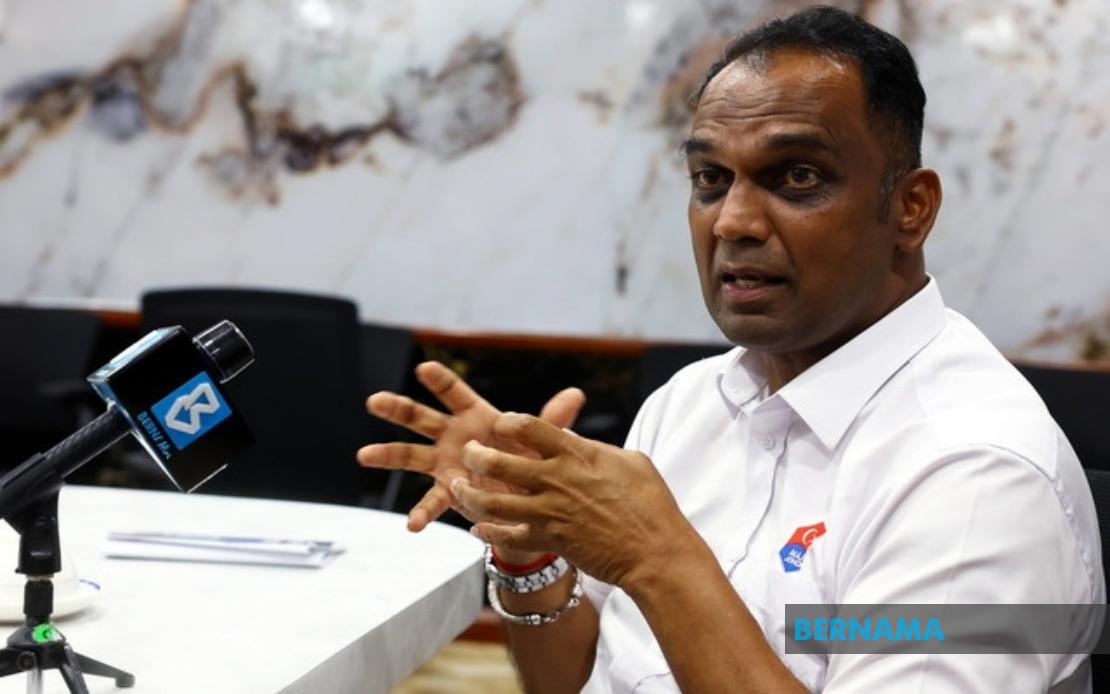
P. Pannir Selvam, the Barisan Nasional candidate contesting the Perling seat in Johor's 16th state election, is charting a traditional path through his candidacy by emphasising direct community dialogue over conventional campaign machinery. His strategy centres on what he terms "pocket talks"—intimate small-group sessions held across the constituency—which he believes create meaningful connections with voters in ways that social media and mass messaging cannot replicate. Making his debut in state-level politics, Pannir Selvam has adopted this interpersonal approach despite recognising the growing power of digital platforms in modern elections.
The rationale underpinning his campaign strategy reflects a broader tension in contemporary Malaysian politics between technological efficiency and the enduring value of personal accountability. Pannir Selvam argues that pocket talks accomplish multiple objectives simultaneously: they narrow the traditional distance between elected representatives and constituents, provide a venue for voters to articulate local grievances directly, and allow candidates to demonstrate their character and commitment in unscripted settings. This approach suggests confidence in his ability to engage substantively with voter concerns rather than relying on polished messaging or intermediaries. The candidate has reported encouraging responses to these sessions across the Perling state assembly district, which encompasses 109,992 registered voters.
Pannir Selvam's campaign is notably strengthened by his family's political pedigree. His father, Datuk KS Balakrishnan, brings substantial gravitas to his candidacy—a former assemblyman representing Permas for five consecutive terms and a former member of Johor's state executive council. At 84 years old, Balakrishnan has actively campaigned alongside his son regardless of weather conditions, a visible symbol of dynastic commitment that carries weight in Malaysian political culture. For Pannir Selvam, his father represents not merely family support but embodied wisdom about the responsibilities and ethical dimensions of public service, providing a form of political capital that transcends money or organisation.
The mentorship dynamic between father and son reveals important aspects of how political knowledge is transmitted within Malaysian society. Pannir Selvam credits his father with teaching him to navigate public service without regard for racial or religious divisions, to absorb criticism constructively, and to approach governance with sincerity and integrity. These values, emphasised repeatedly in the candidate's campaign narrative, position him within a particular tradition of public service that prioritises principle over patronage. Whether voters in Perling respond to this framing may indicate broader shifts in what constituencies expect from their representatives during periods of political flux.
Prior to seeking state office, Pannir Selvam served on the Johor Bahru City Council (MBJB), experience that informs his policy pledges for Perling. He has identified two concrete problem areas deserving immediate attention: the traffic congestion plaguing the constituency and the chronic shortage of parking facilities around the Taman Perling Public Market. These grievances, while seemingly mundane, reflect genuine friction points in daily life for urban residents and illustrate the kind of issues that local government competence addresses. By anchoring his candidacy to municipal administration rather than grand ideological statements, Pannir Selvam signals a practical, problem-solving orientation to governance. His argument that prior experience in municipal administration positions him to handle such concerns more effectively rests on a claim of technical capacity rather than partisan rhetoric.
The Perling constituency presents a three-way contest that complicates Pannir Selvam's path to victory. His opponents include Alan Tee Boon Tsong representing Pakatan Harapan and Boo Wei Han contesting for Parti Bersama Malaysia. The presence of three candidates reflects the fractured political landscape in Johor, where BN's traditional dominance has faced serious challenge in recent electoral cycles. Each candidate's presence potentially fragments the vote, though whether this fragmentation benefits or harms Pannir Selvam depends on demographic and political alignments within Perling that extend beyond what personal campaigning alone can control.
The broader context of the 16th Johor State Election amplifies the significance of contests like Perling. Across Johor's 56 assembly seats, 172 candidates are competing—a figure that reflects the genuine competitiveness characterising Malaysian state politics in the current era. The election, scheduled for July 11 with early voting on July 7, comes at a moment when Johor's political trajectory remains genuinely uncertain. For Barisan Nasional, retaining ground in traditional strongholds matters enormously, yet demographic and political shifts have made even supposedly safe seats less predictable than in previous decades.
Pannir Selvam's emphasis on pocket talks might also reflect strategic calculations about resource allocation. Personal, decentralised campaigning requires substantial volunteer networks and ground presence but can be less capital-intensive than sophisticated media campaigns. For a candidate making his state-level debut, building a functioning campaign apparatus from scratch necessitates maximum engagement from existing networks—precisely what family connections and grassroots party structures provide. His father's visibility in the campaign reinforces these networks, lending weight to candidate appearances and lending legitimacy to campaign claims.
The candidate's framing of social media as a supplementary tool rather than a primary channel indicates awareness that Perling's electorate may not rely uniformly on digital platforms for political information. Older voters, who still constitute significant proportions in many constituencies, respond more readily to traditional personal contact. By treating pocket talks as primary and social media as secondary, Pannir Selvam positions himself to maximise reach across age cohorts and digital literacy levels. This pragmatism, grounded in realistic assessment of how different voter segments actually engage with politics, demonstrates the gap between digital-first campaign discourse and on-the-ground realities in constituencies like Perling.
Looking forward, Pannir Selvam's campaign model will provide data about whether traditional grassroots organising can compete effectively against better-funded or more digitally sophisticated opponents. His success or failure in Perling may influence how other BN candidates approach state and federal contests in coming years, particularly as generational transitions force Malaysian parties to reconsider campaign orthodoxy. For voters in Perling, the choice between Pannir Selvam, Tee, and Boo represents a decision about which party and individual can most effectively address their immediate concerns—traffic flow and market parking—while embodying the values and qualities they expect in elected representatives. Whether Pannir Selvam's pocket talks translate that personal engagement into electoral support will emerge when Johor voters cast their ballots on July 11.

