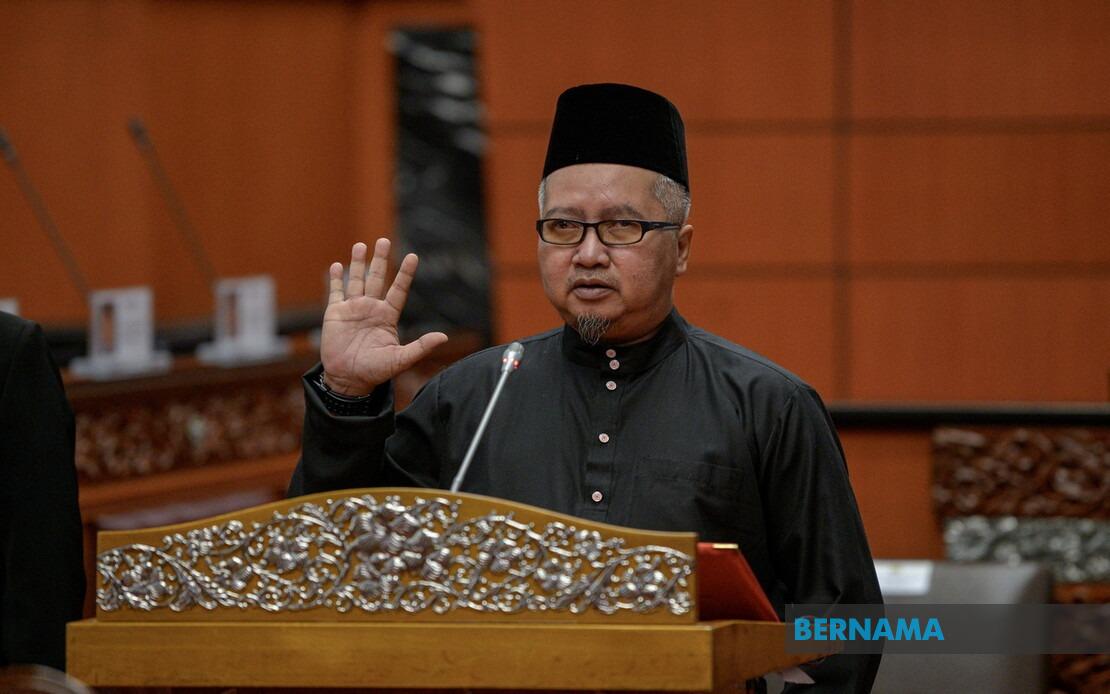
Senator Azahar Hassan, the Perlis secretary of Parti Pribumi Bersatu Malaysia, announced his departure from the party on Tuesday in Kangar, stepping down from all party roles without delay. The move marks a significant internal shift within Bersatu's Perlis chapter, raising questions about factional tensions within the coalition ahead of what could be a politically turbulent period for the state-level party apparatus.
In a brief statement explaining his decision, Azahar framed his resignation as a principled move rooted in careful deliberation about the party's trajectory. He emphasised that the departure stemmed from a thorough assessment of recent developments affecting the party's direction and his own political convictions. His language suggested this was not an impulsive decision but rather one arrived at through sustained reflection on his alignment with the party's stated objectives and operational course.
The senator's explicit framing of his exit around personal principles and political direction offers a window into potential disagreements within Bersatu's broader structure. While he did not detail specific grievances, his emphasis on pursuing a struggle he genuinely believes in implies fundamental differences over the party's strategic priorities or ideological commitments. Such departures at the state secretary level are rarely divorced from wider factional contests within national parties seeking to consolidate influence across the federation.
Despite severing ties with Bersatu organisationally, Azahar made clear his intention to preserve his role as a Dewan Negara member representing Perlis interests. This separation between party membership and legislative duty underscores a deliberate choice to maintain his public service commitment whilst stepping away from the party machinery. By continuing as a senator, he signals that his quarrel lies with the party apparatus rather than with his obligation to represent constituents in the upper chamber.
Azahar's appointment to the Dewan Negara came relatively recently, having been nominated by the Perlis State Legislative Assembly in October 2024. His tenure as a senator has thus been brief, making his swift departure from the party organisation all the more conspicuous. The timing raises speculation about whether his resignation reflects longer-standing misgivings that crystallised following his entry into the federal legislative body, or whether it represents a more recent recalibration of his political priorities triggered by specific party developments.
The resignation assumes additional significance within the context of Perlis' political landscape, where power configurations at state and federal levels frequently intertwine. Bersatu's performance in the state has been closely watched as a barometer of the party's broader health and coalition dynamics. Leadership transitions or defections at the state secretary level invariably ripple outward, affecting recruitment narratives and internal party morale beyond Perlis itself.
Bersatu, as a component of the Pakatan Harapan coalition, has navigated considerable internal turbulence since its founding, with various prominent figures departing at different junctures over ideological or strategic disagreements. Azahar's exit, whilst not at the highest national level, fits a pattern of ongoing recalibration within the party's ranks as members reassess their political positioning. For Perlis specifically, the departure of a state-level secretary necessitates succession arrangements and may trigger broader questions about the party's capacity to retain and motivate senior organisational figures.
The lack of detailed explanation in Azahar's statement leaves room for interpretation regarding the underlying causes of his departure. Political observers in Malaysia typically parse such announcements carefully, reading between lines about personal principles and political direction to discern whether the exit signals dissatisfaction with national party leadership, state-level governance, factional struggles, or some combination thereof. The senator's restraint in not elaborating publicly suggests an attempt to manage the political fallout whilst preserving relationships within and beyond the party.
For regional observers, the resignation illustrates the fluid nature of Malaysian party politics, where individual figures retain considerable discretion to reassess their political allegiances based on evolving circumstances. Unlike rigid party structures elsewhere, Malaysian political parties often accommodate such transitions, with departing members able to maintain separate legislative roles or seek alternative political homes. Azahar's decision to remain a senator whilst quitting the party demonstrates this characteristic flexibility.
The implications for Bersatu's Perlis operations extend to candidate selection, grassroots mobilisation, and internal morale heading into any future electoral contests. State secretaries typically shoulder substantial responsibility for party machinery at the grassroots level, coordinating with district and division leaders. Replacing such a figure requires not merely appointing a successor but ensuring continuity of party functions and maintaining momentum among rank-and-file members who may themselves be reconsidering their affiliations.
More broadly, Azahar's departure adds to a broader narrative of ongoing reconfiguration within Bersatu as the party navigates its place within Pakatan Harapan and the federal coalition landscape. Individual resignations, when they occur at meaningful organisational levels, often presage deeper questions about the party's strategic direction, leadership, and capacity to articulate a compelling political vision that retains the commitment of cadre members. Whether this particular exit represents an isolated incident or symptomatic of wider discontent remains to be seen in coming months.

