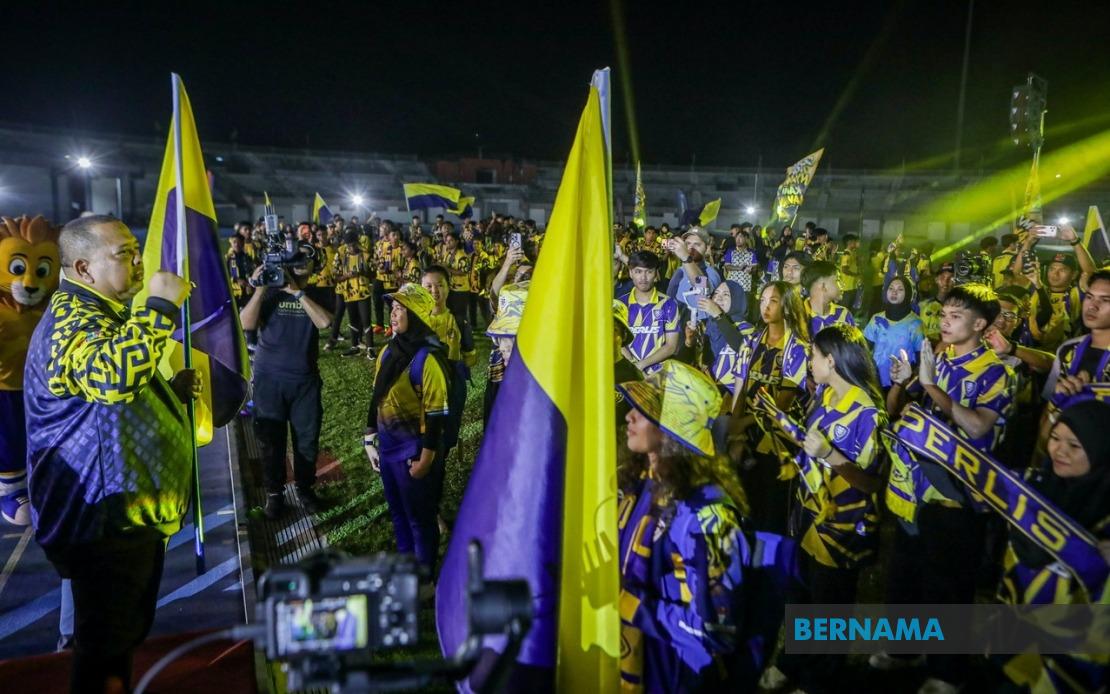
Perlis has scripted a milestone in its sporting history by capturing 17 gold medals at SUKMA 2026, the national biennial games held in Selangor, an achievement that marks the state's strongest showing since it began competing in the tournament. The northern state's contingent finished with a combined medal haul of 42 medals—comprising 17 gold, seven silver, and 18 bronze—a result that state leadership views as validation of its sustained investment in athletic development and grassroots sports infrastructure.
Menteri Besar Abu Bakar Hamzah attributed the breakthrough to a coordinated effort spanning multiple stakeholders, from state government support through to the dedication of individual athletes, coaching staff, sports associations, and the Perlis State Sports Council. Speaking after chairing an executive council meeting at Kompleks Seri Putra in Kangar on August 26, the state leader emphasised that this performance represents tangible progress emerging from years of systematic planning and resource allocation aimed at building competitive sports pathways.
Among the standout achievements that captured national attention was a record-breaking performance in shot put, where Perlis athletes surpassed the existing SUKMA benchmark in the discipline. Such individual excellence reflects the calibre of preparation now evident among the state's sporting cadre, suggesting that targeted high-performance coaching and access to training facilities have begun translating into medal-winning performances on the national stage.
Equally noteworthy was Perlis' dominance in weightlifting, where the state's contingent claimed the overall championship title across the entire event. This particular success underscores how focused investment in specific sports codes—where infrastructure, coaching expertise, and athlete selection are aligned—can yield disproportionate returns and position a smaller state competitively against larger, better-resourced competitors. The weightlifting victory signals that Perlis has identified niches where excellence is achievable and has committed resources accordingly.
The significance of Perlis' SUKMA 2026 results extends beyond mere medal counting. For a northern state that has historically operated with more modest sporting budgets compared to larger peninsular states, this performance carries psychological and political importance. It demonstrates that sustained commitment to sports development, even with constrained resources, can produce measurable returns and international-standard competitors. This narrative matters in Malaysia's federal structure, where states compete for recognition and resources, and sporting success often serves as a tangible indicator of effective governance.
Abu Bakar's announcement that the state government is currently formulating incentive packages for medal-winning athletes reflects an understanding that maintaining momentum requires more than one-off celebration. Retention and motivation of talented performers is crucial to sustaining competitive levels in future games. The timing of these incentive discussions, occurring concurrently with the Para SUKMA Selangor 2026 competitions, also signals that Perlis is broadening its sports development strategy beyond conventional able-bodied athletics to encompass Paralympic disciplines.
The state's roadmap going forward, as articulated by the Menteri Besar, centres on deepening investments across several interconnected areas. Talent identification and development programmes remain foundational, ensuring that potential is spotted early and nurtured systematically. High-performance training initiatives must be scaled to accommodate growing numbers of competitive athletes, while coaching quality remains paramount—coaching excellence, particularly at international-standard levels, remains a persistent challenge across most Malaysian states.
Sports science support represents another frontier where Perlis, like many Malaysian states, must strengthen capacity. Access to sports science expertise—encompassing physiology, biomechanics, nutrition, and sports psychology—increasingly differentiates elite programmes from mid-tier operations. Similarly, facility development cannot be neglected; without appropriate training grounds, competition venues, and recovery infrastructure, even well-coached athletes encounter developmental ceilings.
Athlete welfare considerations are equally critical. Beyond cash incentives, sustainable sports development requires addressing athletes' longer-term needs: educational opportunities, post-competitive career pathways, medical support, and mental health resources. States that attend to these dimensions tend to develop deeper talent pipelines and more resilient sporting cultures.
Perlis' SUKMA 2026 achievement offers instructive lessons for other smaller Malaysian states seeking to improve sporting performance without necessarily matching larger states' absolute spending. The results suggest that strategic focus, efficient resource allocation, stakeholder coordination, and sustained commitment over multiple Olympic cycles can overcome historical disadvantages. Whether Perlis can consolidate this progress and build towards even stronger showings in future SUKMA editions will depend on whether the state maintains political and budgetary commitment to these sports development priorities beyond the current cycle.

