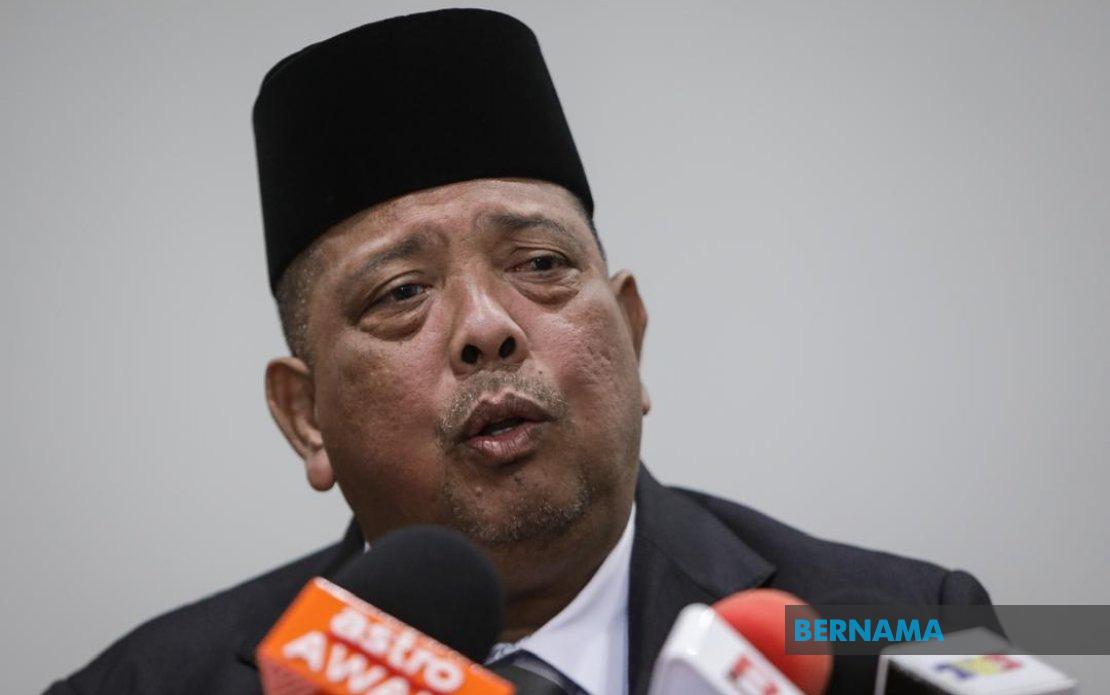
Perlis Menteri Besar Abu Bakar Hamzah has stepped away from the Parti Pribumi Bersatu Malaysia's most senior internal body, submitting his resignation letter to party headquarters in the preceding week. The announcement came during a ceremony in Kangar welcoming Thai officials from Satun province, marking the resumption of the cross-border ferry service between Kuala Perlis and Satun following its suspension due to the COVID-19 pandemic.
Abu Bakar clarified that his departure from the Bersatu Supreme Leadership Council represents a strategic decision rather than a wholesale retreat from party structures. He continues to serve as Perlis state chief of Bersatu and heads the Kangar divisional branch, preserving his influence within the party apparatus at the state and local levels. This distinction underscores an attempt to manage party obligations whilst protecting his primary governmental responsibilities.
The decision reflects the mounting pressures facing Perlis's administration, with Abu Bakar emphasizing that the competing demands of the Supreme Leadership Council prevented him from dedicating himself fully to either role. With the state legislative assembly term concluding next year, he calculated that approximately twelve months remained to implement his agenda for economic development and investor attraction, timeframes that precluded meaningful participation in high-level party governance.
The backdrop to this resignation involves a constitutional validation of Abu Bakar's governing independence. During the June 3 opening of the state assembly sitting, the Raja of Perlis, Tuanku Syed Sirajuddin Jamalullail, issued a royal decree affirming that Abu Bakar should be allowed to lead Perlis unfettered until the conclusion of the 15th state legislative assembly term. This royal intervention effectively provided political cover for the Menteri Besar to prioritize state-level performance metrics over party machinery at the national level.
Bersatu, the splinter party founded by former Prime Minister Mahathir Mohamad and later led by Tan Sri Muhyiddin Yassin, has experienced internal turbulence regarding the balance between national party structures and state-level operations. The Supreme Leadership Council, as the party's apex decision-making body, typically commands attention from senior party figures. Abu Bakar's resignation signals that some regional leaders increasingly view such commitments as incompatible with their state-level mandates, a tension that has periodically destabilized Malaysian coalition governments.
Notably, a second Perlis figure has followed a similar trajectory. Datin Marzita Mansor, the assemblyman for Sena and a state executive councillor, has reportedly likewise resigned from her position as an MPT member, though attempts to verify her decision proved unsuccessful at the time of the initial reporting. The parallel resignations suggest a pattern within Perlis's Bersatu contingent toward disengaging from national party apparatus, though the reasons underpinning Marzita's departure remain unclear without direct confirmation.
The economic dimension of Abu Bakar's statement carries particular significance for Malaysia's northern states, which compete intensely for foreign and domestic investment. Perlis, as the smallest and historically least developed state, has pursued targeted industrial and tourism initiatives to diversify its economy beyond traditional sectors. Abu Bakar's emphasis on achieving key performance indicators related to investor attraction suggests that Bersatu's internal politics may have diverted resources and attention from these development goals.
The cross-border ferry service restoration with Satun represents a tangible accomplishment of this investor-focused agenda. The Kuala Perlis-Satun route serves not merely as a tourist convenience but as a commercial corridor facilitating goods movement and business relationships between Malaysia's northwestern corridor and Thailand's southern provinces. Resuming such services after pandemic-induced disruption carries implications for regional supply chains and bilateral economic cooperation that extend beyond ceremonial significance.
For Malaysia's broader political ecosystem, Abu Bakar's move illustrates a recurring challenge in managing party discipline with regional governance. Bersatu, despite its role in the Pakatan Harapan coalition and subsequent configurations, has struggled to develop institutional frameworks that harmonize national party priorities with state executive demands. When state leaders perceive that party obligations impede their ability to deliver tangible benefits to constituents, resignation from higher party bodies becomes a rational choice despite potential reputational costs.
The timing of this resignation also warrants scrutiny given that Abu Bakar now operates under a formal royal endorsement of his state-level autonomy. The Sultan's decree removes potential accusations that resignation from the party council represents disloyalty or diminishment of commitment to Bersatu. Instead, it reframes the decision as an acknowledgment of constitutional separation between party affairs and state administration, a distinction that underpins Malaysia's federal system in theory if not always in practice.
Moving forward, the resignation may influence how other state-level Bersatu leaders calibrate their own commitments between party machinery and state governance. If Abu Bakar successfully delivers on his investor attraction and KPI targets during the remainder of his term, his decision to exit the Supreme Leadership Council could be retrospectively validated as strategically sound. Conversely, should Perlis's economic performance languish, critics might argue that party disengagement reflected priority confusion or insufficient political influence to advance state interests within national party councils.
For Southeast Asian observers, Perlis's trajectory under Bersatu warrants watching as an indicator of broader trends in Malaysian coalition politics. The state's small size and limited economic heft make it a testing ground where ideas about state autonomy and party structure can be implemented with lower stakes than in larger, more economically significant states. Abu Bakar's experiment in deprioritizing national party duties may portend either a healthier separation of governmental and party responsibilities or a fragmentation that further weakens central party coherence in Malaysia's perpetually volatile political environment.

