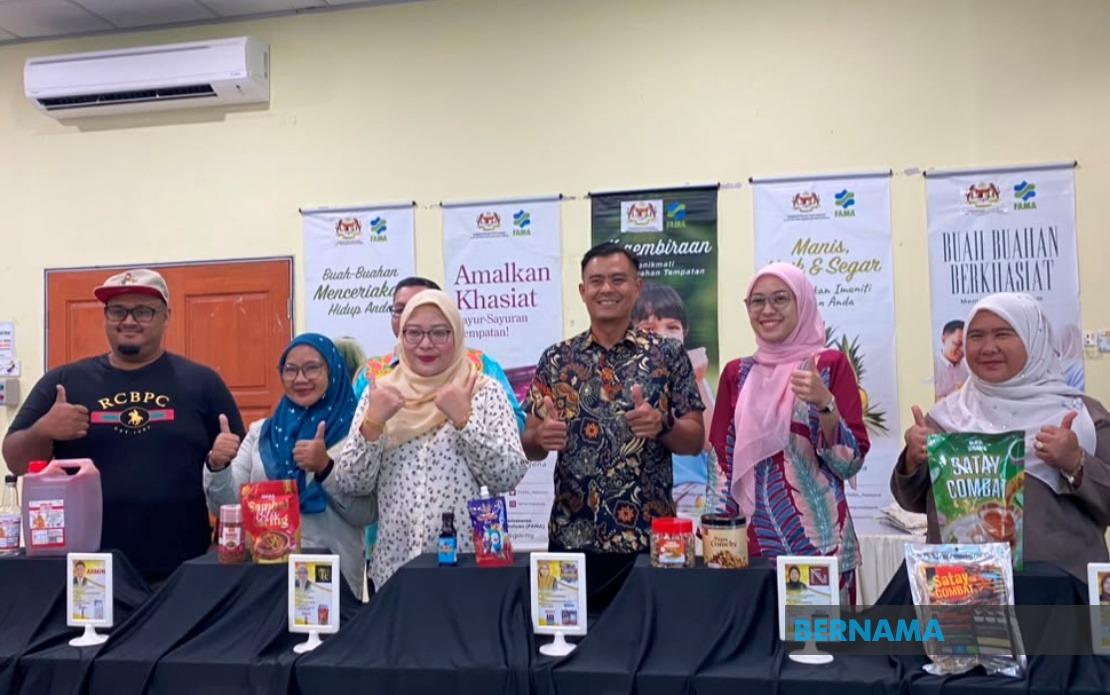
The Perlis branch of the Federal Agricultural Marketing Authority (FAMA) has injected RM510,500 into the state's agro-food sector through targeted grant disbursements to nine entrepreneurs, marking a sustained effort to strengthen the competitiveness and market reach of small food businesses operating within the state. The financial support, distributed across multiple programme streams, reflects FAMA's commitment to nurturing the Agro-Food and Agro-Based Industry (IMAT) ecosystem in Malaysia's northernmost state and underscores the broader national priority of developing value-added agricultural enterprises.
According to Mohd Anzara Azizan, the director of FAMA Perlis, the grant allocation was structured to address distinct operational needs across the entrepreneurial landscape. The largest component, RM392,000, was earmarked for agro-tourism initiatives, recognising the growing potential of farm-based tourism experiences as a revenue stream for agricultural communities. A further RM83,500 supported product image and packaging improvements, acknowledging that market perception and visual presentation significantly influence consumer purchasing decisions. The authority also allocated RM25,000 for KSHOPPE outlet enhancements and RM10,000 for marketing equipment, demonstrating a holistic approach to business development that spans physical infrastructure, brand presentation, and promotional capabilities.
The distribution strategy reflects FAMA's understanding that modern agro-food entrepreneurs require multifaceted support beyond traditional agricultural guidance. Packaging and branding assistance proves particularly crucial in an increasingly crowded marketplace where Malaysian consumers—and regional buyers—encounter numerous product choices. By helping small producers present their goods more professionally, FAMA effectively levels the competitive playing field between local SMEs and larger commercial operations. This targeted intervention addresses a persistent weakness in Malaysia's agro-food supply chain: the perception gap between quality products and their market positioning.
Mohd Anzara emphasised that these grants form part of FAMA's broader strategy to stabilise and expand entrepreneur incomes while ensuring marketing approaches align with contemporary consumer expectations. The authority recognises that technical agricultural competence alone insufficient for business survival; successful enterprises must master digital marketing, social media engagement, and brand storytelling. By supporting image and packaging improvements, FAMA tacitly acknowledges that today's agro-food businesses operate within a consumer environment shaped by visual media and online commerce.
The performance metrics reported by FAMA Perlis director offer encouraging signals about the effectiveness of these interventions. The 319 IMAT entrepreneurs currently operating in the state collectively generated RM4.8 million in sales as of the announcement date, representing a substantial 30 percent increase from the equivalent period in the previous year. This growth trajectory suggests that FAMA's assistance programmes are yielding tangible commercial outcomes, translating policy support into measurable business expansion. The acceleration rate exceeds typical small business growth patterns, indicating that targeted grants and advisory services create meaningful momentum for participating enterprises.
For Malaysian policymakers monitoring agricultural sector development, this Perlis experience carries wider significance. The state, with its comparatively smaller population and more limited industrial base compared to western peninsular neighbours, nonetheless demonstrates capacity to develop a viable agro-food entrepreneurial sector when adequate support mechanisms exist. Success in Perlis could inform replication strategies in other states seeking to diversify economic bases and reduce urban migration pressure.
FAMA's quality assurance role extends beyond grant distribution. The authority actively monitors pricing and marketing practices among assisted entrepreneurs to ensure products remain competitively positioned without compromising profitability. This oversight function prevents grant recipients from undercutting each other destructively while maintaining consumer accessibility. Such regulation proves essential in concentrated regional markets where oversupply or predatory pricing could quickly destabilise multiple small businesses simultaneously.
The breadth of FAMA's support architecture underscores institutional recognition that entrepreneurial development requires layered assistance. The authority maintains approximately nine distinct grant and support service categories specifically designed for IMAT businesses, ranging from initial product development through mature market expansion. This tiered approach allows entrepreneurs to access assistance appropriate to their business maturity stage, whether they represent fledgling ventures requiring foundational support or established operations seeking to penetrate new market segments.
For entrepreneurs across Southeast Asia monitoring Malaysia's agro-food development model, the Perlis initiative demonstrates how targeted public sector support can catalyse private sector growth. The emphasis on packaging, branding, and market presentation reflects global trends in agricultural value addition, where successful developing-country producers increasingly compete on quality and differentiation rather than price alone. Malaysian state governments utilising similar models position their agro-food sectors for regional competitiveness and potential export growth.
Moving forward, FAMA faces the challenge of ensuring grant impact translates into sustained business viability beyond the initial funding period. While the 30 percent sales growth appears impressive, longer-term success requires that recipients develop resilient operations capable of functioning without ongoing subsidy. The authority's monitoring and advisory functions become increasingly important as businesses mature, helping entrepreneurs transition from grant-dependent growth toward self-sustaining profitability.
The initiative also highlights evolving Malaysian approaches to rural economic development. Rather than relying primarily on commodity production expansion, contemporary policy increasingly emphasises value addition, direct-to-consumer marketing, and experience-based agriculture. These shifts reflect both agricultural modernisation realities and changing consumer preferences toward authenticity, traceability, and local sourcing. Perlis entrepreneurs, with FAMA support, position themselves within these emerging market trends.
As Malaysia continues calibrating its agro-food sector strategy amid regional competition and changing trade dynamics, initiatives such as FAMA Perlis's grant programme provide practical evidence regarding effective intervention modalities. The combination of financial support, technical guidance, and ongoing market monitoring creates an ecosystem conducive to entrepreneurial development. Whether this model scales successfully across Malaysia's diverse states and agricultural contexts will determine whether such targeted assistance becomes a foundational component of national agricultural policy or remains a promising but limited experiment.

