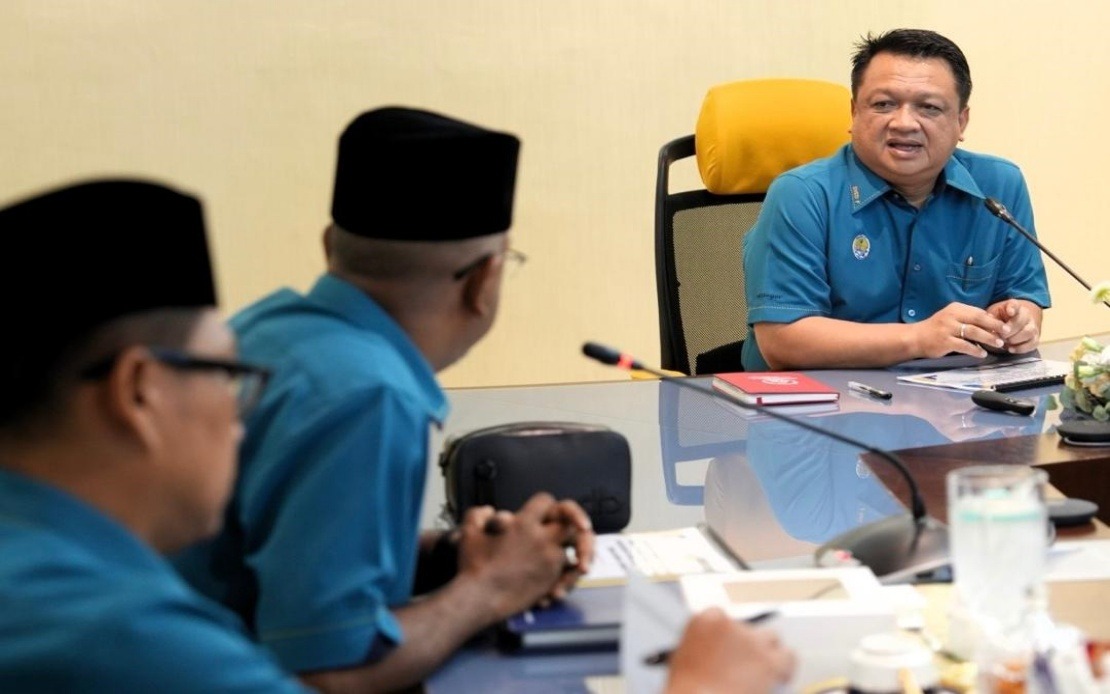
The Raja Muda of Perlis, Tuanku Syed Faizuddin Putra Jamalullail, has presented an ambitious vision for his state to become a proving ground for environmental and sustainability innovations across Malaysia. Speaking during an engagement with Kangar Municipal Council leadership, the Raja Muda argued that Perlis's relatively compact geography and population make it an ideal candidate for testing transformative green policies before potential nationwide rollout. This strategic positioning carries significance for how Malaysia approaches its broader climate commitments and could inform policy development across the wider Southeast Asian region, where comparable jurisdictions face similar environmental pressures and resource constraints.
The proposal centres on positioning Perlis as a frontrunner in renewable energy adoption, with particular emphasis on harnessing solar and biomass resources to achieve comprehensive energy transition. The Raja Muda stressed that attaining zero-carbon status would not only demonstrate tangible environmental progress but would also position Perlis as an active participant in global climate action efforts. Beyond energy, the vision encompasses intelligent waste management systems designed to minimise environmental impact while maximising resource recovery. The integrated approach reflects growing international recognition that sustainable development requires coordinated action across multiple sectors simultaneously, rather than isolated interventions in single areas.
Kangar Municipal Council President Affendi Rajini Kanth outlined the institutional framework supporting these ambitions through the Green City Action Plan (GCAP), a comprehensive strategic document developed in collaboration with multiple stakeholders. The plan received formal approval from the municipal council in February and now serves as the operational roadmap for implementing sustainability initiatives. The collaborative development process involved the Ministry of Economy, the IMT-GT Joint Business Council, ICLEI (Local Governments for Sustainability), and the Asian Development Bank, reflecting the international scale of technical expertise and financial resources being mobilised for Perlis's transformation. This multilateral engagement demonstrates how regional development projects increasingly depend on knowledge transfer and funding partnerships that transcend traditional national boundaries.
The GCAP identifies five catalytic projects designed to accelerate Perlis's transition toward a low-carbon, climate-resilient economy. These initiatives represent a holistic approach that balances economic development with environmental protection and social wellbeing, addressing the tripartite sustainability framework endorsed by the United Nations Sustainable Development Goals. The plan's alignment with Malaysia's national greenhouse gas emission reduction commitments indicates how subnational action contributes to fulfilling international climate obligations under frameworks like the Paris Agreement. For Malaysian policymakers monitoring state-level performance on environmental metrics, Perlis's comprehensive approach offers a practical template for integrating climate action into routine municipal governance.
The most visible initiative involves deploying solar photovoltaic systems across government, public, and private buildings throughout Perlis. This distributed renewable energy infrastructure reduces dependence on centralised fossil fuel power generation while creating opportunities for community participation in energy production and cost savings. The technical feasibility of extensive solar deployment in Perlis is strengthened by the state's tropical geography and consistent sunshine patterns. Implementation across mixed building ownership—government, public, and private sectors—addresses the reality that sustainable transition requires coordinated action beyond government facilities alone, engaging commercial entities and encouraging private sector investment in clean technology adoption.
Transport sustainability represents another critical dimension, with the GCAP proposing development of a Low Carbon Transport Plan alongside establishment of Micro-Mobility Zones and Non-Motorised Transport facilities. These initiatives directly address urban congestion and air quality challenges inherent to motorised transportation systems while promoting healthier, more active mobility patterns. For Malaysian cities grappling with traffic congestion and air pollution, Perlis's approach to integrating cycling infrastructure, pedestrian pathways, and compact urban design offers practical insights into retrofitting existing urban environments. The emphasis on micro-mobility acknowledges that comprehensive transport transformation requires providing appealing alternatives to private vehicle use, not merely restricting car access.
Solid waste management receives particular attention through the proposed Material Recovery Facility with 80-tonne-per-day processing capacity. This infrastructure modernises waste handling beyond traditional landfill disposal, instead prioritising material recovery and recycling to reduce environmental burden while creating economic value from waste streams. Enhanced recycling rates generate employment in collection, sorting, and processing operations while conserving virgin resources and reducing extraction pressure on natural environments. For Southeast Asia more broadly, where waste management infrastructure remains inadequate in many jurisdictions and landfill overflow poses mounting environmental challenges, demonstration of effective material recovery systems carries regional relevance.
Water resource sustainability forms an integral component through comprehensive rainwater harvesting implementation across Perlis. This initiative acknowledges that climate change increasingly threatens reliable freshwater availability even in tropical regions previously considered water-secure. Harvesting systems reduce pressure on groundwater resources and centralised water supply systems while building resilience against drought periods and supply disruptions. The technical simplicity of rainwater harvesting allows scalability from individual buildings to municipal-scale infrastructure, creating distributed water security that proves particularly valuable in regions vulnerable to climate variability. For densely populated Southeast Asian states, such systems become increasingly critical as urbanisation and population growth strain conventional water supply infrastructure.
Disaster management and resilience infrastructure receives emphasis through development of a Perlis State Disaster Management Plan and strengthening of the Perlis Integrated Command Centre. These preparations reflect recognition that climate change amplifies extreme weather risks and that comprehensive environmental sustainability requires building adaptive capacity to respond to inevitable climate impacts. The integration of disaster preparedness with broader sustainability planning acknowledges that mitigation and adaptation strategies prove most effective when developed as complementary rather than competing priorities. For Malaysian states increasingly exposed to flooding, landslides, and drought risks, Perlis's systematic approach to disaster resilience offers frameworks for proactive preparation.
The implementation timeline and resource allocation mechanisms for these initiatives remain subjects for ongoing development, yet the strategic coherence evident in the GCAP's design suggests serious institutional commitment to realisation. The involvement of international development agencies including the Asian Development Bank indicates access to technical expertise and potential concessional financing that many states lack when pursuing comparable sustainability transitions. For Malaysian policymakers evaluating state-level development priorities, the Perlis model demonstrates how international engagement and institutional coordination can overcome resource constraints that might otherwise impede ambitious environmental initiatives.
The broader significance of positioning Perlis as a sustainability testing ground extends beyond the state's boundaries to influence how Malaysia approaches its international climate commitments and regional environmental leadership. Successful demonstration of zero-carbon development pathways in a small, compact jurisdiction creates proof-of-concept evidence that informs policy design for larger, more complex settings. Southeast Asian nations increasingly recognise that credible climate action requires translating international commitments into tangible local outcomes visible to citizens, and Perlis's visibility as a model state could generate political momentum for comparable initiatives elsewhere. The Raja Muda's proposal thus advances not merely local environmental progress but contributes to evolving regional conversations about sustainable development trajectories appropriate to tropical Southeast Asian contexts.

