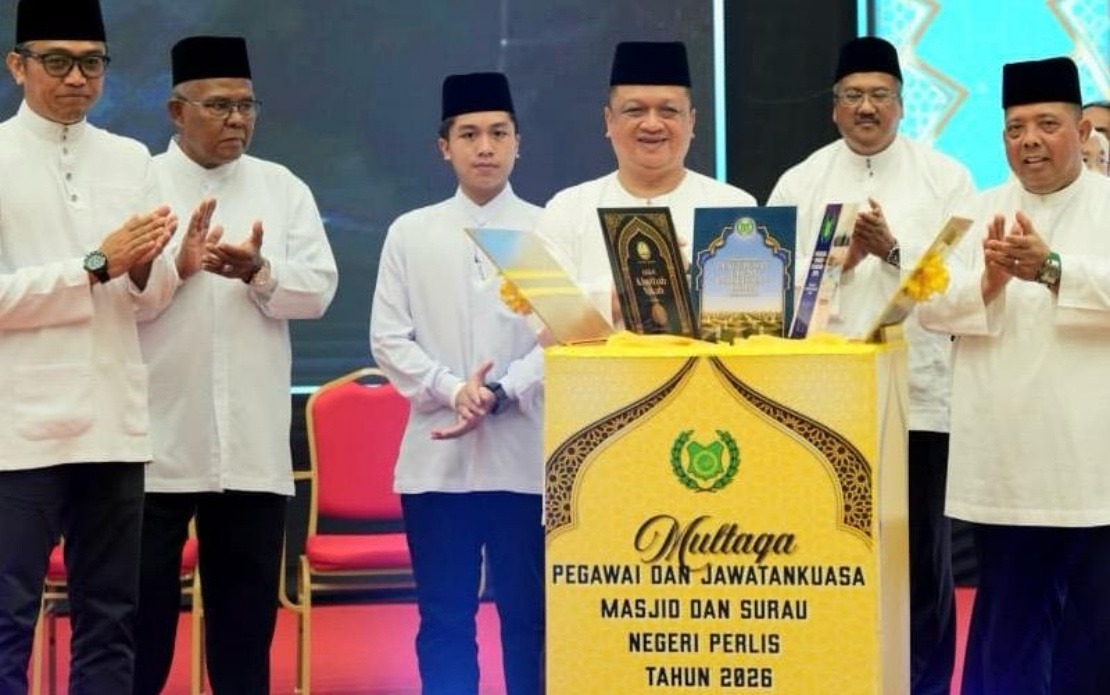
Tuanku Syed Faizuddin Putra Jamalullail, the Raja Muda of Perlis, has emphasised the critical importance of maintaining public trust through ethical leadership and rigorous management practices in religious institutions across the state. Speaking at an official gathering in Kangar on August 25, the royal figure addressed mosque and surau administrators, stressing that their custodial role demands unwavering commitment to integrity, particularly when handling administrative and financial responsibilities that affect the broader Muslim community.
The Raja Muda's remarks came during the opening ceremony of the 2026 Perlis State Mosque and Surau Officers and Committees Multaqa Programme, held at Dewan 2020 in Kangar. This annual gathering has become an important channel for state religious authorities to disseminate operational standards and policy updates to religious institution leaders. By convening such forums, the Perlis state government reinforces the expectation that mosque and surau management operates according to consistent, transparent protocols rather than ad hoc decision-making that might undermine community confidence.
Tuanku Syed Faizuddin Putra stressed that all officers and committee members working within mosque and surau structures must familiarise themselves thoroughly with guidelines established by the Perlis Islamic Religious and Malay Customs Council (MAIPs) and the Perlis Islamic Religious Affairs Department (JAIPs). These regulatory frameworks exist to standardise operational procedures, ensure accountability, and guarantee that religious institutions function in harmony with both Islamic jurisprudence and the legal statutes of Perlis. The Raja Muda's call reflects a broader recognition that modern religious governance requires institutional discipline and systematic approaches that balance spiritual mission with administrative competence.
This year's multaqa programme concentrated on three substantive areas directly affecting Muslim community welfare and institutional operations. The first component focused on developing comprehensive guidelines for managing Muslim cemeteries throughout Perlis, addressing a domain that, whilst often overlooked in public discourse, carries deep cultural and religious significance for families and carries important legal implications. The second element examined best practices for mosque management divisions, covering operational efficiency, resource allocation, and community engagement strategies. The third addressed procedures for managing marriages and clarifying the functions of jurunikah—Islamic marriage solemnizers—whose role bridges religious obligation and civil registration requirements.
By bringing these three areas into a single coordinated programme, the Perlis religious administration demonstrated awareness that effective mosque governance extends far beyond facilitating daily prayers. Modern mosque management encompasses cemetery administration, interfaith relations, community health initiatives, ceremonial functions, educational programming, and social welfare activities. Each of these dimensions requires clarity, training, and consistent application of approved methodologies to prevent mismanagement and preserve institutional credibility within communities.
The Raja Muda articulated a vision of religious institutions that transcend traditional assumptions about their purpose and scope. He acknowledged that contemporary Muslim communities expect mosques and surau to function as professionally administered centres of excellence, not merely as prayer halls. This expectation encompasses transparent financial reporting, responsive community services, evidence-based decision-making, and leadership accountable to both religious authority and the public. Institutions that fail to meet these expectations risk losing community confidence and may inadvertently damage broader Islamic institutions through association with poor governance.
In an increasingly complex society, Tuanku Syed Faizuddin Putra observed, religious institutions operate within a demanding environment where congregants possess higher educational attainment, greater awareness of governance standards, and elevated expectations regarding institutional performance. Communities now frequently benchmark mosque management against standards applied to corporate and civic organisations, expecting transparency in budget allocation, clear communication regarding policy decisions, and responsive engagement with member concerns. This shift in expectations reflects demographic change and rising standards of institutional accountability across Malaysian society.
A notable development within the 2026 programme was the deliberate expansion to include surau committees alongside mosque leadership. This inclusive approach recognises that surau institutions, though typically smaller and less formal than mosques, play complementary and essential roles in serving local religious communities, particularly in residential areas, educational institutions, and workplace settings. By integrating surau administrators into state-level policy coordination, Perlis authorities signalled that professional standards and systematic management apply uniformly across religious institutions regardless of size or institutional status.
The multaqa concept itself represents an important institutional mechanism for translating state-level religious policy into consistent ground-level implementation. Religious governance in Malaysia operates through a tiered system where federal authorities establish constitutional parameters, state religious authorities develop operational frameworks, and local mosque and surau committees execute management and service delivery. Multaqa programmes serve as critical transmission points where directives move downward and feedback flows upward, creating opportunities for dialogue and clarification that reduce implementation gaps and inconsistencies.
Tuanku Syed Faizuddin Putra emphasised that systematic policy comprehension and consistent implementation across Perlis depended upon forums like the multaqa, which brought diverse stakeholders into common understanding. When mosque and surau committees across a state operate according to divergent interpretations of regulations, community members receive inconsistent service experiences and institutional credibility suffers. Standardisation through repeated education and dialogue ensures that a Muslim resident in Kangar encounters similar administrative procedures and governance standards as a congregant in Arau or other districts, strengthening public confidence in religious institution management.
The focus on integrity within religious institution administration also carries implications for religious authority's broader credibility within the state. When religious organisations themselves exemplify transparent, accountable governance rooted in professional management principles, they reinforce rather than undermine confidence in Islamic governance more broadly. This becomes particularly important in a Malaysian context where institutional trust carries significance beyond individual organisations, reflecting community confidence in Islamic institutions as custodians of religious authority and ethical leadership. By insisting on high administrative standards, the Raja Muda effectively connected institutional professionalism with religious authority itself.

