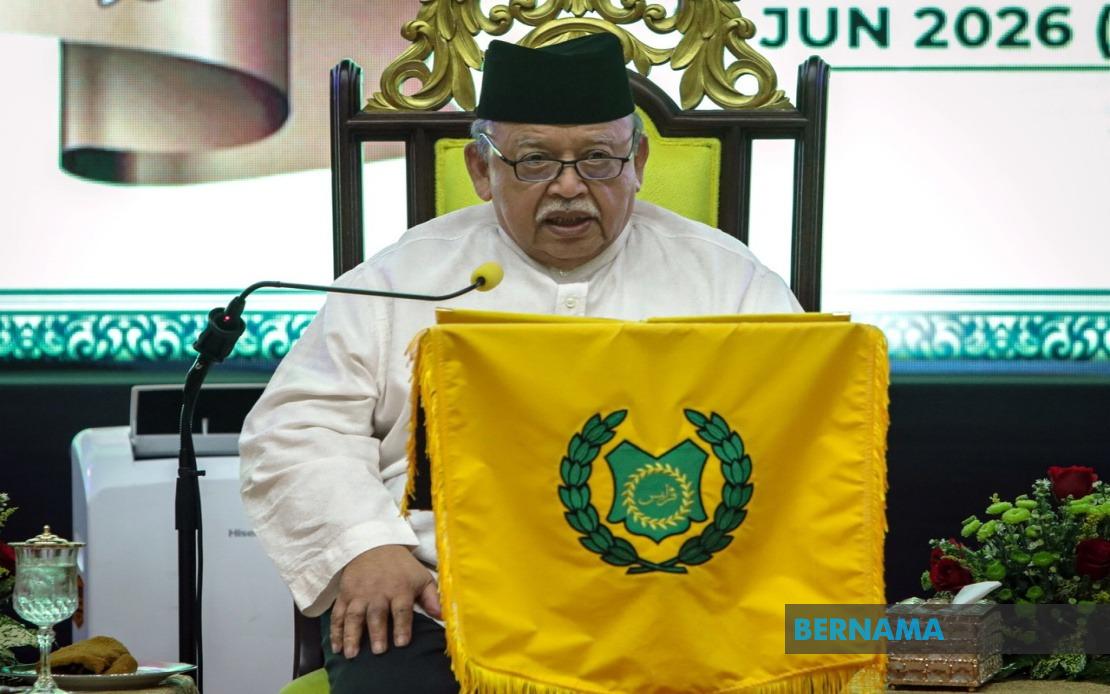
The Raja of Perlis, Tuanku Syed Sirajuddin Jamalullail, has issued a forthright call for Malaysians to anchor their work in moral sincerity and actively resist corruption as a necessary condition for building a truly progressive society. Speaking during the state-level Maal Hijrah 1448H/2026M celebration in Kangar on June 18, the Ruler articulated a vision of national development grounded not in material expansion alone but in the cultivation of intellectual capital, ethical behaviour and social cohesion. His intervention reflects growing concern among Malaysia's constitutional leadership about the foundations upon which sustainable development must rest, particularly as the nation navigates complex pressures from technological disruption and global economic volatility.
Tuanku Syed Sirajuddin advanced a sophisticated understanding of what constitutes meaningful progress, distinguishing between superficial advancement and transformation rooted in authentic human development. He contended that true societal achievement emerges only when the population combines educational attainment with demonstrable personal integrity, upholds standards of civility and maintains genuine unity of purpose. This formulation challenges a narrow focus on infrastructure and GDP growth that has dominated development discourse in many Asian economies, instead positioning ethical character and shared values as essential components of any durable prosperity.
The Ruler's emphasis on viewing work as an act of worship carries particular resonance within Malaysia's Muslim-majority context, where this framing draws on Islamic principles to elevate workplace conduct and professional responsibility beyond mere contractual obligation. By positioning labour as a spiritual practice, Tuanku Syed Sirajuddin implicitly argues that anti-corruption efforts cannot rely solely on institutional enforcement but require an internal moral transformation among citizens. This theological approach addresses a persistent challenge in Malaysian governance: creating intrinsic motivation for ethical behaviour rather than depending entirely on external surveillance and penalties.
During the ceremony, the Ruler articulated what he termed "true MADANI progress"—a formulation that extends Malaysia's existing national aspiration framework beyond economic metrics. His conception encompasses advancement in knowledge systems, the nobility of individual character, the strength of cultural preservation, the sophistication of public thought, and the integrity of values that bind communities together. This multi-dimensional approach aligns with emerging international consensus that sustainable development requires attention to social capital and institutional trust alongside conventional economic indicators, offering Malaysia's leadership an indigenous framework for articulating these priorities.
The specific call to embrace civilised values in daily life, strengthen national unity, pursue lifelong learning, preserve propriety and discharge responsibilities with clear accountability represents a comprehensive prescription for individual and collective behaviour. By linking these elements within a single rhetorical framework, the Ruler suggests they are interdependent—that civility without unity becomes hollow, that knowledge without accountability becomes dangerous, and that mere technical competence without integrity produces hollow institutions. For Malaysian readers, this holistic vision challenges compartmentalised thinking that treats governance, education, cultural preservation and economic activity as separate domains.
Tuanku Syed Sirajuddin also emphasised the necessity of strengthening authentic Islamic understanding rooted in the Quran and Sunnah while simultaneously nurturing mature, civilised political culture. This parallel commitment reflects the delicate balance Malaysia must maintain as a Muslim-majority nation with plural democratic institutions, suggesting that religious authenticity and political maturity need not conflict but rather reinforce one another. The Ruler's assertion that these efforts must advance alongside empowerment of citizens toward greater independence and competitiveness acknowledges that religious and cultural identity need not constrain economic dynamism or individual agency.
The development agenda outlined encompasses religious, political, economic and social dimensions, rejecting artificial compartmentalisation and recognising that comprehensive national advancement requires coordinated progress across multiple spheres. The Ruler specifically highlighted the need to cultivate courage, intelligence and self-reliance as distinctive characteristics of Perlis's population, framing these virtues as essential for constructing a prosperous future for succeeding generations. This aspirational language transforms abstract principles into concrete qualities that individuals and communities should consciously develop and embody.
Recognising the contemporary environment, Tuanku Syed Sirajuddin addressed the formidable challenges confronting modern societies: rapid technological advancement, artificial intelligence implementation, profound social transformation and unprecedented economic shifts at the global level. Rather than counselling retreat or resistance to these forces, he urged Malaysians to engage them proactively—to move beyond passive observation toward active innovation and leadership in navigating transformation. This forward-looking stance acknowledges that Malaysia's future competitiveness depends on embracing rather than resisting technological and social change, while ensuring these developments remain anchored in ethical foundations.
The Ruler's insistence that Malaysians must become "initiators of ideas, leaders of change and contributors to progress" rather than passive witnesses represents a significant call for active citizenship and entrepreneurial thinking. This rhetorical move empowers the population to see themselves as agents capable of shaping their nation's trajectory rather than as subjects acted upon by external forces or distant elites. For a regional audience, this vision offers an alternative to narratives of Asian economies as mere followers of Western innovation or victims of global forces, instead positioning Malaysians as potential architects of their own technological and institutional futures.
The recognition given to Datuk Izham Mahmud through the Perlis Tokoh Maal Hijrah award, presented in his capacity as Yayasan Tuanku Syed Putra board member, instantiates the values the Ruler has articulated by honouring demonstrated contributions to community welfare and development. This symbolic gesture moves beyond abstract exhortation to acknowledge tangible exemplification of the virtues being promoted—integrity expressed through institutional service, knowledge deployed for collective benefit, and responsibility exercised within formal structures. The occasion thus becomes not merely a moment of policy pronouncement but a performative affirmation of values through their public recognition and celebration.