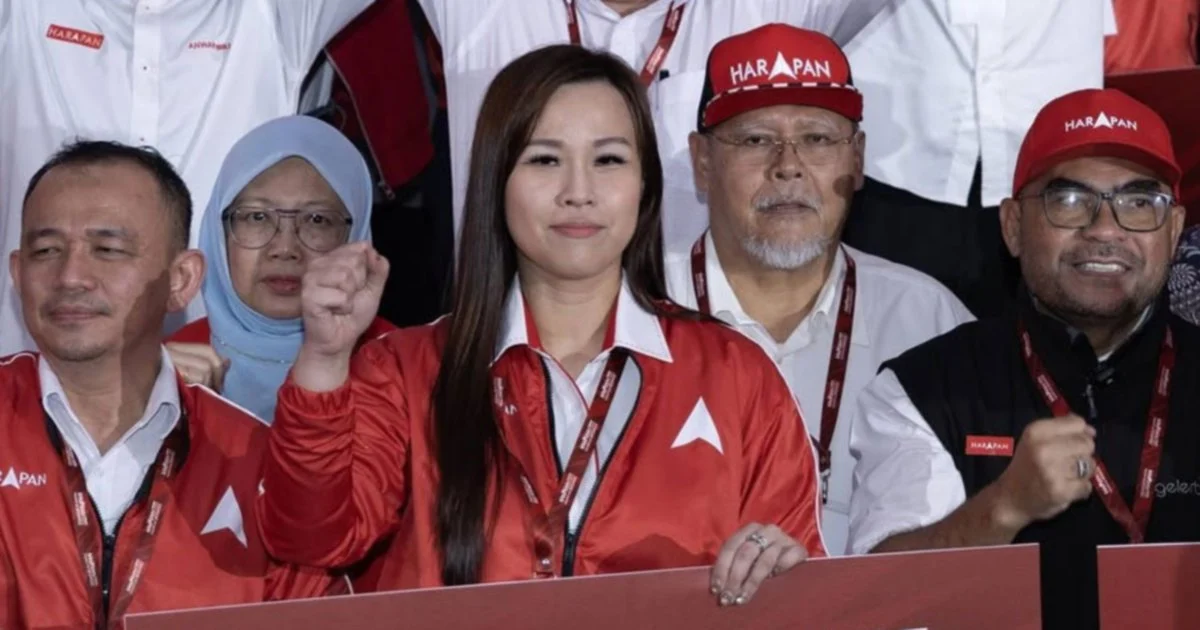
The Johor 16th state election is shaping up to be a test of coalition unity as internal fractures emerge within Pakatan Harapan's support base. Pasir Gudang's Amanah division has announced plans to boycott Sharon Teo, the coalition's selected candidate for the Permas state seat, citing objections to what members describe as parachute politics—the practice of imposing external candidates onto constituencies without proper grassroots consultation or local endorsement.
The boycott signals mounting frustration among ground-level party activists who feel sidelined in candidate selection processes. Amanah, one of PH's core components alongside PKR and DAP, has increasingly voiced concerns about centralized decision-making in recent months. The Pasir Gudang division's public opposition to Teo represents a significant challenge to PH's messaging about democratic renewal and internal party governance, themes the coalition has championed since its 2018 electoral victory.
Such internal discord carries particular weight in Johor, Malaysia's most populous state and economically important territory. The region's political dynamics have shifted considerably since 2018, with Umno reasserting dominance at state level and Bersatu fragmenting the Malay-Muslim vote. PH's ability to maintain coalition discipline and project a unified front will be crucial to preventing further electoral erosion in constituencies where margins are tight.
The parachute candidate phenomenon reflects broader tensions within opposition coalitions across Southeast Asia. When parties dispatch candidates with limited local connections or community standing, they risk alienating volunteer networks and dormancy-period supporters who invested time building organizational capacity. Amanah's stance suggests the party values authentic grassroots representation, though this can sometimes conflict with coalition-level strategic requirements and demographic calculations.
Since PH's reconstitution following the 2022 general election, questions about candidate selection criteria have festered. The coalition comprises parties with differing traditions—DAP's cellular organization and meritocratic emphasis contrasts with PKR's decentralized structure and Amanah's focus on religious credibility. When unified command decisions override these distinct approaches, friction inevitably follows. Permas represents exactly the kind of suburban-urban hybrid seat where such tensions become visible.
Sharon Teo's background and qualifications have not been contested publicly by Amanah, suggesting this confrontation hinges primarily on process rather than individual capability. This distinction matters considerably for PH's long-term credibility. If the coalition can demonstrate that external candidates bring genuine value—specialist expertise, demographic alignment, stronger appeal to swing voters—then such placements might gain acceptance. However, if they appear arbitrary or serve factional interests within national party hierarchies, they corrode the meritocratic credentials PH has cultivated.
The boycott's practical implications depend on whether Pasir Gudang Amanah members actively campaign against Teo or simply abstain from supporting her. Full-throated opposition would amplify damage; passive withdrawal might be manageable. Either way, PH loses ground within Johor's political ecosystem, where every vote increment matters as Umno-BN and potentially strengthened Perikatan Nasional forces compete aggressively. The state's razor-thin margins in contested seats mean that coordinated local resistance can shift outcomes.
Regionally, this episode reflects broader challenges confronting established opposition coalitions from Taiwan to Thailand. Coalition partners must balance autonomy with unity, accommodate local preferences with strategic centralization, and maintain volunteer engagement whilst imposing electoral discipline. These tensions are not uniquely Malaysian, but Malaysia's federal system and state-level political autonomy make them particularly acute.
The 16th Johor state election also occurs amid PH's broader attempts to rebuild after its 2022 general election setback. Demonstrating resilience and attracting diverse voter segments requires flexibility in candidate selection that sometimes disappoints activist bases. PH must navigate between disappointing organizational stalwarts and broadening appeal through professional networks. Teo's candidacy may represent one such calculation; Amanah's boycott represents the internal cost.
Looking forward, PH leadership faces pressure to engage substantively with component parties about selection protocols. Creating transparent, consultative frameworks—rather than top-down appointments—could reduce such friction, though at the cost of potentially sacrificing centralized strategic flexibility. How the coalition resolves this particular case will signal whether it has learned lessons from pre-2022 tensions that contributed to its electoral reversal.
For Malaysian voters, especially those in Permas and surrounding constituencies, these internal dynamics raise questions about opposition parties' commitment to grassroots democracy. Whether parachute placement ultimately proves strategically wise or politically damaging depends partly on Teo's campaign performance, but also on whether Amanah's boycott influences broader voter sentiment. Johor's electoral trajectory will likely hinge on how effectively PH manages such internal discord whilst projecting coherence to an increasingly skeptical electorate.