The Malaysian government is taking decisive action to address long-term water sustainability by initiating a comprehensive study into industrial water reclamation. The Ministry of Energy Transition and Water Transformation, known as PETRA, will spend at least twelve months developing the Industrial Water Reclamation Policy to strengthen how the nation manages its precious water resources and enhances efficiency across key sectors. This strategic initiative marks a significant pivot towards addressing water scarcity challenges that have increasingly threatened Malaysia's economic and social stability, particularly as urbanisation and industrial expansion accelerate demand on existing supplies.
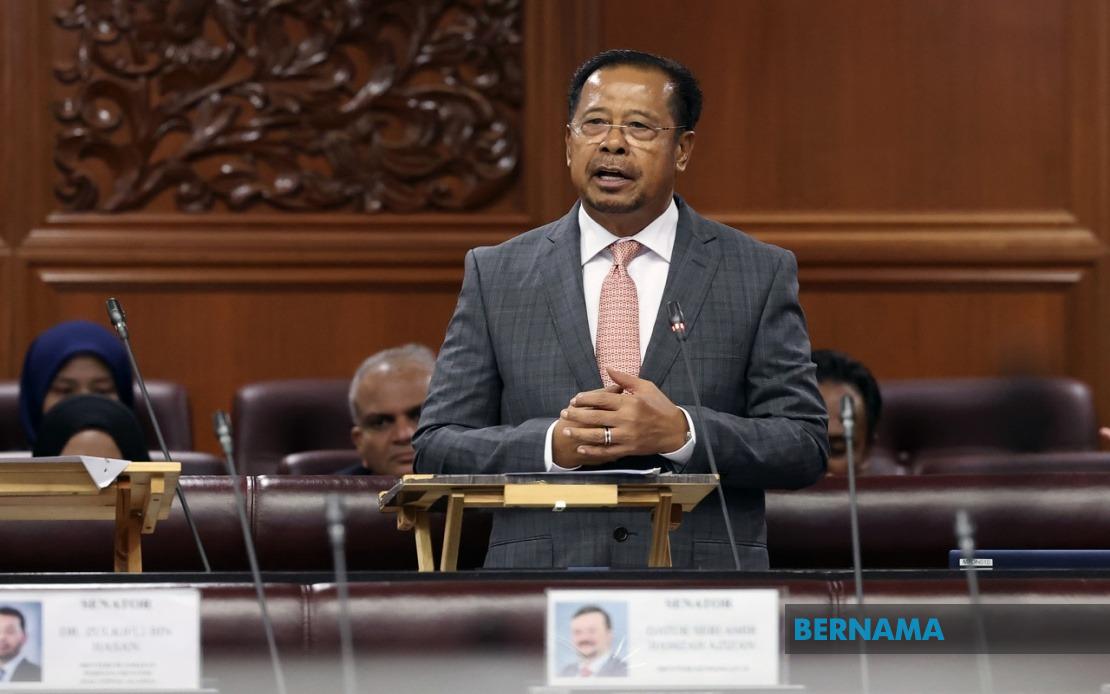
Deputy Minister Datuk Seri Abdul Rahman Mohamad outlined the scope of PETRA's ambitious undertaking during parliamentary proceedings, emphasising that the research phase will create the intellectual foundation necessary for implementing a coherent national framework. Rather than immediately imposing blanket regulations, the government recognises that a measured, evidence-based approach will ultimately produce more effective and workable guidelines. This deliberative process reflects international best practice in developing environmental and resource policies, where rushing to implementation without adequate groundwork often leads to unintended consequences and costly revisions.
The policy framework under development targets specific industrial sectors that consume substantial quantities of water but do not necessarily require the highest treatment standards. Food and beverage manufacturers, data centre operators, semiconductor production facilities, and public cleaning service providers represent significant water consumers where reclaimed water—treated wastewater suitable for non-potable applications—could substantially reduce pressure on freshwater reserves. By identifying these industries early, PETRA can tailor technical standards and implementation pathways to suit their particular operational requirements and economic circumstances.
Reclaimed water represents a critical frontier in Malaysia's water security strategy. Unlike traditional supply augmentation approaches that depend on developing new reservoirs or boreholes, water reclamation leverages existing infrastructure and converts what would otherwise be treated as waste into a productive resource. For water-intensive industries such as semiconductor manufacturing, which requires enormous quantities of cooling water but not necessarily potable-grade supplies, the economics of reclamation become increasingly attractive as freshwater becomes scarcer and more expensive. This approach aligns with global trends where water-stressed nations from Singapore to the Middle East have already embedded reclamation into their core water strategies.
The research programme encompasses multiple analytical dimensions recognising that policy success depends on addressing not merely technical feasibility but also legal authority, financial viability, and economic viability. Engineers must assess what treatment technologies are appropriate for different end-uses and whether existing water treatment infrastructure can be retrofitted or upgraded. Lawyers must clarify regulatory authority across federal and state jurisdictions, resolving questions about who oversees quality standards and enforcement. Economists must evaluate whether industry adoption makes financial sense without unsustainable subsidies, while financial specialists must identify funding mechanisms to support necessary infrastructure investments by both public and private actors.
Infrastructure requirements represent a substantial but often underestimated challenge. Simply treating water to reclamation standards means little without distribution networks that convey recycled water from treatment facilities to industrial consumers, often across considerable distances. Malaysia's diverse geography, with industries scattered across Peninsula, Sabah and Sarawak, means infrastructure solutions cannot be standardised. The study must therefore examine site-specific requirements, identify potential regional hubs, and assess whether private operators or government agencies should manage distribution systems.
Quality control mechanisms demand particular attention given public sensitivity surrounding water safety and environmental protection. Even though reclaimed water does not require potable standards, consistent quality assurance remains essential both to protect industrial equipment and maintain public confidence in the programme. The study must therefore establish which pollutants or contaminants matter most for different industrial applications, determine appropriate monitoring frequencies and methodologies, and specify remedial actions when quality falls below acceptable thresholds.
PETRA recognises that successful policy development demands extensive stakeholder engagement rather than top-down prescription. The ministry is conducting structured sessions with state governments, who retain constitutional responsibility for water resources; established water operators who understand practical implementation challenges; Indah Water Konsortium, which manages wastewater treatment nationally; and industrial representatives who will ultimately decide whether to adopt reclaimed water. This collaborative approach helps surface practical obstacles early, builds buy-in among affected parties, and generates ideas that purely governmental planning might overlook.
State government involvement proves particularly crucial given Malaysia's federal structure. Water authority sits primarily with state governments, meaning any national reclamation policy must accommodate varying state priorities, existing infrastructure configurations, and different levels of institutional capacity. Some states may embrace reclamation enthusiastically while others require greater incentives or technical support. The study phase provides opportunity to negotiate these differences and design implementation pathways that reflect local realities.
Semester-length timeframe reflects the complexity of developing workable policy in a federal, multi-ethnic nation with competing water demands. Rushing this analysis risks producing regulations that industry cannot feasibly implement, infrastructure standards that prove inappropriate for Malaysia's specific context, or quality frameworks that create more problems than they solve. Conversely, the twelve-month horizon maintains momentum and demonstrates government commitment to actionable outcomes rather than indefinite study.
Successful reclamation policy would position Malaysia as a regional leader in sustainable industrial water management. Neighbouring nations facing similar demographic and economic pressures increasingly seek models they can adapt. More immediately, industrial water reclamation could meaningfully extend Malaysia's effective water supplies without massive capital investment in new dams or desalination plants, both of which carry substantial financial and environmental costs. For semiconductor manufacturers and data centres seeking expansion, availability of reliable reclaimed water supplies could prove decisive in location decisions, directly supporting economic development objectives.

