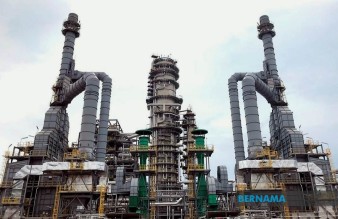
Prime Minister Datuk Seri Anwar Ibrahim's proposal to establish a strategic petroleum reserve has sparked broader debate about Malaysia's economic resilience strategy. However, according to Mohd Sedek Jantan, director of investment strategy and country economist at IPPFA Sdn Bhd, framing this initiative solely around oil storage misses a critical opportunity to build systemic protection against multiple categories of economic disruption. The real measure of success, he argues, lies not in barrel quantities but in whether the initiative genuinely fortifies Malaysia's capacity to navigate future geoeconomic turbulence.
The distinction between tactical stockpiling and strategic resilience becomes increasingly important as global supply chains remain vulnerable to diverse shocks. Mohd Sedek emphasizes that historical experience demonstrates stockpiles function most effectively when anchored within an integrated policy framework addressing interconnected vulnerabilities. Malaysia's economic exposure extends far beyond energy sectors, particularly given the nation's structural reliance on imported foodstuffs and dependence on semiconductors for manufacturing competitiveness. A petroleum reserve operating in isolation would address only one dimension of potential crisis scenarios while leaving other critical dependencies unfortified.
Food security deserves equivalent policy attention to energy considerations, according to the economist. Disruptions in global agricultural supplies carry direct consequences for domestic inflation, household purchasing capacity, and ultimately social stability. Malaysia imports substantial quantities of staple commodities from various international sources, creating exposure to supply chain shocks originating thousands of kilometres away. When international food prices spike due to geopolitical tensions, unfavourable weather patterns, or market manipulation, Malaysian households experience immediate purchasing power erosion. The social consequences extend beyond economics into political stability, making food security inseparable from broader national resilience planning.
Energy security undeniably remains foundational to Malaysia's industrial base and transportation networks. Manufacturing operations, logistics infrastructure, and resource-intensive industries all depend on uninterrupted energy supplies to maintain productivity and competitiveness. However, positioning petroleum reserves as a standalone initiative overlooks how vulnerabilities in other strategic domains can cascade through the economy with equal force. Critical minerals required for technological manufacturing, semiconductor supply chains essential to information technology advancement, and digital infrastructure supporting financial systems all represent potential chokepoints capable of triggering widespread economic disruption. Tomorrow's crisis may originate not from oil shortages but from mineral scarcity or technology supply failures.
Mohd Sedek advocates for developing an adaptable national risk management framework rather than a collection of sector-specific stockpiling programmes. Such an integrated approach would identify emerging vulnerabilities systematically, assess interconnections between different strategic dependencies, and prioritize responses based on comprehensive cost-benefit analysis. This methodology recognizes that geopolitical circumstances constantly evolve, and today's primary concern may differ entirely from threats materializing in subsequent years. Building institutional capacity to anticipate and respond to multiple categories of strategic risk requires flexibility built into foundational assumptions rather than rigid, commodity-focused approaches.
Clear definitional purpose becomes essential before Malaysia implements any strategic reserve programme. Reserves serve genuine economic stabilization during authentic supply disruptions, but can become problematic if coopted for short-term market price manipulation or become fiscally unsustainable burdens on public finances. Government policymakers must establish transparent criteria distinguishing legitimate reserve deployment from political or commercial misuse. Without such guardrails, strategic reserves risk becoming fiscal liabilities consuming public resources without generating proportionate economic protection.
Commercial and fiscal sustainability shapes whether reserve programmes generate genuine long-term benefits. Decisions regarding reserve magnitude, financing mechanisms, storage infrastructure requirements, and governance structures demand rigorous analytical assessment rather than symbolic quantities. A petroleum reserve that consumes excessive capital, requires expensive maintenance, or generates poor returns on invested public funds ultimately weakens rather than strengthens economic resilience. Malaysia must ensure reserve policies reflect realistic assessments of storage costs, opportunity costs of capital deployment, technological efficiency improvements, and comparative advantages of alternative resilience strategies.
International precedent offers valuable guidance for designing effective strategic reserves. Japan integrates strategic stockpiles with sophisticated diversification across multiple supply sources, development of resilient logistics networks connecting suppliers with consumption centres, and deeply embedded coordination mechanisms between government agencies and private sector operators. This integrated approach succeeds because it recognizes that storage alone proves insufficient without parallel investments in supply chain redundancy, transportation network resilience, and institutional coordination mechanisms. Malaysia could adapt Japanese methodologies to its distinct geographical, economic, and geopolitical circumstances while maintaining the underlying principle of comprehensive, interconnected resilience architecture.
Southeast Asia's strategic position in global supply networks creates particular imperative for sophisticated resilience planning. The region's manufacturing sectors, semiconductor assembly operations, and digital economy development all depend on uninterrupted access to critical inputs and global connectivity. Disruptions originating in distant locations ripple quickly through regional economies given existing supply chain integration. Malaysia's capacity to maintain regional competitiveness depends partly on building resilience advantages competitors lack. A comprehensive economic security strategy encompassing multiple strategic domains positions Malaysia advantageously relative to regional peers focused narrowly on individual commodities or sectors.
Implementing integrated economic security strategy requires institutional coordination extending across multiple government ministries and private sector stakeholders. Energy security specialists must collaborate with agricultural policy experts, semiconductor industry representatives, digital infrastructure specialists, and logistics operators to develop coherent frameworks preventing conflicting objectives or inefficient resource allocation. Such coordination remains organizationally demanding but essential for moving beyond symbolic initiatives toward substantive resilience improvements. Malaysia's policy apparatus must evolve to support cross-sectoral planning and implementation rather than maintaining isolated sectoral fiefdoms pursuing narrowly defined objectives.
The temporal dimension of economic security strategy deserves careful consideration. Today's petroleum reserve addresses contemporary concerns about energy supply disruption, yet the strategic challenge set facing Malaysia in 2035 or 2045 may involve entirely different vulnerability categories. Building adaptable frameworks with embedded mechanisms for reassessing priorities and redirecting resources maintains strategic coherence across changing circumstances. Regular evaluation cycles examining emerging vulnerabilities, assessing reserve effectiveness, and adjusting policies based on evolving geopolitical and technological conditions transform static programmes into dynamic resilience infrastructure capable of protecting Malaysia across multiple possible futures.

