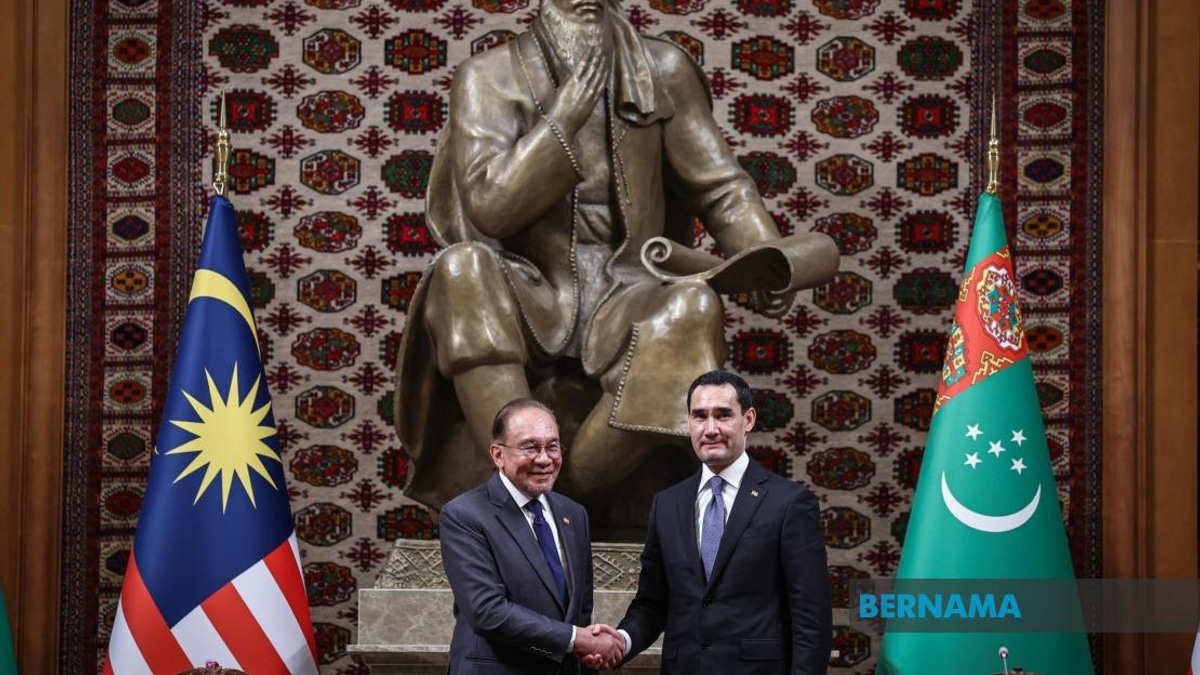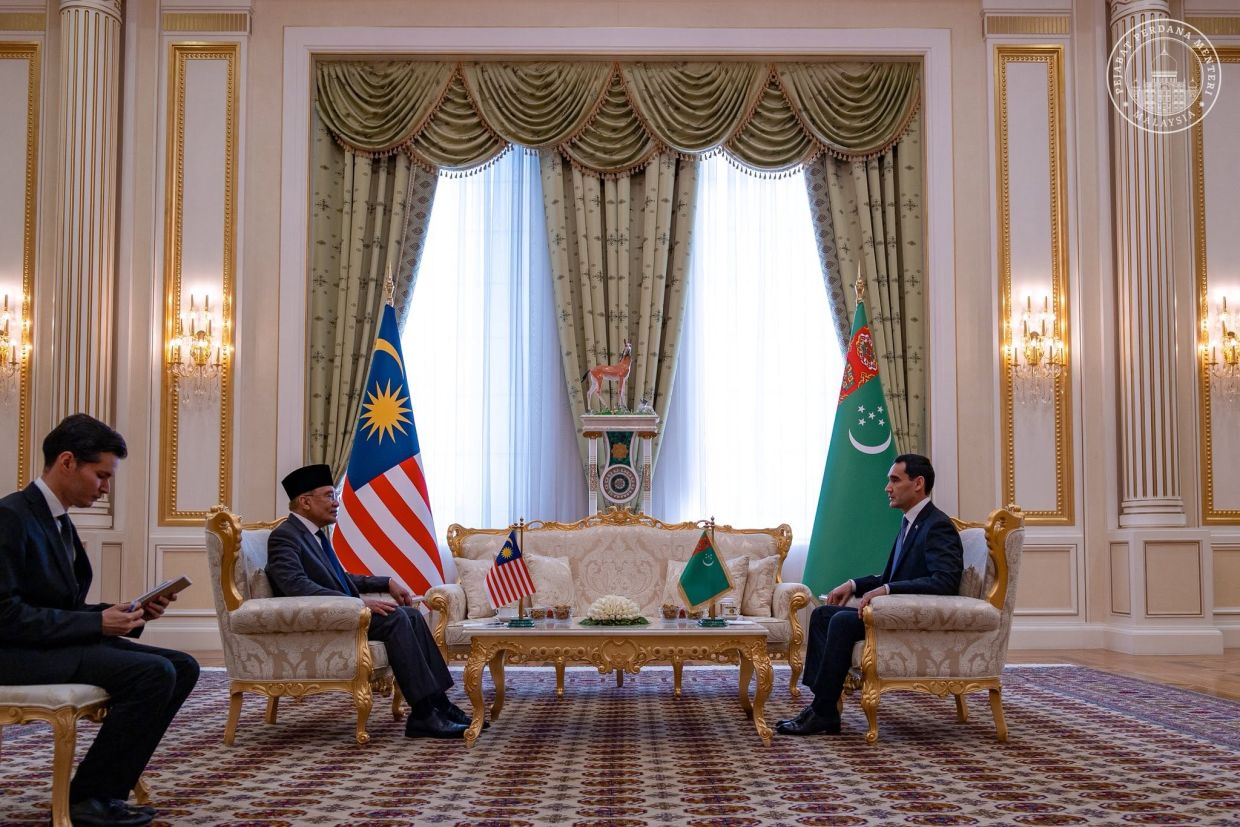
Prime Minister Datuk Seri Anwar Ibrahim has presided over a landmark strategic partnership agreement between Petronas and Turkmenistan's authorities, with the signing ceremony held in Ashgabat and witnessed by Turkmenistan President Serdar Berdimuhamedov. The accord represents a significant milestone in deepening Malaysia's economic and energy engagement with the Central Asian nation, building upon three decades of collaborative endeavours in the sector that have formed the bedrock of bilateral relations.
The partnership carries particular strategic weight given Turkmenistan's position as one of the world's largest holders of natural gas reserves. By formalising this agreement, both nations have signalled their commitment to unlocking these vast hydrocarbon resources through technology transfer, expertise sharing, and coordinated investment initiatives. For Petronas, the move reinforces its credentials as a world-class energy company capable of executing complex projects in challenging geopolitical and geological environments. The Malaysian national oil company's track record in Central Asia demonstrates the technical sophistication and operational resilience that emerging energy markets seek from their international partners.
According to the Prime Minister's Office, the strategic partnership extends well beyond traditional energy transactions. The arrangement encompasses talent development and knowledge transfer mechanisms designed to build indigenous capacity within Turkmenistan's energy sector. This dimension reflects a broader evolution in how major energy companies approach partnerships with resource-rich nations, moving beyond extractive models toward collaborative frameworks that strengthen local institutional capabilities and human capital. Malaysia's approach through Petronas exemplifies the kind of mutually beneficial arrangement increasingly expected by Central Asian governments seeking to maximise the long-term value of their natural resources.
The timing of this agreement coincides with Malaysia's broader regional positioning strategy in Central Asia. Trade figures underline the significance of this relationship: in 2025, Turkmenistan ranked as Malaysia's fourth-largest trading partner within the Central Asian region. The bilateral trade volume reached RM75.80 million, with Malaysian exports accounting for RM75.50 million and registering a 9.0 per cent year-on-year growth. While these figures may appear modest by global standards, they represent a meaningful commercial foundation and indicate consistent strengthening momentum in economic ties between the two nations.
Petronas's historical commitment to Turkmenistan underscores the company's confidence in the market and its long-term strategic vision. Since establishing operations in 1996, Petronas has accumulated total investments in Turkmenistan reaching RM52.73 billion. This substantial capital deployment reflects the company's conviction in Turkmenistan's energy potential and its willingness to commit significant resources to developing infrastructure and capabilities that support the country's hydrocarbon industry. Few multinational energy firms maintain such deep historical engagement with individual markets, making Petronas's presence in Turkmenistan a rare distinction.
The Malaysian government's framing of this partnership emphasises its contribution to economic development and international confidence in domestic energy sector expertise. The MADANI government has positioned the Petronas-Turkmenistan partnership as validation of Malaysia's technological capabilities and competitive standing in global energy markets. This narrative serves multiple domestic purposes: it burnishes Malaysia's image as a sophisticated energy player capable of commanding respect from resource-endowed nations, and it provides a platform for highlighting domestic industrial achievements in international forums. The partnership thus transcends its immediate commercial dimensions to assume symbolic importance in Malaysia's external relations and soft power projection.
For Turkmenistan, the partnership with Petronas offers practical advantages in developing and monetising its energy resources. The Central Asian nation has historically struggled with the capital intensity and technical complexity of large-scale natural gas projects. Petronas brings operational experience from diverse geographic and regulatory contexts, along with established relationships with international markets, financiers, and technology providers. This external expertise becomes particularly valuable for Turkmenistan as it seeks to expand production capacity and access new export routes, especially given evolving geopolitical conditions affecting traditional regional energy flows.
The broader context of Malaysia-Turkmenistan relations demonstrates how energy partnerships can serve as anchors for comprehensive bilateral engagement. Beyond the oil and gas sector, the partnership signals opportunities for broader economic and investment cooperation spanning infrastructure, technology, and manufacturing domains. Central Asian nations, keen to diversify their revenue sources and reduce economic dependence on hydrocarbons, increasingly seek partnerships with countries that can contribute across multiple sectors. Malaysia's positioning, combining energy expertise with emerging market credentials and Southeast Asian perspectives, offers complementary value that resource-dependent Central Asian economies find attractive.
Anwar Ibrahim's two-day official visit to Ashgabat, which commenced with the formal welcome ceremony at the Presidential Palace, underscores the diplomatic significance Malaysia attaches to this relationship. High-level bilateral meetings between Malaysian and Turkmenistan delegations during the visit provide opportunities to explore further areas of cooperation, address implementation details of the partnership, and discuss regional challenges and opportunities affecting both nations. Such high-level engagement facilitates not only transaction-specific discussions but also relationship-building and mutual understanding that sustains long-term cooperation.
Looking forward, the Petronas-Turkmenistan partnership may serve as a template for Malaysian energy companies' engagement with other Central Asian and regional markets. As global energy transition accelerates and traditional energy markets face structural headwinds, companies like Petronas must identify stable, resource-abundant markets where they can invest confidently over extended timeframes. Turkmenistan's vast gas reserves, combined with improving political stability and institutional frameworks, position it as an attractive destination for such engagement. The partnership's success could encourage similar initiatives elsewhere in Central Asia, potentially expanding Malaysia's strategic footprint in a region of growing geopolitical importance.
The agreement also reflects international energy market realities wherein stable, technologically advanced partners become increasingly valuable. As competition for Central Asian resources intensifies among major global players, partnerships with trusted operators like Petronas differentiate opportunities available to Turkmenistan. The strategic partnership thus represents a convergence of interests: Malaysia securing access to hydrocarbon reserves essential for long-term energy security and industrial competitiveness, while Turkmenistan gains a capable, committed partner invested in developing its resource potential responsibly and profitably. This alignment of strategic objectives, anchored in three decades of proven cooperation, creates a durable foundation for future collaboration in one of Asia's most energy-rich regions.