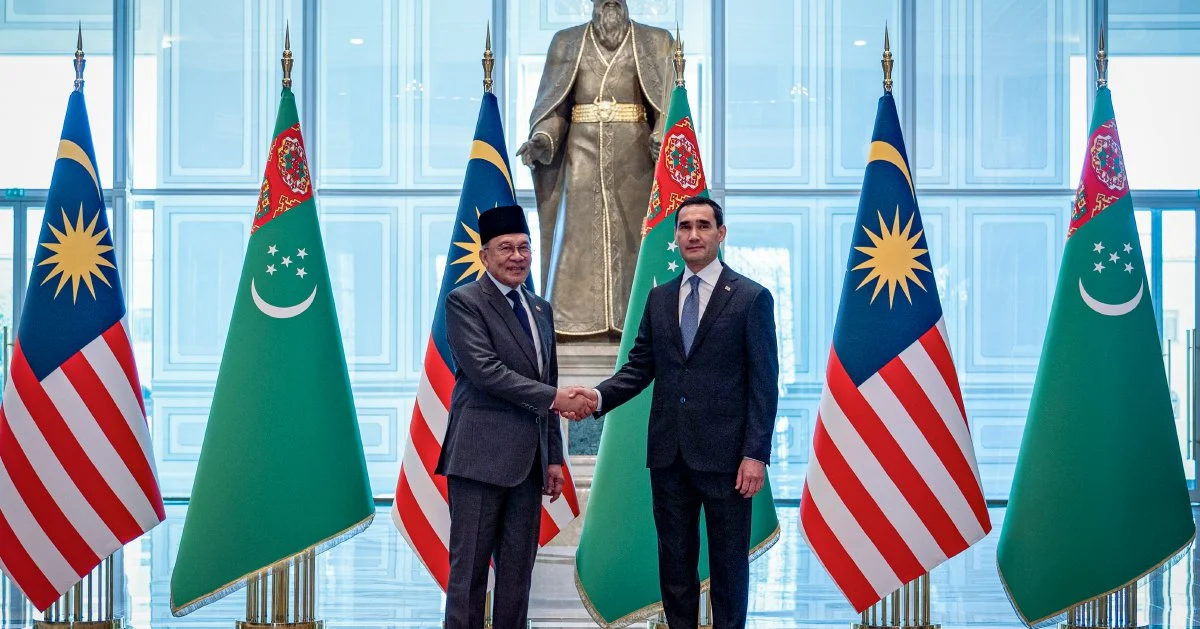
Malaysia's national oil and gas champion Petroliam Nasional Bhd (Petronas) is positioning itself as a crucial catalyst for strengthened bilateral ties with Turkmenistan, capitalizing on recent high-level diplomatic engagement between the two nations. Prime Minister Datuk Seri Anwar Ibrahim's official visit to the Central Asian republic has injected fresh momentum into economic and strategic cooperation, with Petronas's operational expertise and regional footprint serving as a foundation for expanded partnership in the energy sector.
Petronas's established presence in Turkmenistan represents more than a commercial foothold; it embodies the potential for deepening institutional relationships between Kuala Lumpur and Ashgabat. The company's track record in developing hydrocarbon reserves and managing complex infrastructure projects across diverse geographical and regulatory environments provides a credible platform for extending collaboration into new domains. This operational competence positions Petronas as a reliable intermediary capable of translating political goodwill into tangible economic benefits for both nations.
The energy sector forms the natural cornerstone of Malaysia-Turkmenistan cooperation, given Turkmenistan's substantial natural gas reserves and Malaysia's downstream capabilities and regional market access. Petronas's involvement in upstream exploration and production activities creates opportunities for technology transfer, workforce development, and knowledge exchange that extend beyond simple commercial transactions. Such partnerships typically stimulate ancillary industries including petrochemicals, liquefied natural gas processing, and specialized engineering services that generate multiplier effects across the broader economy.
For Malaysia, deepening energy ties with Turkmenistan offers strategic diversification benefits in an increasingly complex global energy landscape. Central Asia represents a historically significant but often overlooked resource frontier, and systematic engagement through established entities like Petronas allows Malaysia to secure long-term energy supplies while building diplomatic relationships that yield benefits across multiple sectors. The Central Asian region's geopolitical importance continues to grow as global energy markets shift, making early positioning advantageous for Malaysian interests.
Turkmenistan benefits substantially from partnership with a sophisticated regional operator like Petronas, which brings not only capital and technical expertise but also connections to Southeast Asian markets and financial institutions. The company's experience navigating complex projects in different regulatory environments, managing stakeholder relationships, and implementing international best practices offers value that transcends basic resource extraction. Such partnerships help resource-rich nations optimize their hydrocarbon assets while developing institutional capacity for sustained economic management.
The timing of PM Anwar Ibrahim's visit reflects broader strategic calculations by the Malaysian government regarding regional engagement and energy security. Central Asia's reserves and production capacity merit closer attention from Southeast Asian economies seeking diversification away from historical reliance on Middle Eastern suppliers. By elevating diplomatic representation and channelling corporate engagement through established entities like Petronas, Malaysia signals serious commitment to long-term partnership rather than transactional resource acquisition.
Beyond energy, Petronas's presence creates scaffolding for broader economic cooperation between the two nations. Joint ventures in the energy sector frequently spawn subsequent collaborations in infrastructure development, financial services, telecommunications, and human resources development. Malaysian companies in construction, engineering, and professional services often follow established energy sector anchors into new markets, creating ecosystem effects that multiply the initial investment's impact on bilateral trade relationships and cultural exchange.
The geopolitical context adds another dimension to strengthened Malaysia-Turkmenistan cooperation. As regional powers recalibrate their Central Asian strategies, Malaysia's engagement through respected institutional players like Petronas provides non-aligned legitimacy and commercial credibility. This approach differs from competitors motivated primarily by geopolitical alignment, allowing Malaysia to develop relationships based on mutual economic benefit and shared interest in stable energy markets. Such positioning enhances Malaysia's influence within the region while avoiding entanglement in great power competition.
Looking forward, the sustainability of renewed Malaysia-Turkmenistan ties depends substantially on translating political declarations into concrete projects with clear timelines and measurable outcomes. Petronas's operational commitments serve as bellwether indicators of genuine partnership depth. Successful execution of collaborative ventures—whether exploration concessions, joint infrastructure development, or technology licensing arrangements—would validate the framework established through PM Anwar Ibrahim's visit and create momentum for subsequent expansions into other sectors and regions within Central Asia.
The precedent established through renewed Malaysia-Turkmenistan cooperation under Petronas's leadership carries implications for Malaysia's broader Central Asian strategy. Success in Turkmenistan could catalyze similar initiatives with neighbouring Kazakhstan and Uzbekistan, where Malaysian companies possess complementary capabilities and genuine market opportunities. Systematic engagement with Central Asian nations through energy sector anchors like Petronas represents a measured, sustainable approach to geographic diversification that aligns commercial interests with diplomatic objectives.

