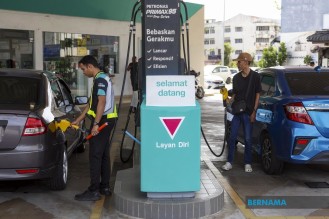
Fuel supplies flowing through Petronas petrol stations nationwide are expected to remain steady and plentiful at least until August, according to assurances given by Malaysia's Minister in the Prime Minister's Department (Law and Institutional Reform), Datuk Seri Azalina Othman Said, following discussions at the National Economic Action Council's weekly gathering. The commitment from the state oil giant underscores efforts by Kuala Lumpur to navigate global energy market volatility stemming from ongoing regional conflicts and geopolitical tensions affecting crude oil flows and refining capacities across key producing regions.
Petronas Dagangan Bhd, the publicly listed fuel distribution arm of the national oil corporation, manages a petrol station network responsible for fulfilling approximately half of Malaysia's total domestic fuel consumption. This substantial market share positions the company as a critical infrastructure player in maintaining energy security for millions of vehicles and the broader transportation ecosystem that keeps Malaysia's economy moving. The explicit timeframe provided—extending through the coming two months—offers some reassurance to motorists and transport operators concerned about potential supply disruptions, though it also implicitly acknowledges inherent uncertainties beyond that window.
The government's response to potential energy supply vulnerabilities has evolved beyond relying on market mechanisms alone. A Crisis Management Task Force, designated as PPPK and operating under the National Economic Action Council framework, has been formally established to tackle supply security issues as they emerge. This specialised unit functions as a dedicated monitoring and response mechanism, continuously tracking developments across Malaysia's fuel, petroleum, and broader energy supply chains. The existence of such a task force signals official recognition that external shocks—particularly those originating from the Middle Eastern region—pose tangible threats to the country's energy independence and economic stability.
The task force's mandate encompasses multiple dimensions of energy security beyond simply ensuring adequate stocks at retail pumps. Its responsibilities include coordinating government responses to international energy market disruptions, implementing price stabilisation measures to protect consumers and businesses from volatile global commodity movements, and conducting enforcement operations against fuel smuggling and irregular trading activities that drain legitimate supplies and distort market conditions. These layers of intervention reflect sophisticated understanding that energy security involves supply adequacy, affordability, and system integrity simultaneously.
Diversification of crude oil sourcing represents a central pillar of Malaysia's strategy to reduce vulnerability to Middle Eastern disruptions. Datuk Seri Azalina indicated that ongoing negotiations are securing crude oil supplies from alternative exporters located in West Africa and the Americas. This geographic expansion of supplier relationships reduces dependence on any single region while improving resilience against localised production disruptions or supply route complications. However, such arrangements remain subject to technical compatibility—crude oil varies significantly in viscosity, sulphur content, and other characteristics affecting refinery operations—and to commercial viability, ensuring that alternative supplies remain economically competitive compared with established sources.
The timeframe limitation contained in Petronas's original statement—guaranteeing supplies only until June 2026—had prompted parliamentary scrutiny from opposition lawmakers. Khairil Nizam Khirudin, member for Jerantut representing Perikatan Nasional, raised concerns about what contingencies existed should global energy turbulence persist beyond that date. His intervention highlighted legitimate anxieties about energy supply security among rural constituencies where fuel access carries particular importance for agricultural and resource-dependent economies. The government's response effectively acknowledged these concerns while projecting confidence in its mitigation mechanisms.
Malaysia's energy security challenges reflect broader Southeast Asian vulnerabilities in a world where petroleum supplies remain geopolitically contested. Unlike nations with substantial domestic crude reserves or nuclear-powered electricity systems, Malaysia's growing economy remains dependent on imported energy sources and refined products. The 2023 conflict in West Asia, originating from Israeli military operations in Gaza and subsequent regional tensions, has heightened awareness of how distant geopolitical events translate into tangible economic impacts affecting fuel prices and availability across Asia-Pacific markets. Shipping disruptions affecting major maritime chokepoints like the Strait of Malacca intensify these pressures for countries positioned along global energy trade routes.
The government's establishment of the PPPK task force demonstrates learning from previous energy crises, including experiences during the 1970s oil embargo and subsequent episodes of petroleum price volatility. Rather than adopting purely reactive crisis management, the contemporary approach emphasises continuous monitoring, diplomatic engagement with alternative suppliers, and pre-emptive coordination among government agencies and state-linked enterprises. This institutional framework allows for faster response times should supply disruptions materialise unexpectedly.
Pricing stability constitutes another dimension receiving task force attention. Malaysia's government has historically intervened in fuel pricing to shield domestic consumers and transport-dependent sectors from international market swings, recognising that energy cost spikes ripple through economic activity broadly. The subsidy and price ceiling mechanisms create fiscal pressures on government budgets, particularly when global crude prices spike sharply. Balancing affordability objectives against fiscal sustainability remains an ongoing tension in Malaysian energy policy, with the task force serving as a coordinating mechanism for weighing these competing concerns.
International cooperation on energy security has gained prominence in Malaysia's diplomatic engagement. Regional organisations including ASEAN and bilateral partnerships with energy-producing nations shape Malaysia's strategic positioning. Recent developments have prompted closer coordination among Southeast Asian governments regarding energy supply contingencies, particularly as countries assess vulnerabilities and explore alternative supply arrangements. Malaysia's experience managing energy shocks carries potential lessons for neighbouring economies facing similar challenges.
Looking beyond August, Malaysia faces strategic questions about longer-term energy security architecture. The transition toward renewable energy sources remains a gradual process constrained by infrastructure investment requirements and technological maturity. Liquefied natural gas imports provide some diversification beyond crude oil dependence, though LNG pricing correlates closely with petroleum markets. The government's task force likely anticipates extended energy market turbulence, making the post-August period a critical juncture for evaluating whether current mitigation strategies require strengthening or expansion.

