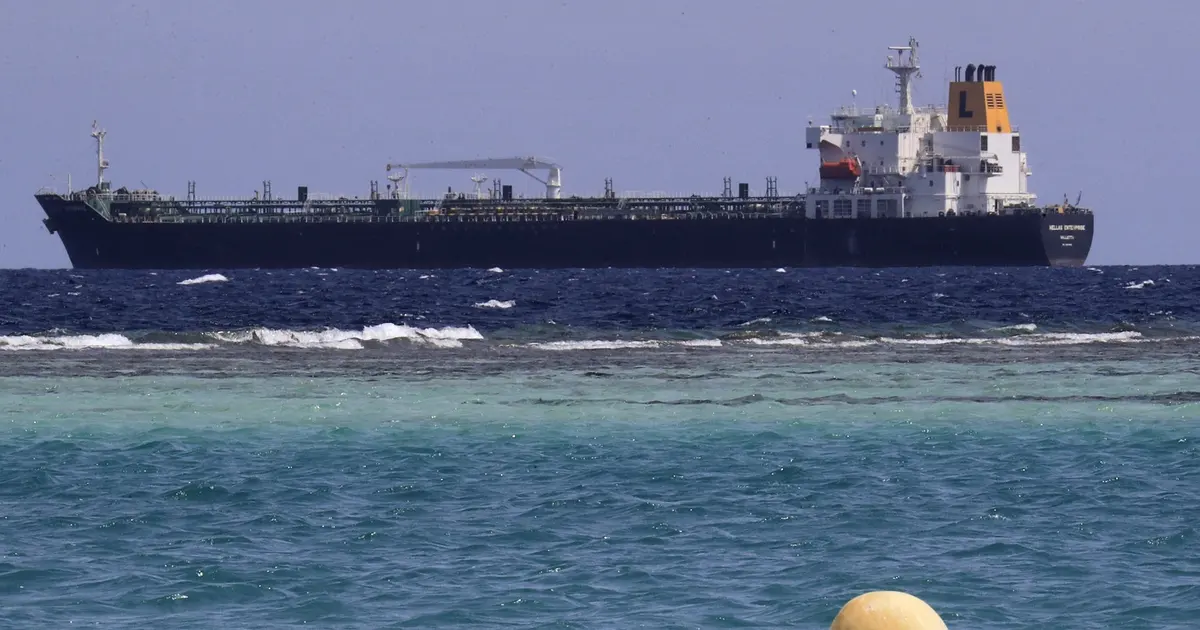
A Petronas operating vessel has been authorised to proceed through the Red Sea corridor despite heightened security concerns that have disrupted global shipping lanes in recent months. The clearance represents a significant development for Malaysia's premier energy company and reflects broader implications for the nation's maritime commerce and strategic positioning in global trade corridors. Prime Minister Anwar Ibrahim has characterised the outcome as validation of Malaysia's careful calibration of foreign policy interests, particularly as the country navigates complex geopolitical circumstances affecting the Middle East and Indian Ocean region.
The authorisation to transit the critical waterway carries particular weight given the volatility that has characterised the Red Sea since late 2023. Houthi militants aligned with Iran have conducted repeated attacks on commercial shipping vessels, citing solidarity with Palestine amid the ongoing Israel-Gaza conflict. These incidents have prompted major international shipping companies to reroute vessels around the Cape of Good Hope at significantly increased cost and time, fundamentally disrupting established maritime trade patterns that have channelled commerce through the Suez Canal and Red Sea for centuries. The impact has reverberated across global supply chains, affecting everything from consumer goods to energy shipments.
Malaysia's position as a major energy producer and net exporter has made questions of maritime security and freedom of navigation particularly consequential for national economic interests. The Petronas vessel represents not merely a single commercial transaction but rather a barometer of international confidence in Malaysia's capacity to maintain shipping operations through contested waters. The fact that this particular vessel has secured passage suggests that diplomatic efforts have achieved some degree of operational normalcy despite the underlying security threats that continue to characterise the region.
Prime Minister Anwar's emphasis on prudent foreign policy reflects Malaysia's deliberate approach to balancing competing interests in Middle Eastern affairs. Unlike some regional partners who have adopted more openly aligned positions with either Western or Islamic bloc interests, Malaysia has sought to maintain pragmatic engagement with multiple parties while avoiding entanglement in proxy conflicts. This measured stance has allowed the country to maintain commercial relationships and diplomatic channels across ideological divides that have increasingly fractured international relations in recent years.
The scheduled arrival in Melaka within the coming month represents significant operational and symbolic importance. Melaka port, located on the western coast of Peninsular Malaysia along the Strait of Melaka, remains one of Southeast Asia's most strategically significant maritime facilities. The port's position along one of the world's busiest sea lanes makes it a critical node in regional and global shipping networks. A Petronas vessel successfully completing the Red Sea transit and arriving at Melaka would demonstrate maintained operational capacity despite regional disruptions and reinforce Malaysia's role as a reliable energy market participant.
The Strait of Melaka itself carries dimensions of strategic significance that inform Malaysia's approach to freedom of navigation globally. Through this narrow waterway pass approximately one-third of global maritime trade and roughly half of world seaborne oil shipments. Any disruption to the Strait would have immediate repercussions for Malaysian commerce but equally for global energy security and supply chain stability. Malaysia's interest in maintaining international maritime security norms therefore extends beyond its immediate territorial concerns to encompass broader systems that sustain regional prosperity.
The clearance also signals something about the current phase of Middle Eastern dynamics and international responses to shipping disruptions. Various international naval coalitions have established presence in the Red Sea to counter hostile activities against commercial vessels, yet these efforts have proven insufficient to completely eliminate the threat. The Houthi attacks have persisted despite multilateral military operations, suggesting that security concerns, whilst significant, have not entirely paralysed commerce through the corridor. This partial resumption of normal operations through previously contested waters reflects adaptation and resilience in global shipping practices.
For Malaysia specifically, successful transit of Petronas vessels through the Red Sea carries implications for the nation's energy sector competitiveness and export reliability. Petronas operates across multiple jurisdictions and markets, with international customers requiring assurance that contracted deliveries can proceed without excessive disruption or delay. Any extended closure of the Red Sea route would force Malaysian energy exports into longer and more expensive circumnavigation routes, potentially affecting pricing and market access. The clearance thus addresses practical commercial concerns that affect thousands of workers in Malaysia's energy sector.
Anwar's framing of this development as reflecting Malaysia's foreign policy approach deserves particular attention. Rather than characterising Malaysia as either trapped between competing powers or aligned with one bloc, the Prime Minister has presented the nation as successfully navigating diplomatic complexities through balanced engagement. This narrative carries domestic political implications, positioning the government as competent steward of national interests during a period of international uncertainty. It also appeals to Malaysia's traditional foreign policy doctrine emphasising non-alignment and pragmatic multilateralism, principles embedded in the nation's founding diplomatic traditions.
The broader context involves questions about the durability of international order and dispute resolution mechanisms. The Red Sea disruptions represent a fundamental challenge to established maritime law and freedom of navigation principles that have underpinned global commerce since the post-World War II period. Malaysia, as a trading nation dependent on open sea lanes, has significant interest in maintaining these international norms even as regional tensions complicate their implementation. The Petronas vessel's successful clearance thus represents not merely a commercial transaction but rather a reaffirmation of Malaysia's stake in preserving the institutional frameworks that enable its prosperity.
Moving forward, the successful transit of this vessel may establish precedent for resumed commercial operations through the Red Sea, potentially encouraging other shipping operators to resume direct routing rather than expensive detours. For Malaysia, maintaining energy export competitiveness and demonstrating operational resilience serves strategic interests extending well beyond the immediate transaction. The development underscores how maritime security, commercial interests, and diplomatic positioning remain fundamentally intertwined in contemporary Southeast Asian geopolitics.

