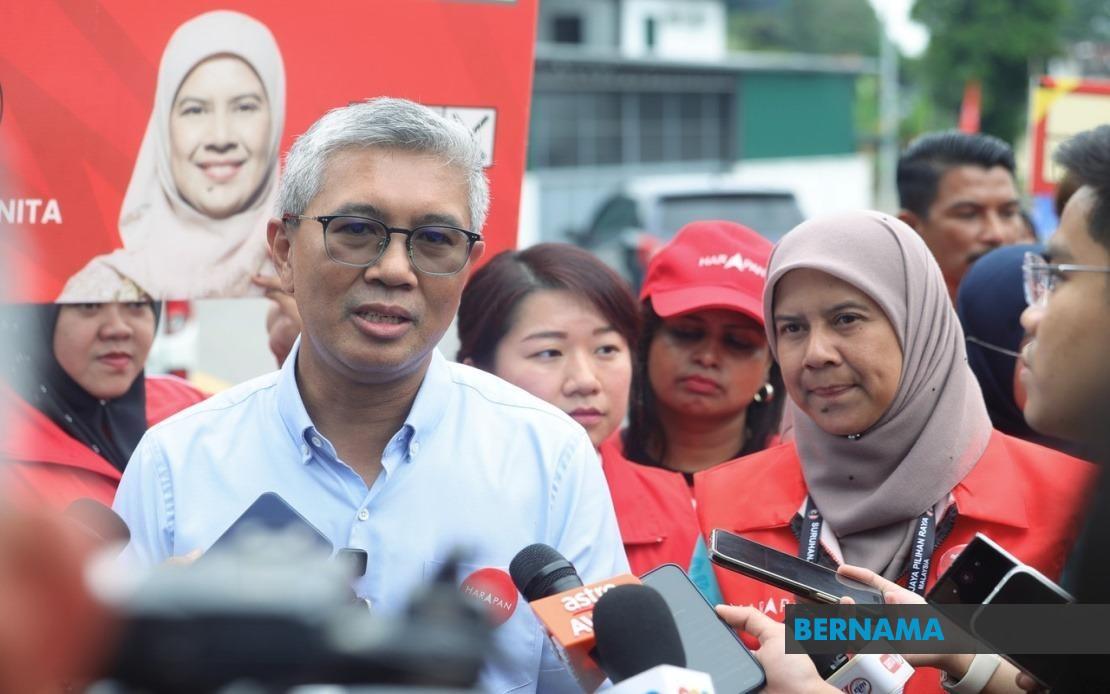
The Pakatan Harapan coalition is heading into the final stretch of campaigning for the Kuala Pilah state seat with what party strategists describe as a commanding position, based on extensive ground-level polling and community feedback gathered throughout the constituency. Tengku Datuk Seri Zafrul Tengku Abdul Aziz, who serves as Senior Political Advisor to the Prime Minister, underscored the strength of voter support during a campaign visit to the district, while emphasising that maintaining momentum remains critical as polling day approaches on August 1.
The positive reception toward incumbent state assemblyman Datuk Noorzunita Begum Mohd Ibrahim—who is seeking another term representing PKR—reflects what coalition officials characterise as the electorate's appreciation for on-ground development work and constituent assistance delivered over her tenure. Analysts point out that personal service delivery, particularly in smaller state constituencies, often outweighs broader national messaging and can prove decisive in close electoral contests. Tengku Zafrul's decision to join the campaign trail himself signals the importance PH attaches to holding this seat in central Negeri Sembilan.
During the walkabout through residential areas, both Tengku Zafrul and Noorzunita Begum engaged residents directly to understand prevailing concerns and gather proposals for future initiatives. These ground interactions, whilst appearing routine on the campaign calendar, function as crucial mechanisms for testing voter sentiment and identifying shifts in public opinion. The team documented conversations around desired infrastructure projects, economic opportunities, and public grievances—data that campaigns use to refine messaging and resource allocation during the critical final week of campaigning.
The economic backdrop supporting PH's campaign narrative centres on Negeri Sembilan's aggregate investment figures and financial reserves. Tengku Zafrul highlighted that total investments in the state have reached RM19 billion, with state reserves surpassing RM1 billion, framing these metrics as evidence of effective governance under Menteri Besar Datuk Seri Aminuddin Harun. For rural and semi-rural constituencies like Pilah, such economic indicators carry weight when voters assess whether incumbent administrations have delivered tangible improvements to living standards and employment prospects.
A strategic priority emerging from campaign interactions involves creating higher-quality professional employment pathways for Generation Z within Negeri Sembilan itself. Young professionals frequently migrate to Kuala Lumpur and larger urban centres for career advancement, a pattern that diminishes constituency populations and reduces electoral turnout in smaller towns. The MADANI Government's stated commitment to bridging development gaps between metropolitan areas and smaller towns directly addresses this demographic challenge, offering younger voters a reason to remain engaged locally. Noorzunita Begum's team has identified this as a primary concern during constituency visits, signalling that youth employment will feature prominently in the final campaign messaging.
Geographically, Kuala Pilah sits in central Negeri Sembilan between Seremban and Bahau, positioning it within a region experiencing gradual economic diversification. However, the indirect nature of economic spillover effects means that constituency residents often experience slower benefit flow compared to areas proximate to major industrial zones or commercial hubs. This reality frames the MADANI Government's messaging around attracting fresh investments and extending economic opportunities more evenly across the state as particularly relevant to local voters who may feel peripheral to the state's main growth narrative.
Noorzunita Begum reported that by the eighth day of campaigning, her team had covered most residential precincts and would concentrate final efforts on traditional village communities during the campaign's closing days. This tactical adjustment reflects campaign strategy premised on data—identifying which areas remain unvisited or under-engaged and prioritising final contact accordingly. Traditional villages, which sometimes experience lower voter turnout and may receive less campaign attention from all parties, represent both an opportunity and a challenge for mobilising support in the final week before August 1.
The contest itself has crystallised as a direct two-way contest between Noorzunita Begum of PH and Barisan Nasional candidate S. Leza Md Yasin, a configuration that eliminates vote fragmentation and forces voters into a clear binary choice. In such straight fights, turnout mechanics and ground-level voter mobilisation become paramount, as marginal shifts in turnout can produce large changes in seat outcomes. The elimination of third candidates removes protest voting opportunities and may consolidate support around the two leading contenders.
Electoral logistics for the 16th Negeri Sembilan State Election include early voting scheduled for July 28, followed by standard polling on August 1. The Pilah constituency encompasses 18,034 registered voters according to the Electoral Commission's June 4 update, of which 17,775 are ordinary voters while 259 comprise police personnel and their spouses. The nearly even gender distribution—49.49 per cent male and 50.51 per cent female—provides no obvious demographic skew that would mechanically advantage either candidate, making campaign effectiveness and candidate personal appeal potentially decisive factors.
For Malaysian observers watching state-level contests, the Negeri Sembilan election offers a bellwether on voter sentiment toward the current federal PH administration and its performance record in managing state governance. Results in smaller constituencies like Pilah, where personal constituency service and local development projects carry substantial weight relative to national narratives, often reveal whether voters are rewarding or punishing incumbent parties based on bread-and-butter delivery rather than ideological positioning. The confidence expressed by Tengku Zafrul and the campaign machinery will face its ultimate test when polling stations close on August 1.

