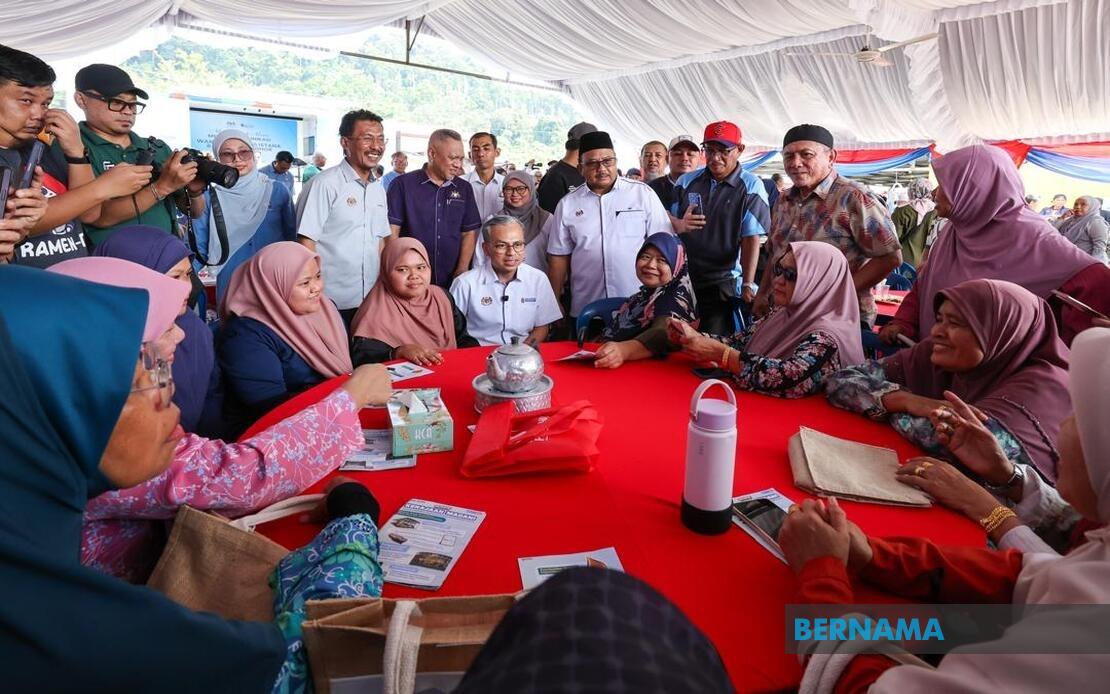
Pakatan Harapan's strategy of delaying its manifesto launch for the Johor state election has drawn internal criticism, but coalition leadership is standing firm on the decision. Communications Minister Datuk Fahmi Fadzil defended the timing during a grassroots engagement in Batu Pahat on July 4, arguing that the coalition prioritised thoroughness over speed in preparing its "Johor for All" platform. The manifesto was unveiled on Friday, marking the beginning of the campaign's second week, after candidates had already been introduced and initial momentum established. Fahmi emphasised that the document underwent comprehensive vetting and received approval from PH's top brass, including Prime Minister Anwar Ibrahim, before being presented to voters.
The timing criticism originated from Ong Kian Ming, the former Bangi MP, who had warned that the late release could hamper PH's electoral prospects in the state contest. Ong had painted a broader picture of campaign challenges facing the coalition, pointing to the absence of a publicly named menteri besar candidate, limited presence of senior party figures among candidates, and insufficient narrative momentum. However, Fahmi dismissed this assessment as disconnected from ground realities. He noted that by the time the manifesto was released, voters had already been introduced to PH candidates and both coalitions were transitioning into the policy presentation phase of campaigning. The sequence, he argued, made logical sense within the campaign calendar and reflected a deliberate choice rather than organisational failure.
The broader campaign environment in Johor has become increasingly contentious as polling day approaches. Barisan Nasional, the incumbent coalition led by Menteri Besar Datuk Onn Hafiz Ghazi, is expected to be the formidable favourite in the contest, based on both historical precedent and recent political shifts in the state. The Johor election carries national significance as a bellwether for political sentiment in Malaysia's second-most populous state and a traditional BN stronghold. PH's performance here could signal whether the coalition has stabilised its support base after the turbulent period following the 2022 general election, or whether it remains vulnerable to further erosion in key states.
A secondary layer of controversy has emerged around allegations that the PH manifesto closely mirrors BN's platform in substance and language. Khairy Jamaluddin, the former UMNO Youth chief now serving as an influential campaigner, levelled the "copy and paste" accusation against PH. Rather than directly addressing the policy similarities, Fahmi responded with pointed political commentary, observing that Khairy appeared to be campaigning with considerably more vigour than Onn Hafiz himself. This observation underscores a potential vulnerability for the BN campaign: the reliance on figures outside the formal menteri besar's office, suggesting possible confidence gaps or communication challenges at the top of the state government. Fahmi suggested, somewhat cheekily, that Khairy's energy and public presence would benefit the official BN leadership if transferred through similar "copy and paste" methods.
Internal party dynamics within PH have also surfaced as a complicating factor during the campaign. Marina Ibrahim, a former assemblyman who previously represented Skudai, announced her exit from active politics through social media, citing disillusionment with Democratic Action Party (DAP) leadership over their perceived positioning regarding a pardon for former Prime Minister Datuk Seri Najib Tun Razak. The allegation, circulating on social platforms, touched on a historically sensitive issue within Malaysian politics—the prosecution and imprisonment of Najib and the complex political calculations surrounding potential clemency. Marina's departure, while not necessarily indicative of broader grassroots fracture, nonetheless provided ammunition for critics seeking to portray PH as internally divided or ideologically incoherent.
Fahmi sought to minimise the impact of Marina's exit and the associated social media allegations, grounding his confidence in observable grassroots engagement rather than abstract party unity metrics. He pointed to consistent strong turnout at PH campaign events across Johor, describing the reception and voter enthusiasm as solid and unwavering. The presence of DAP candidates throughout PH's slate, including Ng Yak Howe contesting the Bentayan state seat, demonstrates the coalition's continued reliance on the party despite the reputational challenges. Fahmi's invocation of Marina's earlier comments suggested that high-profile departures, while symbolically notable, have not visibly translated into broader voter defection at the grassroots level where elections are ultimately decided.
The Johor state election represents the first major electoral test for the unity government since its formation after the 2022 general election. With 172 candidates contesting 56 state seats, the race encompasses significant geographic and demographic variation across the state. Polling is scheduled for July 11, with early voting opportunities on July 7, allowing voters to participate before election day. The scale of the contest and the number of seats at stake mean that even modest swings in voter preference could alter the composition of the state assembly materially. For PH, reclaiming or significantly expanding its Johor presence would represent a symbolic and practical victory after years of political decline in the state following the 2018 general election defeat of BN at the national level but subsequent coalition realignments at the state level.
The campaign environment reflects broader patterns in Malaysian electoral politics where manifestos, while important symbolic documents outlining governing philosophy and policy intent, increasingly compete with social media narratives, personality-driven campaigns, and local grassroots sentiment. Fahmi's defence of the manifesto timing acknowledges this reality implicitly: the coalition chose to focus on comprehensive policy development and leadership endorsement rather than rushing to market with a hastily prepared document. Whether this calibrated approach translates into electoral gains will depend partly on how effectively PH can convert manifesto commitments into compelling campaign messaging in the remaining weeks before polling.
The criticisms directed at PH—concerning delayed manifesto release, absent senior candidates, and lack of a public menteri besar frontrunner—collectively paint a picture of a coalition still grappling with organisational and messaging challenges in a state where it seeks meaningful electoral revival. Fahmi's responses have attempted to reframe these liabilities as deliberate strategic choices made in the interest of quality and inclusivity. The success of this reframing will ultimately be judged by voters in Johor and by national observers watching whether the unity government can maintain or expand its electoral footprint in one of Malaysia's most politically significant states.

