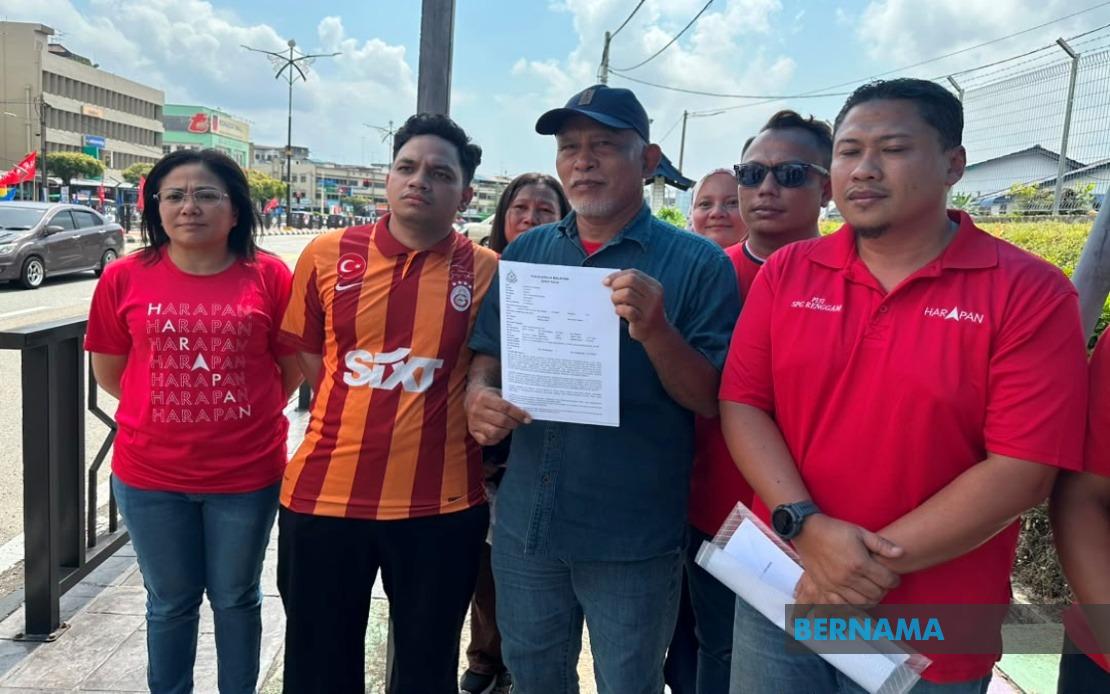
A representative of the Pakatan Harapan candidate contesting the Machap seat has initiated a police investigation into allegations that Johor Menteri Besar Datuk Onn Hafiz Ghazi orchestrated an effort to mobilise Technical and Vocational Education and Training students for political campaigning purposes. Khiru Nasir Rohani submitted the formal complaint at Simpang Renggam district police headquarters, marking an escalation in allegations of electoral impropriety during the Johor state election campaign.
The core allegation centres on what Khiru Nasir characterises as a systematic initiative to channel TVET students from educational institutions into political support activities for Barisan Nasional candidates. This characterisation suggests an organised apparatus rather than isolated incidents, implying coordination across multiple institutions and organisational bodies. The complainant contends that such actions breach fundamental democratic principles by weaponising the educational system for partisan advantage.
Specific reference is made to a gathering held in Kluang on July 4, where TVET students were allegedly required to participate in an event that subsequently functioned as a campaign platform promoting state election candidates. The transformation of what was ostensibly an educational programme into a venue for open political campaigning represents the crux of the complaint, raising questions about the separation between government machinery and party political activities.
According to Khiru Nasir, the alleged conduct violates multiple provisions of the Election Offences Act 1954, particularly those addressing undue influence on voters and the improper deployment of official position or state institutions for electoral purposes. The invocation of these specific legal frameworks suggests the complaint is structured to establish both intent and legal culpability, moving beyond mere procedural irregularities to substantive violations of electoral law.
Beyond the immediate police report, Khiru Nasir has appealed to three institutional authorities to examine the matter comprehensively. The Malaysian Anti-Corruption Commission, the Election Commission, and police investigations working in concert could theoretically establish whether systemic abuse occurred and identify the decision-making hierarchy responsible. This multi-agency approach underscores the seriousness with which the complaint is framed and suggests concerns that the matter extends beyond simple campaign oversight failures.
The complaint carries particular weight in Malaysia's electoral context, where safeguarding institutional neutrality remains contentious. Educational institutions, especially vocational centres, occupy a position of public trust. When allegations surface that such institutions become vehicles for partisan mobilisation, concerns about democratic integrity assume constitutional dimensions. The timing of the complaint, made during an active state election campaign, amplifies its political salience.
The Johor state election itself involves substantial stakes, with 172 candidates competing across 56 state seats. The election results will determine the balance of power within one of Malaysia's most politically significant states, historically a Barisan Nasional stronghold. Any questions about the integrity of the campaign machinery could influence both electoral calculations and post-election political legitimacy. Accusations of institutional misuse therefore carry consequences extending beyond individual candidates to broader governance questions.
Khiru Nasir's dual role as Simpang Renggam Amanah deputy division chief and campaign representative gives the complaint institutional backing from within the PH coalition structure. This positioning ensures the allegation receives attention from party machinery and coordination across PH's constituent bodies. The complaint represents not merely a candidate's protest but a formal statement by an identified party official acting within organisational capacity.
The allegation touches on a recurrent tension in Malaysian politics: the distinction between legitimate use of government communications and resources for public purposes, and improper deployment of state apparatus for electoral advantage. TVET institutions, funded through public resources and operating under government oversight, occupy precisely this grey zone. The complaint forces examination of whether participation in government-organised programmes constitutes voluntary civic engagement or compulsory party mobilisation masked as official activity.
Police response and investigative procedures will prove determinative. Investigating officers must establish whether participation was genuinely voluntary or coercive, whether institutional leaders coordinated with political operatives, and whether documentary evidence exists demonstrating planning and execution. The evidential threshold for substantiating undue influence allegations is deliberately high, requiring demonstration that specific actions swayed voting behaviour or prevented free exercise of electoral choice.
The complaint also invites scrutiny of broader campaign practices across competing parties. While centred on specific allegations against Menteri Besar Onn Hafiz, the underlying concern about institutional instrumentalisation could prompt examination of whether similar practices occur elsewhere in the campaign. Such parallel scrutiny, if initiated, might broaden the investigation's scope and implications beyond the immediate complaint.
For Malaysian voters and regional observers monitoring electoral integrity, this complaint exemplifies the ongoing contestation over democratic practice in competitive systems. The formal mechanisms available for contesting alleged electoral misconduct—police reports, anti-corruption commission involvement, election commission oversight—demonstrate institutional responsiveness to concerns. However, the effectiveness of these mechanisms in protecting electoral integrity ultimately depends on investigative rigour and willingness to pursue allegations wherever evidence leads.

